
Market Size and Segmentation: From Pico Products to Kilowatt-Scale Systems
The off-grid solar market is no longer a marginal category defined by donor programmes. According to World Bank/ESMAP's Off-Grid Solar Market Trends Report and GOGLA's semi-annual sales data, the sector has consistently sold roughly 4–5 million off-grid solar products annually in recent years, with Sub-Saharan Africa accounting for around 60% of unit volumes and South Asia the majority of the remainder. The World Bank estimates that several hundred million people now meet at least part of their electricity needs through off-grid solar, and the total market — devices, appliances, batteries and mini-grid equipment — is estimated in the low single-digit billions of dollars, growing at high single-digit to low double-digit rates.
Segmentation matters more than headline volume. The market splits into pico products below 10 Wp, solar home systems (SHS) in the 10–200 Wp range, and larger "SHS-plus" and commercial systems from roughly 0.5 kWp to 20 kWp serving clinics, telecom towers, agro-processing and tourism lodges. The clearest structural trend is up-market migration: average Watt-peak per system sold has risen steadily as [solar panels](/products/solar-panels) become cheaper per watt and buyers bundle fans, TVs, refrigerators and productive-use equipment. GOGLA's device cost-per-capita-income metric shows affordability improving in most African markets even as system capacity increases.
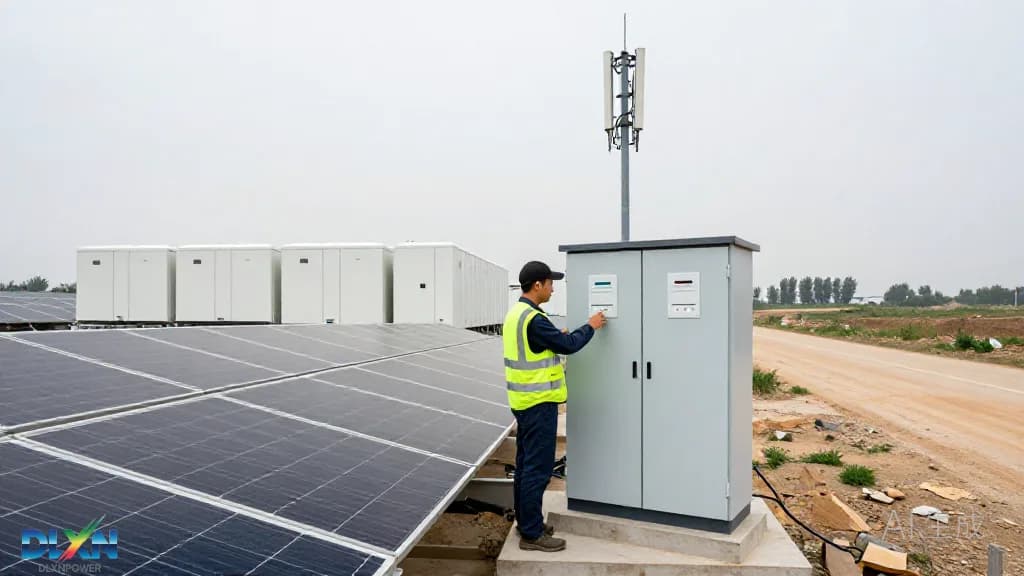
A third shift is the professionalisation of the commercial and industrial (C&I) off-grid segment. Remote mining camps, telecom base stations, defence installations, aquaculture sites and disaster-response fleets increasingly specify off-grid systems as engineered assets with performance guarantees rather than as consumer appliances. This segment demands documented component testing — IEC 62109 for power converters, UL 9540A for energy storage fire safety — and multi-year service contracts, pulling the off-grid market closer to the standards regime of mainstream grid-tied solar.
Demand Drivers: Electrification Gaps, Grid Reliability and Policy
The fundamental demand driver remains the access gap. The IEA's tracking of SDG7 indicates that roughly 750 million people still lack electricity access, with progress having slowed and, in some years, reversed as population growth outpaced connections in Sub-Saharan Africa. Grid extension to dispersed rural settlements frequently costs more per connection than a solar home system or a small mini-grid, particularly where terrain is difficult and load densities are low. The IEA has repeatedly noted that off-grid and mini-grid solutions are the least-cost route to serving a substantial share of the remaining unserved population.
In wealthy economies, the driver is resilience rather than access. NREL analysis of distribution-extension economics shows that serving very remote loads through new line construction can cost far more per customer than a standalone photovoltaic-battery system, which is why utilities and regulators in the United States and Australia increasingly evaluate off-grid alternatives as non-wires solutions. Utility public-safety power shutoffs in California, winter storm outages in Texas and cyclones in Australia have all expanded residential and small-business demand for backup-capable systems with islanding functionality.
Policy is converging on the sector from several directions. Nigeria's Electricity Act 2023 devolved regulatory authority to states, accelerating sub-national mini-grid permitting; Kenya and Ethiopia have pursued results-based financing for off-grid deployment; India's PM-KUSUM programme targets millions of solar irrigation pumps; and the US Inflation Reduction Act introduced a standalone 30% investment tax credit for energy storage, including systems that operate independently of the grid. According to BloombergNEF, policy support plus cost declines have made the off-grid and mini-grid segment one of the more resilient corners of the solar market during periods of high interest rates.
Unit Economics: Battery Cost Curves and Off-Grid LCOE
Battery economics dominate off-grid system cost. BloombergNEF's annual battery price survey has documented a decline of roughly 90% in lithium-ion pack prices since 2010, with 2024 turnkey pack prices in the region of $115/kWh and cells trading considerably lower. Because off-grid systems typically use modest pack sizes and increasingly favour lithium iron phosphate (LFP) chemistry, the storage share of total system capex has fallen sharply. Modern [lithium battery systems](/products/lithium-battery) specified for off-grid duty commonly quote 6,000 cycles at 80% depth of discharge, translating into a 10–15 year design life in daily-cycling applications.
Levelised cost of electricity tells the same story. NREL and independent analyses place off-grid PV-battery LCOE in the approximate range of $0.30–0.80/kWh depending on location, load profile and financing cost, compared with roughly $0.60–1.20/kWh for diesel generation once fuel logistics, theft and maintenance are included. In remote island, mine and telecom applications, fuel avoidance alone often produces payback periods of two to five years, with the added benefit of eliminating fuel-supply risk — a factor that matters more to operators than the headline levelised cost.
Balance-of-system costs are now the binding constraint. Mounting structures, cabling, enclosures, combiner boxes and installation labour have not fallen as fast as modules and cells, and in many African and South Asian markets soft costs — logistics, duties, distribution margins and after-sales service — exceed 50% of installed system price. This is why smart [inverters](/tech/inverters) and integrated power centres that reduce component count, wiring labour and commissioning time have become a competitive battleground among suppliers.
Technology Shifts: Higher DC Voltages, Hybrid Inverters and Monitoring
Architecturally, the off-grid market is bifurcating. Small systems remain DC-coupled at 12V or 24V, while systems above roughly 2 kWp increasingly adopt 48V nominal DC bus architectures with MPPT charge controllers delivering 98–99% conversion efficiency. Larger commercial and mini-grid installations are moving to high-voltage DC arrays of up to 1,000V with three-phase hybrid inverters, reducing cable losses and permitting longer DC runs between array and powerhouse. Bifacial modules, now standard in utility procurement, add 5–15% yield depending on albedo and mounting height.
Inverter specifications have matured accordingly. Leading off-grid and hybrid units now combine grid-forming capability, split-phase 120/240V or three-phase output, 1.5–2× surge ratings for motor starting, IP65 enclosures and operating ranges from −20°C to +60°C with documented thermal derating. Standards compliance is increasingly a procurement gate: IEC 62109 for safety, UL 1741 SB for North American grid-interactive functions, and IEEE 2030.10 for DC microgrids, which codifies voltage limits, earthing and protection requirements for the small DC systems common in energy-access deployments.
Monitoring has shifted from optional to expected. Cellular-connected data loggers reporting state of charge, array yield, fault codes and load consumption allow operators to manage dispersed fleets of hundreds of systems, dispatch technicians predictively and validate performance against contractual guarantees. IEEE work on microgrid control and interoperability, together with open protocols such as SunSpec, is gradually reducing the vendor lock-in that previously complicated fleet management for large off-grid portfolios.
PAYGo, Digital Finance and Fleet Operations
Pay-as-you-go financing remains the sector's most consequential business-model innovation. According to GOGLA and World Bank data, PAYGo transactions account for a substantial and growing share of SHS sales in East and West Africa, enabled by mobile money penetration exceeding 70% in markets such as Kenya. Customers pay a small deposit followed by daily or weekly instalments, typically over 12–36 months, with remote disabling as the enforcement mechanism. Default and repossession rates have improved as credit-scoring models mature, though the cost of capital remains the sector's principal constraint.
The financing stack around off-grid companies has deepened. Blended-finance facilities, results-based financing grants, guarantee instruments from development finance institutions and, increasingly, securitisation of PAYGo receivables have allowed leading companies to raise working capital at scale. Carbon credits linked to avoided kerosene and diesel combustion provide an additional revenue line, though methodology revisions have introduced volatility. For commercial buyers, leasing and energy-as-a-service structures now make multi-kilowatt [projects](/projects) viable without upfront capital expenditure.
Operationally, the industry's cost-to-serve is falling through digitalisation. Remote diagnostics reduce truck rolls, modular component design shortens repair times, and spare-parts logistics are being consolidated regionally. The emerging benchmark is fleet availability above 95% and first-visit repair rates above 80% — metrics borrowed from telecom infrastructure management and now written into off-grid service-level agreements.
Regional Spotlights and the Outlook to 2030
Sub-Saharan Africa remains the growth engine. Nigeria, the Democratic Republic of Congo and Ethiopia together account for a large share of the unserved population, and mini-grid developers are increasingly pairing solar with storage to serve anchor loads such as mills, cold storage and telecom towers. In South Asia, Bangladesh's Solar Home System programme — which installed more than four million systems through IDCOL — is now transitioning customers to grid interconnection, while India's PM-KUSUM scheme pushes solar irrigation pumps toward a multi-million-unit target, creating durable demand for ruggedised pumps and controllers.
In North America, Europe and Australia, off-grid demand is concentrated in remote habitations, telecom, defence, agriculture and resilience-driven backup. Rapidly deployable [mobile solar generators](/solar-sunflower) are increasingly specified for disaster response, construction sites and event power, replacing diesel gensets where noise, emissions and fuel logistics are constraints. Market researchers generally project high single-digit to low double-digit compound annual growth for the global off-grid segment through 2030, with commercial and industrial applications growing faster than household products.
Three variables will determine whether that forecast holds: the cost and availability of LFP cells, the cost of capital in African and South Asian markets, and the pace at which standards harmonisation reduces engineering and certification overhead. Buyers should prioritise suppliers offering documented cycle-life data, third-party-tested power electronics, open monitoring interfaces and a credible regional service footprint — because in off-grid systems, availability, not headline capital cost, is the metric that ultimately determines value.