Cell Prices, Pack Economics and the New Cost Floor
In its December 2024 Battery Price Survey, BloombergNEF recorded a volume-weighted average lithium-ion pack price of USD 115/kWh, a 20% decline year over year and one of the steepest falls since 2017. Chinese LFP cell prices traded below USD 60/kWh in late 2024, undercutting most Western cost models. The consequence is not simply cheaper hardware; it is a reset of project economics. A 100 MW/400 MWh system that budgeted USD 200/kWh in 2022 now prices closer to USD 130–150/kWh installed, depending on interconnection, enclosure scope and site civil works. See our [lithium battery product range](/products/lithium-battery) for current configuration options.
Price compression has triggered consolidation upstream. Marginal cathode and cell capacity in Europe and North America has been deferred or cancelled, while tier-one Chinese manufacturers sustained utilization above 70% through exports. Analyst consensus for 2025–2026 is a plateau rather than another cliff: BloombergNEF and Wood Mackenzie both expect pack prices to drift toward USD 100/kWh by 2026 rather than break it outright. Tariffs are the main brake. In the United States, Section 301 duties on non-EV lithium-ion cells rise to 25% from January 2026, adding roughly USD 15–25/kWh to imported storage systems.
The practical procurement lesson is to contract on delivered energy rather than nameplate capacity. Because augmentation, round-trip efficiency and degradation vary materially between suppliers, a system quoted at 4 MWh per container may deliver meaningfully different usable AC energy in year ten. Sophisticated buyers now require measured round-trip efficiency at the point of interconnection and warranty structures indexed to retained capacity, a shift documented in our [battery storage technology overview](/tech/battery-storage).
Chemistry Competition: LFP Dominance, LMFP and Sodium-Ion
Lithium iron phosphate has moved from niche to default for stationary storage. LFP cells typically deliver 150–180 Wh/kg at cell level with 4,000–8,000 cycles to 80% state of health under moderate conditions, and their olivine structure tolerates thermal abuse better than layered oxide chemistries. According to IEA analysis, LFP's share of global lithium-ion battery demand has climbed past 40%, driven by both Chinese EVs and stationary systems where gravimetric energy density matters far less than cycle life, safety and cost per kilowatt-hour.
Nickel-manganese-cobalt remains relevant where footprint is constrained, offering 200–250 Wh/kg and better cold-weather performance, but its cost premium is hard to justify in grid applications. Lithium manganese iron phosphate (LMFP) is the most credible near-term upgrade, promising 15–20% energy density gains over LFP with similar process equipment. Sodium-ion has moved from laboratory to commercial pilots, with cells around 160–175 Wh/kg and strong low-temperature retention; its value proposition in stationary storage is resilience to lithium price volatility rather than raw performance.
For system designers, chemistry choice now cascades into civil works and thermal management. A higher-density NMC system may fit a smaller footprint in an urban substation but requires more aggressive fire mitigation and spacing under NFPA 855. An LFP system trades area for safety margins and predictable degradation, which is why most utility-scale projects and hybrid [solar panel](/products/solar-panels) plus storage plants specify LFP as the baseline.
Grid-Scale BESS: The Fastest-Growing Demand Segment
Grid-scale battery energy storage has become the demand engine of the lithium market. The IEA's 2024 report on batteries and secure energy transitions noted that global battery storage additions reached roughly 42 GW in 2023 and must scale to around 150 GW per year by 2030 to align with announced energy and climate pledges. BloombergNEF's储能 outlook similarly projects cumulative stationary storage installations surpassing 1 TWh of deployed capacity by the early 2030s, with China, the United States and Europe accounting for the bulk of additions.
The United States illustrates the dynamics. Texas and California dominate interconnection queues, with ERCOT adding multiple gigawatts of standalone storage annually as ancillary service revenues and scarcity pricing reward fast-responding assets. Four-hour duration remains the workhorse configuration because it aligns with evening solar ramps and capacity accreditation rules, but procurement is lengthening: Chile, the UAE and several U.S. utilities have tendered 8-hour and even 10-hour systems, pushing vendors toward larger enclosures and DC-coupled architectures.
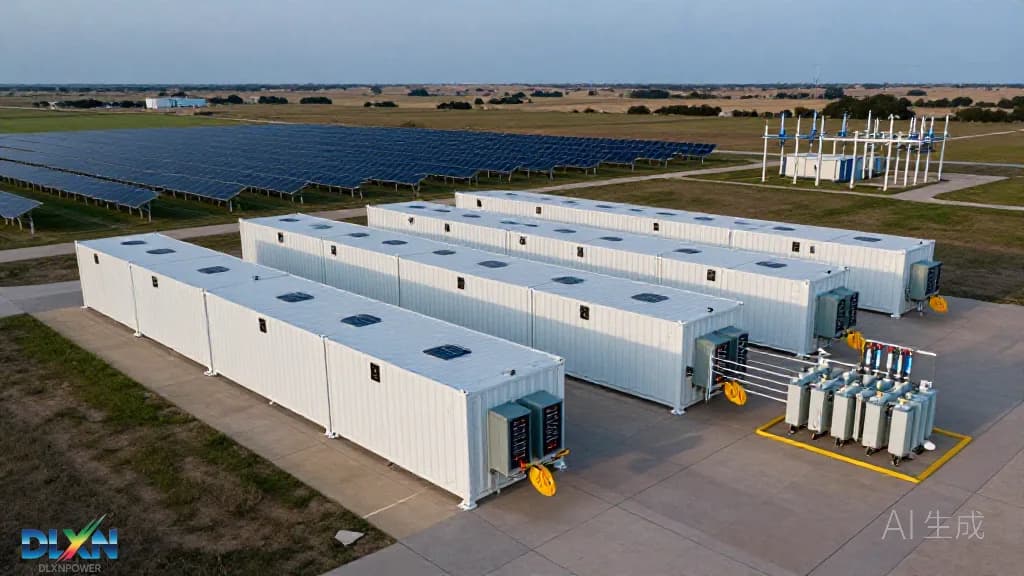
Hardware scale has followed. Standard 20-foot containers now ship 5–6 MWh of LFP capacity at 1,500 V DC, up from roughly 3–4 MWh three years ago, with liquid-cooled thermal plates and pack-level active balancing. Higher energy density per container reduces balance-of-plant cost and land use, which matters for co-located projects. Our [Eos carport](/eos-carport) and [solar sunflower](/solar-sunflower) platforms illustrate how distributed generation and storage can share the same interconnection and civil footprint.
Manufacturing Footprint and Policy-Driven Reshoring
Supply chain geography is being rewritten by industrial policy. The U.S. Inflation Reduction Act's 45X manufacturing credit provides up to USD 45/kWh for cells and USD 10/kWh for modules produced domestically, and the foreign entity of concern rules restrict eligibility for components sourced from China, Russia, North Korea and Iran from 2025 onward. The result has been a wave of announced North American cell plants, though announced capacity consistently exceeds financed capacity.
Europe is pursuing a different lever: regulation. The EU Battery Regulation (2023/1542) introduces carbon footprint declarations, recycled content thresholds and battery passports, progressively tightening from 2025 through 2031. These requirements favor producers with traceable supply chains and low-carbon grid electricity, and they will effectively set a compliance bar for any storage system sold into the EU market.
Meanwhile, overcapacity is real. The IEA estimates announced global cell manufacturing capacity exceeds 3 TWh against demand well below half that figure in the mid-2020s. Utilization pressure keeps prices low for buyers but raises counterparty risk, making supplier due diligence — balance sheet strength, warranty backing and service presence — as important as the technical datasheet.
Safety Codes, Longevity and System-Level Engineering
Safety compliance has become a procurement gate rather than a differentiator. UL 9540A cell-to-grid propagation testing, NFPA 855 spacing and separation rules, and UL 9540 certification for the complete system are now baseline requirements in North American projects. In Europe, IEC 62619 and IEC 62933 govern cell and system safety, while IEEE 1547-2018 and its successors define interconnection behavior, including voltage ride-through and frequency response for inverter-based resources.
Thermal management directly determines lifetime economics. Liquid-cooled systems hold cell-to-cell temperature deltas within 3°C, which slows capacity fade to roughly 2–3% per year in well-managed LFP assets, versus faster degradation in poorly balanced air-cooled enclosures. Measured AC-to-AC round-trip efficiency for modern BESS typically lands between 85% and 92%, a figure that should be verified against DOE and PNNL testing protocols rather than accepted from marketing literature.
Longevity also depends on contractual architecture. Augmentation clauses that add capacity in years 5, 10 and 15 can lower upfront capital cost but complicate site access and interconnection headroom. Owners increasingly model augmentation against real dispatch profiles, using [inverter](/tech/inverters) clipping and DC/AC ratios to size the hybrid plant optimally.
Second-Life, Recycling and the Circularity Mandate
End-of-life management has shifted from an afterthought to a market trend in its own right. The EU Battery Regulation sets binding recovery targets: 90% for cobalt, copper, lead and nickel by 2027, and 50% for lithium by 2027 rising to 80% by 2031. Those thresholds are forcing investment in hydrometallurgical and direct-recycling capacity, and they give stationary storage a structural advantage over consumer electronics because large-format packs are easier to collect and disassemble.
Recycling economics remain challenging at current metal prices, particularly for LFP, which contains no nickel or cobalt to subsidize processing. Companies such as Redwood Materials, Li-Cycle and several Chinese specialists are scaling capacity while relying on policy support and feedstock agreements. Direct recycling, which preserves cathode crystal structure, is the most promising route for LFP but remains pre-commercial at scale.
Second-life deployment is advancing more slowly than forecast. Repurposed EV modules face certification, warranty and state-of-health verification hurdles, and cheap new LFP cells undercut the business case. Where second-life succeeds, it is in low-cycle, behind-the-meter applications rather than utility dispatch. Buyers should insist on documented chain-of-custody and end-of-life provisions in supply contracts.
Outlook to 2030 and Implications for Solar Developers
The next five years will be defined by hybridization. Solar-plus-storage is moving from a premium product to the default configuration for new utility-scale plants in high-penetration markets, supported by investment tax credit adders in the U.S., capacity remuneration mechanisms in Europe and auction designs in India and the Middle East. Levelized cost of storage estimates from Lazard and BloombergNEF place four-hour LFP systems in the USD 100–150/MWh range in favorable markets, competitive with peaking gas in many jurisdictions.
Technical differentiation is migrating from cells to controls. Grid-forming inverters, state-of-charge balancing across heterogeneous fleets, and forecasting-integrated dispatch algorithms now determine revenue capture more than cell chemistry does. Owners who treat storage as a software-enabled asset rather than a box of batteries consistently outperform on merchant revenue stacks.
For solar developers, the strategic implication is straightforward: storage specification decisions made today will lock in twenty years of operating cost. Engaging early on interconnection, safety compliance and augmentation planning — and reviewing proven [project references](/projects) — reduces the risk of stranded design choices as cell prices, chemistries and codes continue to evolve.