
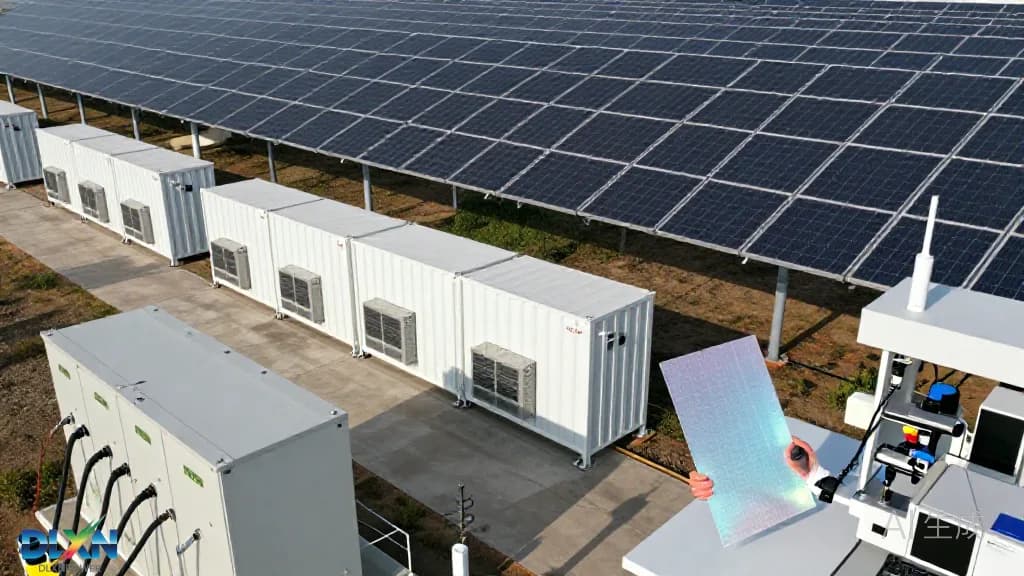
Policy Reset: From Subsidy Race to Market Discipline
The defining policy event of 2025 came from China. In February, the NDRC and National Energy Administration issued Document No. 136, ending fixed benchmark feed-in tariffs for new wind and solar from 1 June 2025 and moving new capacity into market-based dispatch and pricing, with a transitional "sustainable development price" settlement mechanism. The result was a pronounced installation rush in the first half of the year — China commissioned well over 200 GWdc of solar in H1 2025 — followed by an expected second-half slowdown as developers re-based revenue models around merchant power prices and spot-market volatility rather than administratively set tariffs.
In the United States, the July 2025 reconciliation law reshaped the 45Y/48E : solar and wind projects must begin construction by mid-2026 to retain full credits, with the technology-neutral credits unavailable for projects placed in service after 2027, and foreign-entity-of-concern (FEOC) restrictions tightening eligibility for both the generation credits and the 45X manufacturing credit. According to BloombergNEF, the reshaping of US clean-energy incentives is expected to trim medium-term domestic deployment forecasts by roughly 10–20% for utility-scale solar while accelerating safe-harboring and domestic-content sourcing decisions in the near term.
Europe took a different route. The Net-Zero Industry Act entered its implementation phase, with member states now applying non-price pre-qualification criteria — sustainability, supply resilience, cybersecurity and responsible business conduct — to at least 30% of auctioned renewable volume, alongside a 30 GW annual EU solar manufacturing benchmark for 2030. Combined with the recast Energy Performance of Buildings Directive, which mandates rooftop solar on new commercial and public buildings above 250 m² from end-2026 and on all new residential buildings by 2030, the policy mix is pushing demand toward building-integrated and rooftop formats.
The TOPCon Era and the Tandem Countdown
Cell architecture has largely converged. TOPCon (tunnel oxide passivated contact) accounted for the majority of global cell capacity added in 2025, with mass-production conversion efficiencies of 26.0–26.5% at cell level and 22.5–23.2% at module level for mainstream 210 mm and 210R formats. Heterojunction (HJT) holds a premium niche in high-temperature, high-value markets, while back-contact (BC) platforms are being scaled by several Tier-1 manufacturers targeting residential and distributed segments where area efficiency justifies a cost premium.
The next inflection is tandem. LONGi's certified 34.6% crystalline-silicon/perovskite tandem cell remains the benchmark, and pilot lines at multiple Chinese and European manufacturers are targeting commercial tandem modules in the 2027–2028 window, initially for rooftop and space-constrained utility applications. The gating factors are not efficiency but stability: damp-heat and UV-induced degradation of the perovskite layer, lead-encapsulation and end-of-life handling, and the capital cost of replacing established TOPCon lines. NREL's techno-economic work suggests tandem modules need to reach roughly 28% module efficiency at less than a 20–25% price premium to displace TOPCon at scale.
Manufacturing policy is now inseparable from technology choice. The US 45X credit — which phases down under the 2025 law and is subject to FEOC sourcing rules for polysilicon, wafers and cells — has driven announced ingot, wafer and cell capacity that did not exist domestically in 2022. India's ALMM List-II, requiring domestically approved solar cells from June 2026, is having a similar effect on cell capacity. For developers, module procurement is increasingly a compliance exercise as much as a technical one, and traceability documentation now sits alongside datasheets in procurement packages.
Modules, Trackers and Balance-of-System Gains
Mainstream utility modules crossed 700 W in 2025 in 2382 × 1134 mm footprints, using 66-cell TOPCon layouts, glass-glass bifacial construction with bifaciality factors of 80–85%, and 30-year power warranties with degradation below 0.4% per year. Bifacial gains of 5–9% depending on albedo and mounting height are now routinely modeled rather than treated as upside, and tracker vendors are optimizing torque-tube height and backtracking algorithms specifically to monetize rear-side irradiance. Single-axis trackers with independent-row architecture remain the default for utility-scale projects above 20 MW in high-DNI markets.
On the power electronics side, silicon-carbide (SiC) MOSFETs are displacing IGBTs in string inverters, pushing European efficiency beyond 99% and enabling 350 kW-class string units at 1500 Vdc, with 2000 Vdc architectures moving from pilot to commercial deployment in 2025 to reduce DC cabling and combiner costs. Grid-forming capability has shifted from differentiator to requirement — AEMO's requirements in Australia, ERCOT's ride-through and voltage-support rules in Texas, and IEEE 2800 alignment in the US are all pushing inverter firmware toward synthetic inertia, fast frequency response and black-start functionality. Our [inverter technology overview](/tech/inverters) details how these control modes interact with weak-grid conditions.
Balance-of-system innovation is also where distributed formats are gaining ground. Dual-axis trackers such as the [solar sunflower](/solar-sunflower) design deliver higher energy yield per square meter in land-constrained or high-latitude sites, while solar carports like the [EOS carport](/eos-carport) monetize existing impervious surfaces and avoid the interconnection and permitting delays that dominate greenfield development timelines. Both formats increasingly pair with on-site storage rather than exporting at midday prices.
Storage Policy Becomes the Binding Constraint
Battery storage moved from accessory to core asset in 2025. LFP cells scaled to 314 Ah and then 500 Ah+ formats, enabling 20-foot containerized DC blocks of roughly 5 MWh — up from 3.7 MWh two years earlier — with round-trip efficiencies of 88–92% at the system level and augmented 25-year or 8,000-cycle warranties. Global BESS installations in 2025 are tracking toward the 250 GWh range, according to BloombergNEF, with China, the US and the Middle East accounting for the bulk of utility-scale additions. Our [battery storage technology](/tech/battery-storage) analysis covers the DC-block architecture and thermal-management trade-offs driving these density gains.
Policy is now the pacing item. In the US, the standalone storage ITC survived the 2025 reconciliation process but is subject to the same FEOC and placed-in-service constraints as generation, and several grid operators have introduced fast-track interconnection for storage-plus-solar hybrids to reduce queue time. China's Document No. 136 created a new revenue stack challenge: with midday solar prices collapsing in several provincial spot markets, co-located storage shifts from arbitrage opportunity to prerequisite for project viability, and provinces are responding with capacity payments and dispatch-guarantee mechanisms.
Long-duration technologies remain largely pre-commercial at scale. Iron-air, sodium-ion and vanadium-flow systems are accumulating pilot data, but LFP dominates on cost — pack prices in the $60–80/kWh range for utility-scale procurement in 2025, according to BNEF's battery price survey — and on supply-chain maturity. The practical question for developers is not chemistry but augmentation strategy: oversizing DC blocks and planning for one or two capacity additions over the asset life has become standard financial modeling practice.
Grid, Interconnection and Permitting Reform
The binding constraint on deployment has moved decisively to interconnection and transmission. In the US, FERC Order 2023's cluster-study reforms are reducing queue backlogs in several RTOs, but median interconnection timelines in ERCOT and PJM still exceed three years for utility-scale solar, and network upgrade cost allocation remains the single largest source of project attrition. According to NREL's interconnection cost work, upgrade costs can consume 10–25% of total project capital in constrained corridors.
Europe faces a parallel problem with a different mechanism. The revised TEN-E regulation and the EU grid action plan target 2030 for major cross-border capacity, but national permitting remains the bottleneck; the RED III "go-to areas" designation — where projects benefit from accelerated and simplified permitting and a presumption of overriding public interest — is only now being transposed into national law, and its effectiveness varies widely between member states.
Technical solutions are emerging alongside regulatory ones. line ratings, grid-enhancing technologies (advanced conductors, power flow controllers) and hybrid AC/DC connections can add 10–30% transfer capability on existing rights-of-way at a fraction of new-build cost, and several European TSOs are now procuring them as alternatives to reconductoring. For developers, siting decisions increasingly weight substation headroom and curtailment history as heavily as irradiance — a shift reflected in the growing use of [battery storage](/products/lithium-battery) to firm interconnection-limited capacity.
Manufacturing Reshoring and Supply-Chain Rules
Supply-chain policy has become industrial policy. The US 45X credit, despite its phase-down, underwrote a wave of announced ingot, wafer, cell and module capacity; the practical 2025 constraint is not announcements but commissioning — ramping cell lines to qualified yields takes 12–18 months, and FEOC-compliant polysilicon remains the tightest link. India's PLI scheme plus ALMM List-II is building a domestic cell base behind a protected module market. The EU, lacking a comparable production subsidy, is relying on NZIA auction pre-qualification and the Critical Raw Materials Act to create demand-pull for non-Chinese supply.
The result is a fragmented price . Module prices in China have hovered near record lows — sub-$0.09/W for TOPCon in the first half of 2025 — while US delivered prices remain several times higher due to tariffs, domestic-content requirements and logistics. For asset owners, this divergence changes the calculus on module selection, warranty enforcement and supplier financial health: a low price is only valuable if the counterparty survives the consolidation now underway among Tier-2 and Tier-3 manufacturers. Our [solar panel product line](/products/solar-panels) reflects this with bankability documentation and traceability records bundled at the SKU level.
What Developers and Asset Owners Should Do in 2025–2026
Three practical priorities emerge. First, lock equipment and safe-harbor eligibility early: in the US, construction-start documentation before mid-2026 is worth more than any incremental module efficiency gain; in China, revenue modeling must now assume merchant exposure and negative midday prices rather than fixed tariffs. Second, design for grid services, not just energy: grid-forming inverters and co-located storage are becoming eligibility conditions in several markets, and projects configured without them face curtailment or outright rejection in interconnection studies.
Third, treat policy as a design variable. Domestic-content thresholds, FEOC sourcing rules and NZIA resilience criteria all translate into specific bills of materials — wafer origin, cell fab location, inverter firmware certification, storage cell provenance. Building a compliant, documented bill of materials at the design stage costs far less than retrofitting one after financial close. Our engineering team at [DLXN Energy](/about) works with developers to align module, inverter and storage specifications with the specific policy regime the project will be settled under.
The 2025 story is therefore not a single breakthrough but a simultaneous tightening on three fronts: revenue (market pricing), eligibility (content rules) and operations (grid obligation). Solar's cost curve continues to fall — module and storage prices both hit records this year — but the marginal project now succeeds or fails on policy engineering as much as on irradiation.