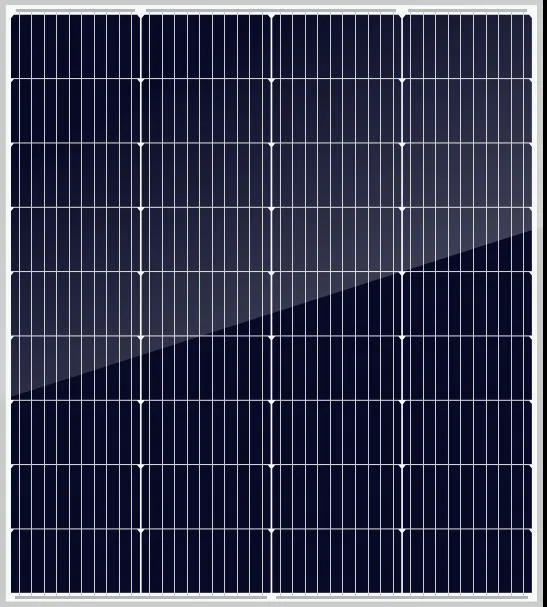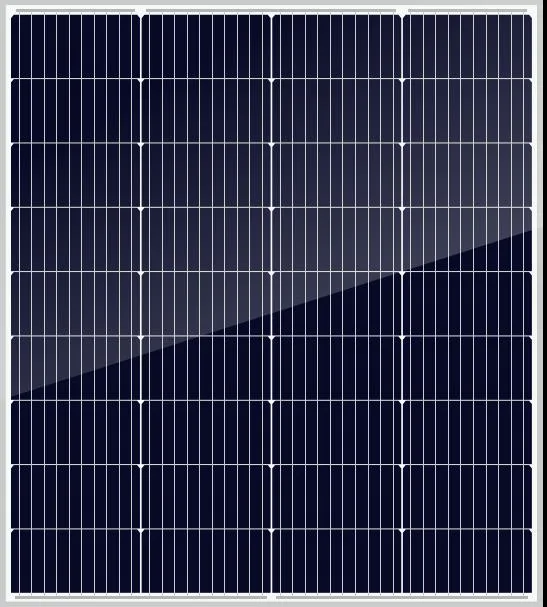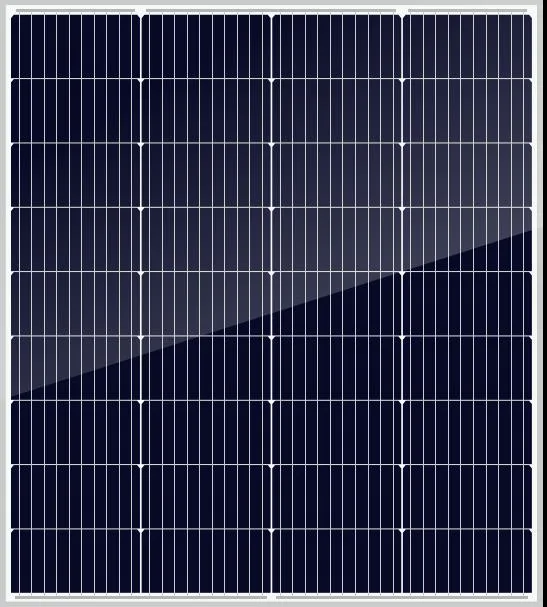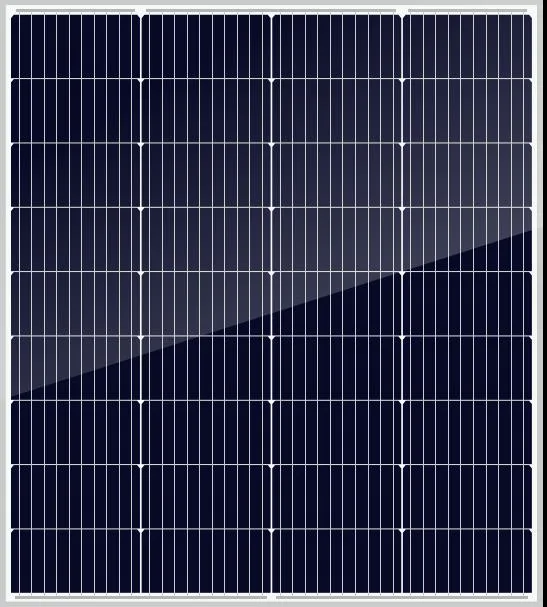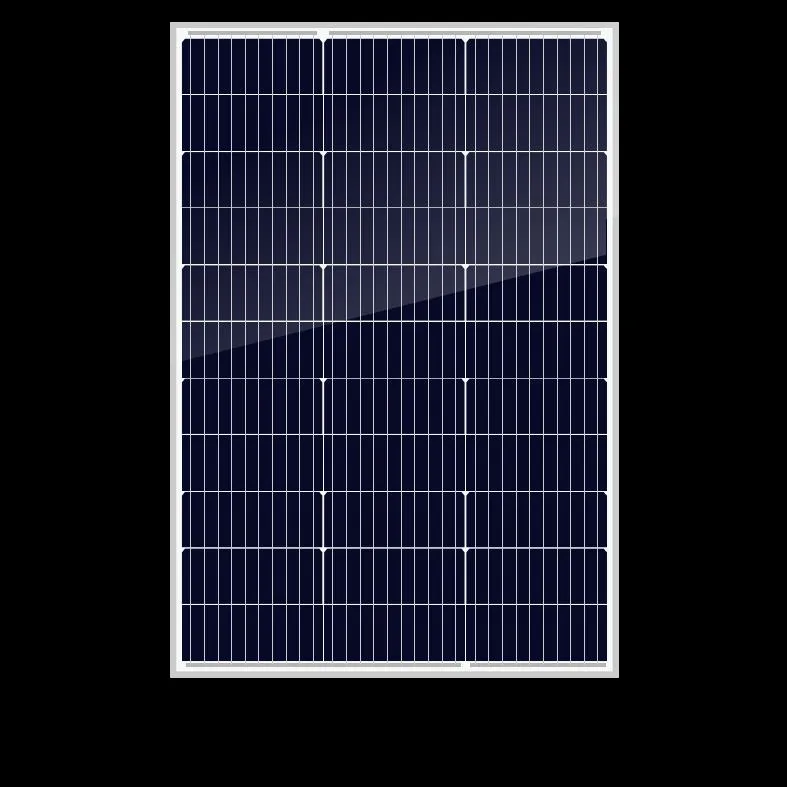
Salt spray is the failure mode that separates a marine solar install from a rooftop one, and the DLXN-M10-120W is assembled with that in mind: anodized aluminium, IP67 potted junction box, and a 30 mm frame depth that gives the laminate stiffness when it is lashed to a bimini frame or a stern rail rather than bolted to purlins.
Output on a moving deck
Rated 120W, the module reads Vmpp 19.54V, Impp 6.14A, Voc 22.57V and Isc 6.46A, held to 0/+3W. Thirty-three 182 mm cells produce 17.0% module efficiency across 1070×580×30 mm, and the 6.58 kg weight is manageable for a two-person lift onto a coachroof. The 500 VDC system limit is generous for a 12V or 24V vessel; what actually constrains a boat is shading from the boom and rigging, so the narrow 580 mm width lets two units sit either side of a hatch without falling into the mast shadow.
Corrosion and mechanical detail
3.2 mm tempered glass in an anodized frame, front 5400 Pa / rear 2400 Pa load rating, -40 to +85°C operating window, 45.3°C NOCT. Thermal behaviour is the standard curve: -0.41%/°C on power, -0.34%/°C on Voc, +0.06%/°C on Isc. On deck, where panels are cooled by wind and spray rather than baking, real output often lands closer to nameplate than a roof install would suggest — a genuine advantage for 12V refrigeration loads.
Installation support
Rail clamps, tilting deck mounts and cable entry glands are all compatible with the standard frame; custom lead lengths are available so no joint sits in a splash zone. Browse the solar module catalogue, or describe your vessel and daily Ah draw for a matched array.