
Solar Market Insights: Prices, Costs, Tariffs and Policy
Prices in this industry move faster than any quotation sheet. Module prices are driven by wafer and polysilicon capacity, battery prices by lithium carbonate and cell oversupply, and both are then bent by tariffs, anti-dumping duties and local-content rules. This hub collects the DLXN market notes: per-watt and per-kWh cost benchmarks, how a landed cost is actually built from FOB plus freight, duty and financing, what changed in the last quarter and why, and how policy shifts in the EU, US and emerging markets translate into the price a project buyer sees. Use these pieces as a reference band for negotiation, not as a quotation.
In this topic (22)

LiFePO4 Battery Solar Market Trends: 2025 Outlook
Lithium iron phosphate (LFP) has become the default chemistry for solar-coupled energy storage, capturing more than 90% of new grid-scale capacity additions as pack prices fall to record lows. This analysis examines the market forces, technical parameters, cost trajectories and policy drivers shaping LiFePO4 adoption across residential, commercial and utility-scale solar segments — and what system designers and project developers should anticipate through 2027.
Read more
Solar Panel Manufacturers Market Trends: 2025 Outlook
Global solar module manufacturing capacity now exceeds 1.1 TW per year against roughly 600 GW of annual demand, triggering the deepest price collapse and supplier shakeout in the industry's history. This analysis examines overcapacity, module pricing below $0.10/W, the TOPCon technology transition, industrial policy in the US, India and the EU, consolidation among manufacturers, and what the shifting supplier means for procurement, bankability and system design.
Read more
Off-Grid Solar Market Trends: Costs, PAYGo and Demand
The off-grid solar sector is moving from a niche energy-access story to a maturing global market valued in the billions of dollars, reshaped by falling lithium iron phosphate battery prices, higher-DC-voltage system architectures, PAYGo digital finance and rising demand for resilience in grid-connected economies. This article examines the key market trends — sales volumes and segmentation, demand drivers across Sub-Saharan Africa and South Asia, unit economics and LCOE, technical shifts in inverters and storage, and the financing models underpinning growth — with reference to data from the IEA, BloombergNEF, NREL, the World Bank/ESMAP and GOGLA, and explains what buyers and project developers should watch through 2030.
Read more
BIPV Market Trends: Growth, Policy and Technology
Building-integrated photovoltaics is shifting from an architectural curiosity to a regulated building product, driven by the EU's recast Energy Performance of Buildings Directive, France's APER law, Chinese building codes and US tax incentives. Global BIPV revenue sits in the US$15–25 billion range depending on definitions and is forecast to grow at 14–20% annually to 2030, even though the segment remains under 2% of global PV installations. This article examines market sizing, policy drivers, IEC 63092 and EN 50583 certification, the real economics of cost per square metre versus cost per watt, the solar shingle battleground, and reference projects that show where BIPV works.
Read more
Carbon Neutral Market Trends Reshape Global Solar Investment
Corporate net-zero pledges, border carbon pricing and maturing storage economics are converging into a single investment signal, and solar PV is the primary beneficiary. According to the IEA, clean energy investment passed $2 trillion in 2024, with solar attracting more capital than any other generation technology. This article examines six structural trends shaping the carbon neutral market — from CBAM-driven procurement and 24/7 carbon-free energy contracting to battery price collapses, manufacturing traceability and the rise of distributed prosumer assets — with the data points and technical parameters that matter for developers, EPCs and asset owners.
Read more
Photovoltaic Panel Market Trends Shaping Global Solar 2025
After a two-year collapse in module prices, the photovoltaic panel market is entering a consolidation phase defined by TOPCon dominance, annual installations above 450 GW, structural manufacturing overcapacity and a widening price gap between Chinese and Western supply chains. This analysis reviews the data points that matter for procurement through 2025 and 2026 — spot prices, cell architecture shifts, wafer formats, trade policy and bankability requirements — drawing on figures from the IEA, BloombergNEF, NREL and InfoLink Consulting, and explains what each trend means for developers, EPCs and installers specifying modules today.
Read more
BIPV Market Trends 2025: Growth, Costs and Codes
Building-integrated photovoltaics (BIPV) is shifting from an architectural curiosity to a regulated building product, driven by EU and US codes that effectively mandate on-site generation. Market analysts now value the global BIPV sector in the high tens of billions of dollars, with double-digit compound growth projected through 2033, yet BIPV still represents well under 2% of annual solar installations. This article examines the regulatory engines in Europe and North America, the persistent cost gap against conventional rack-mounted modules, the maturation of the IEC 63092 product standard, and the emerging role of module-level power electronics and battery storage in making BIPV economics work on real buildings.
Read more
String Solar Inverter Market Trends: 2024-2030 Outlook
The global string solar inverter market is undergoing simultaneous consolidation, technical convergence and geographic rebalancing. As annual PV additions pass 550 GWdc, string inverters — led by Huawei and Sungrow — now dominate residential and commercial segments and are rapidly displacing central inverters at utility scale, while hybrid architectures, grid-forming controls and silicon carbide power stages redefine the product category. This analysis examines shipment data, pricing trajectories, regulation and aftermarket dynamics shaping the sector through 2030.
Read more
The Home Solar EV Charger Market: 2025 Trends Reshaping Residential Energy
The convergence of home solar and electric vehicle charging is rapidly transforming the residential energy . As EV adoption accelerates globally, homeowners are increasingly pairing rooftop photovoltaic systems with smart bidirectional chargers to maximize energy independence and reduce costs. This article explores the key market trends driving this integration—from falling battery prices and Vehicle-to-Home (V2H) technology to evolving regulatory frameworks and consumer demand for energy resilience. We analyze market data, technical innovations, and the strategic shift toward whole-home energy ecosystems, offering a comprehensive outlook for industry stakeholders and homeowners alike.
Read more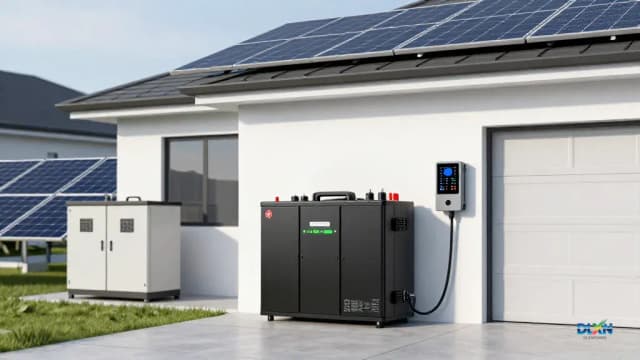
Complete Home Solar Energy Storage Kits: Market Trends Reshaping Residential Power
The complete home solar energy storage kit market is undergoing rapid transformation as hardware costs decline, policy incentives expand, and homeowners demand energy independence. This analysis examines current market dynamics, technology developments, and what these trends mean for residential solar adopters in 2024 and beyond.
Read more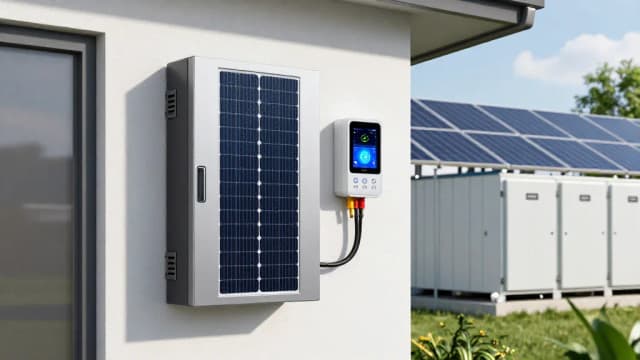
Global Solar Inverter and Home Storage Market: 2025 Trends Reshaping Residential Energy
The residential solar inverter and battery storage market is undergoing a structural transformation, driven by falling lithium-ion prices, new grid interconnec
Read more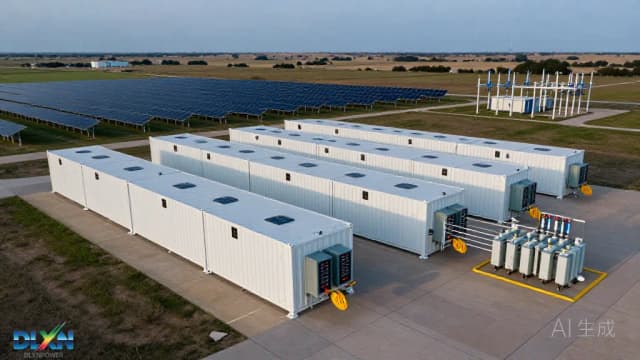
Lithium Battery Storage Market Trends Reshape Solar
The rechargeable lithium storage battery market has entered a new phase defined by steep pack-price declines, LFP chemistry dominance, gigawatt-scale grid deployments, policy-driven regional manufacturing, and tightening circularity rules. BloombergNEF's December 2024 survey put average pack prices at USD 115/kWh, down 20% year on year, while global battery storage additions reached record levels and tariffs began redrawing supply chains. For solar developers, the strategic question is no longer whether lithium storage is bankable, but how to specify chemistry, duration, safety compliance and augmentation schedules to capture lowest-cost energy over a 20-year asset life.
Read more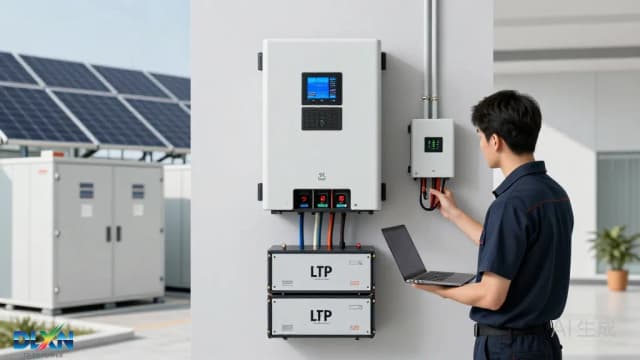
Hybrid Solar Inverter Market Trends: Growth to 2030
Hybrid solar inverters — single units that combine PV conversion, battery management and backup power — have become the fastest-growing category in the global inverter market, with analyst forecasts pointing to a 14–18% CAGR through 2030. This article examines the market size and growth drivers, storage attach-rate economics, regional dynamics across Europe, North America and Asia-Pacific, the technical migration from 48 V to high-voltage battery architectures, pricing and supply-chain pressure, and the standards and virtual power plant developments that will define the next five years.
Read more
Low Voltage Solar Inverter Market Trends in 2025
The low-voltage (LV) solar inverter segment — single- and three-phase units operating at 230/400 V AC and up to 1,500 V DC input — is being reshaped by three forces: a decisive shift from plain string inverters to hybrid, storage-ready designs; aggressive price erosion driven by silicon carbide adoption and Chinese manufacturing scale; and an expanding compliance burden from grid codes and cybersecurity rules. Global solar installations reached roughly 599 GW in 2024 according to BloombergNEF, and the IEA notes that distributed rooftop systems now account for a meaningful share of that growth. This article examines the technical, commercial and regulatory trends defining the LV inverter market through 2030.
Read more
The Rise of the All-in-One Residential Energy Storage System: Market Trends Reshaping Home Power
The residential energy storage market is undergoing a seismic shift toward all-in-one systems that integrate batteries, inverters, and energy management software into a single unit. This article examines the key market trends driving this evolution—from declining lithium-ion costs and rising electricity rates to the demand for backup power and smart home integration. We analyze current market data, technical specifications, and real-world deployments, while highlighting how modular, scalable solutions are becoming the new standard for homeowners seeking energy independence.
Read more
Large-Scale Commercial Energy Storage: Market Trends Reshaping the Grid in 2025
The large-scale commercial energy storage market is undergoing rapid transformation, driven by falling battery costs, evolving grid regulations, and the urgent need for renewable integration. This article examines key market data, technology shifts, and policy drivers shaping the sector, with insights for project developers and energy managers.
Read more
Commercial Solar Storage in 2025: Latest Tech Trends
Commercial and industrial (C&I) solar-plus-storage entered 2025 with larger LFP cells, higher-voltage DC architectures, sodium-ion pilots and AI-driven dispatch software, while average battery pack prices fell to roughly USD 115/kWh according to BloombergNEF. This deep dive covers the chemistry, hardware, software, safety standards and financing models shaping commercial projects this year, with data from the IEA, NREL, UL, IEEE and national regulators — and what procurement teams should specify right now.
Read more
Residential Energy Storage Technology Trends 2025
Residential energy storage entered 2025 as a mainstream grid asset rather than a niche backup product. LFP cells now dominate home batteries, silicon-carbide hybrid inverters push round-trip efficiency past 90%, high-voltage architectures simplify installation, and VPP-enabled controls let homeowners earn from capacity markets. This article examines the chemistry, power electronics, standards and economics driving the current generation of home storage systems, with concrete data on sizing, payback and regulatory shifts across the US, Europe and Australia.
Read more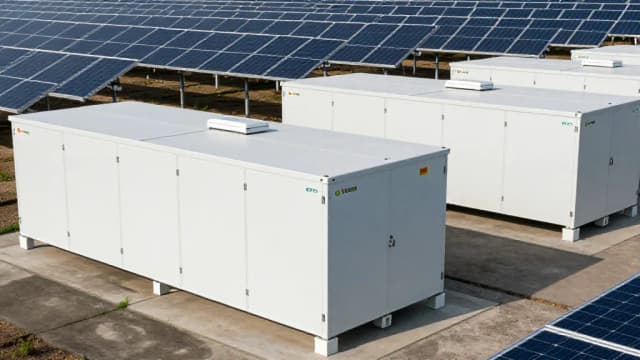
Grid-Tie Solar with Battery Backup: The Market Shift Reshaping Home Energy
The grid-tie solar system with battery backup market is undergoing a significant transformation in 2025, driven by falling battery costs, evolving net-metering policies, and rising demand for energy resilience. Once a niche add-on, battery storage is now becoming a standard component o
Read more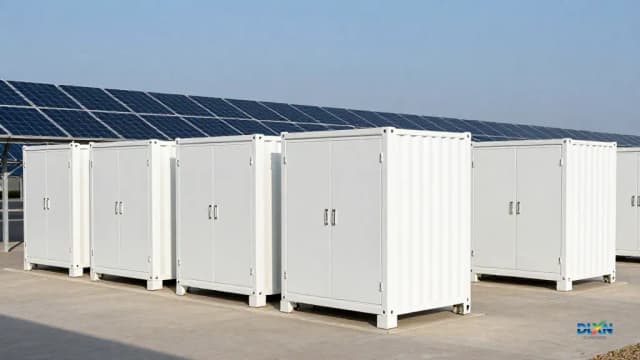
Lithium Storage Battery Market Trends: The Data Behind the Storage Boom
The rechargeable lithium battery market is undergoing its most significant expansion since the consumer electronics era. Driven by grid-scale deployments, elec
Read more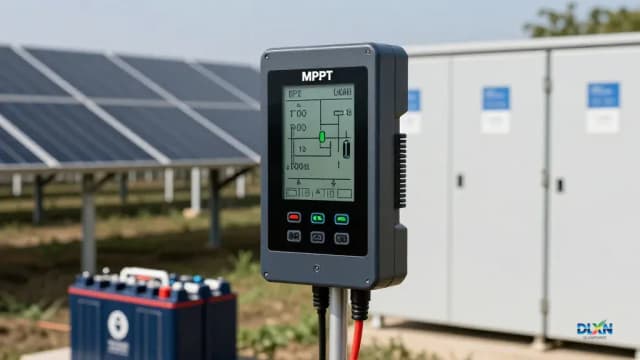
Solar Charge Controller Market Trends: Smart MPPT Technology and Storage Integration Reshape the Industry
The global solar charge controller market is experiencing significant transformation as MPPT technology advances, storage integration becomes standard, and smart connectivity reshapes system architecture. With the market projected to reach $3.8 billion by 2030, charge controllers are evolving from simple voltage regulators to intelligent energy management hubs. This article examines the key trends driving this growth, from efficiency gains in MPPT algorithms to the integration of lithium battery management systems, and provides data-driven analysis for solar professionals and system designers.
Read more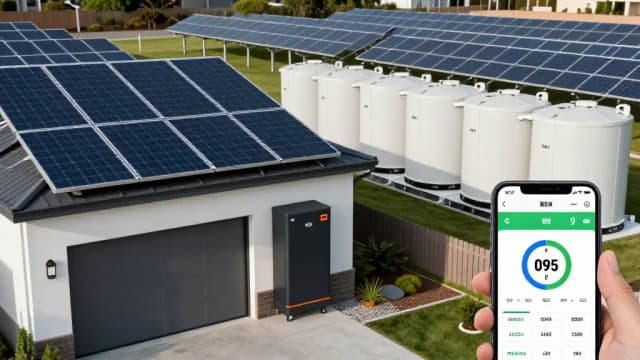
Global Residential Energy Storage Market Crosses 35 GWh: What It Means for Homeowners and Installers
The global residential energy storage market surpassed 35 GWh of annual installations in 2024, driven by falling lithium-ion battery prices, evolving net-metering policies, and rising electricity rates. This article examines the market data, the technology shifts enabling this growth, and the practi
Read moreFrequently asked questions
Why do quoted solar prices differ so much between suppliers?
Because the quote usually hides one of four things: cell grade (A versus B grade), warranty terms and who backs them, certification set (IEC plus the destination country grid code), and Incoterms. Two quotes at the same per-watt price can differ by 15% in landed cost once freight, duty and warranty reserve are added.
How are battery storage prices trending?
Cell-level prices fell sharply as LFP capacity outran demand, and complete cabinet prices followed with a lag because enclosure, BMS, fire suppression and certification are a growing share of the cost. Expect further declines at cell level and flatter pricing at system level, where engineering and compliance dominate.