
Solar Panels Guide: Monocrystalline Cells, TOPCon, Bifacial and Efficiency
Most solar panel comparisons are decided by three numbers that the datasheet buries: temperature coefficient, degradation per year, and the difference between STC and real-world output. This guide walks through the cell technologies now shipping in volume — mono PERC, TOPCon and bifacial — and explains where each one actually pays back: rooftop area constraints, high-ambient-temperature sites, tracker and carport mounting where rear-side gain is real, and small-format modules for street lights, cameras and off-grid loads. You will also find the mechanical details that decide a project: frame and glass thickness, junction box IP rating, connector type and the mounting clamp zones that keep the warranty valid.
In this topic (22)

Efficiency Records Fall as Solar Panel Kits Cross 25% Module Threshold
Recent cell efficiency records above 27% and module-level breakthroughs past 25% are redefining what solar panel kits can deliver for residential and commercial installers. NREL data confirms the average installed module efficiency rose from 19% to 21.5% between 2020 and 2024, driven by TOPCon and HJT cell architectures. This article examines the technical milestones, the cost curve implications, and what the efficiency race means for system designers, including the rise of high-power kits that reduce balance-of-system costs.
Read more
High-Efficiency Solar Panels 2025: The Technology Race Reshaping the Industry
The solar industry's efficiency frontier is moving faster than at any point in the last decade. Monocrystalline PERC modules, once the standard, are being displaced by TOPCon, HJT, and back-contact architectures that push commercial module efficiency past 24%. Meanwhile, perovskite-silicon tandems are transitioning from laboratory curiosities to pilot production lines. This article examines the technology shifts, the data behind them, and what they mean for project economics in 2025 and beyond.
Read more
Monocrystalline PERC Cells Hit 26.1% Efficiency: What the New Record Means for Real-World Solar Economics
Researchers at Germany's Fraunhofer ISE have achieved a 26.1% conversion efficiency for monocrystalline PERC solar cells, surpassing the previous record by 0.4 percentage points. This breakthrough, published in the journal Progress in Photovoltaics, has significant implications for levelized cost of electricity (LCOE) calculations. While the laboratory record is impressive, the real value lies in how manufacturers like DLXN Energy translate these gains into commercially viable modules. This article examines the technical innovations behind the record, the roadmap to mass production, and the economic impact of efficiency gains on residential and commercial installations.
Read more
Solar Cell Efficiency Records Fall Again: What the 2025 Gains Mean for Project Economics
The global solar industry has logged another year of record-breaking efficiency gains, with commercial modules now exceeding 25% conversion efficiency and perovskite-silicon tandems reaching 34.6% in laboratory settings. This article examines the latest verified data from NREL and the IEA, analyzes the cost-per-watt implications for project developers, and outlines how these breakthroughs translate into tangible returns for residential, commercial, and utility-scale installations. We also explore how DLXN Energy's manufacturing roadmap aligns with these efficiency milestones.
Read more
Grid-Tied Solar Efficiency Breakthrough: How Module-Level Power Electronics Are Redefining System Performance
Recent advances in module-level power electronics and cell architecture are pushing grid-tied solar system efficiency past 23% for commercially available panels, with real-world performance ratios climbing above 85% in distributed installations. This article examines the technical drivers behind these gains—from half-cut cell designs to MLPE optimization—and what they mean for system owners calculating payback periods. Drawing on data from NREL, IEA, and SEIA, we analyze how these improvements translate into measurable financial returns and why the integration of smart storage is becoming the natural next step for maximizing self-consumption.
Read more
BIPV Efficiency Breakthrough: How Building-Integrated Solar Is Closing the Gap on Conventional Panels
Building-integrated photovoltaics (BIPV) has long been the aesthetic compromise in solar—beautiful but inefficient. That narrative is shifting. Recent module-level innovations have pushed BIPV efficiency from a 12–14% range to over 20%, narrowing the gap with conventional rooftop panels to under 3 percentage points. This article examines the technical drivers behind this breakthrough—from perovskite-silicon tandem cells to advanced encapsulation—and what it means for architects, developers, and the broader energy transition.
Read more
Rooftop Solar Efficiency Breakthrough: 24%+ Modules
Rooftop photovoltaics has crossed a genuine performance threshold, with commercial module efficiencies now exceeding 23% and record silicon cells certified above 27%. This article examines the cell architectures — TOPCon, heterojunction and back-contact — driving those gains, the perovskite-silicon tandem modules now entering commercial supply, and the module-level, thermal and power-electronics improvements that convert laboratory records into kilowatt-hours on an actual roof. It also reviews certification requirements, degradation warranties and the market data that determine whether higher efficiency translates into shorter payback for building owners.
Read more
Photovoltaic Panel Market Trends Shaping Global Solar 2025
After a two-year collapse in module prices, the photovoltaic panel market is entering a consolidation phase defined by TOPCon dominance, annual installations above 450 GW, structural manufacturing overcapacity and a widening price gap between Chinese and Western supply chains. This analysis reviews the data points that matter for procurement through 2025 and 2026 — spot prices, cell architecture shifts, wafer formats, trade policy and bankability requirements — drawing on figures from the IEA, BloombergNEF, NREL and InfoLink Consulting, and explains what each trend means for developers, EPCs and installers specifying modules today.
Read more
Home Solar Efficiency Breakthrough: 2025 Gains
After two decades of incremental improvement, residential solar is entering a genuine step-change. Tandem perovskite-silicon cells have passed 34% in certified laboratory testing, mainstream TOPCon modules now exceed 23% at the module level, and balance-of-system advances — hybrid inverters, DC-coupled LFP storage and smarter controls — are pushing whole-home performance ratios toward 0.85. This article examines the technical drivers behind the breakthrough, the field data validating it, and the metrics homeowners and installers should demand before signing a contract.
Read more
Floating Solar Efficiency Breakthrough: How Hybrid Cooling and Bifacial Design Are Reshaping the Renewable
Floating solar photovoltaics (FPV) are emerging as one of the fastest-growing segments of the renewable energy sector, with global installed capacity surpassing 5 GW in 2024. Recent engineering breakthroughs in passive cooling systems, bifacial panel architecture, and high-density moor
Read more
Solar Panel Manufacturers Market Trends: 2025 Outlook
Global solar module manufacturing capacity now exceeds 1.1 TW per year against roughly 600 GW of annual demand, triggering the deepest price collapse and supplier shakeout in the industry's history. This analysis examines overcapacity, module pricing below $0.10/W, the TOPCon technology transition, industrial policy in the US, India and the EU, consolidation among manufacturers, and what the shifting supplier means for procurement, bankability and system design.
Read more
Solar Panel Manufacturers: Installation Guide for EPCs
Global solar PV additions approached 600 GW in 2024, and as module prices fell below $0.10/W, installation quality has become the single biggest lever on project returns. This guide synthesises manufacturer installation requirements — clamp zones and torque values, string voltage limits, rapid shutdown compliance, carport and roof mounting rules, battery pairing and commissioning tests — with reference to IEA, BloombergNEF, NREL, IEC and NEC criteria that EPCs must document to protect warranties and pass independent engineering review.
Read more
Solar Panel for Street Light: Sizing and Selection Guide
Sizing a solar panel for street light installations: the winter-case formula, module selection from 50W to 230W, tilt and shading practice, and controller pairing.
Read more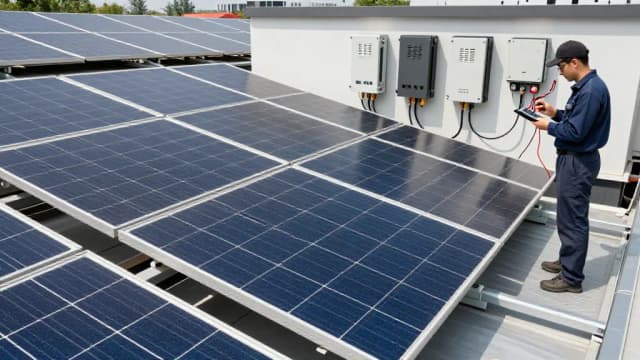
Polycrystalline Solar Panels Installation Guide: Engineering Best Practices for 2024
This guide provides a technical overview of polycrystalline solar panel installation, covering site assessment, mounting systems, electrical design, and performance optimization. Drawing on data from NREL, IRENA, and SEIA, it addresses the specific characteristics of polycrystalline modules—including temperature coefficients, degradation rates, and efficiency ranges—and outlines step-by-step installation procedures for residential and commercial applications. The article also discusses cost considerations, permitting requirements, and maintenance protocols, offering practical guidance for installers and system owners.
Read more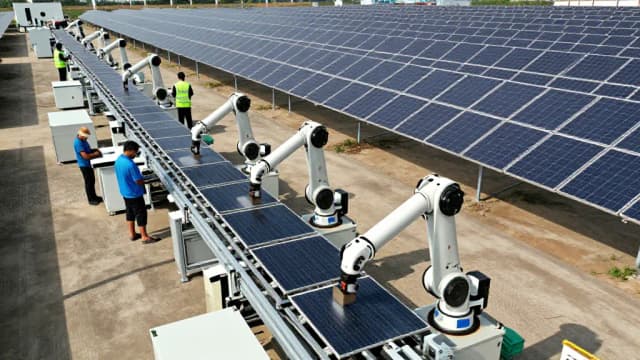
Polycrystalline Solar Panels: The Market Shift That Refuses to Follow the Script
While monocrystalline PERC technology dominates headlines, polycrystalline solar panels maintain a significant share of the global PV market, particularly in cost-sensitive regions. This article examines the data behind the persistent demand for polycrystalline modules, the manufacturing economics that keep them viable, and the technology upgrades extending their lifecycle. Market projections from BloombergNEF and the IEA suggest polycrystalline panels will retain a 15–20% market share through 2030, driven by utility-scale projects in emerging economies and repurposing in distributed applications.
Read more
Grid-Tied Solar 2025: SiC Inverters and AI Controls
Grid-tied solar in 2025 is defined less by module wattage than by intelligence at the point of interconnection. Silicon carbide inverters now hit 99% peak efficiency, TOPCon modules dominate global cell output, and DC-coupled LFP storage has become standard rather than optional in net-billing markets. This analysis examines the hardware, grid codes and economics shaping the latest generation of grid-tied systems, with data from the IEA, BloombergNEF, NREL, IEEE and national regulators.
Read more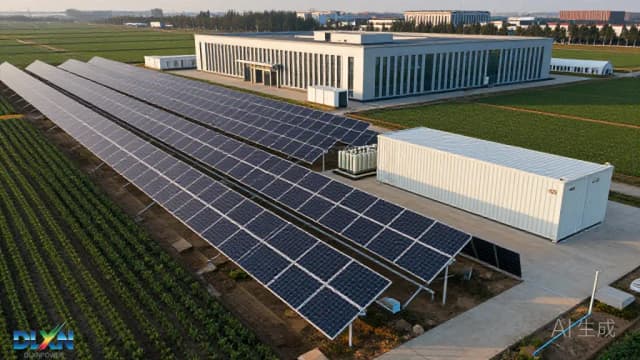
Carbon Neutral Market Trends Reshape Global Solar Investment
Corporate net-zero pledges, border carbon pricing and maturing storage economics are converging into a single investment signal, and solar PV is the primary beneficiary. According to the IEA, clean energy investment passed $2 trillion in 2024, with solar attracting more capital than any other generation technology. This article examines six structural trends shaping the carbon neutral market — from CBAM-driven procurement and 24/7 carbon-free energy contracting to battery price collapses, manufacturing traceability and the rise of distributed prosumer assets — with the data points and technical parameters that matter for developers, EPCs and asset owners.
Read more
Rooftop Solar Installation: A Technical Field Guide
Rooftop PV is now the fastest-growing segment of the global solar market, but a durable, code-compliant array depends on far more than bolting modules to rafters. This guide walks through the full engineering chain — structural load verification, mounting and waterproofing, string sizing and voltage-window calculations, inverter and storage architecture, commissioning per IEC 62446-1, and long-term performance economics — with current market data from the IEA, BloombergNEF and NREL, and the specific parameters installers must verify at each stage.
Read more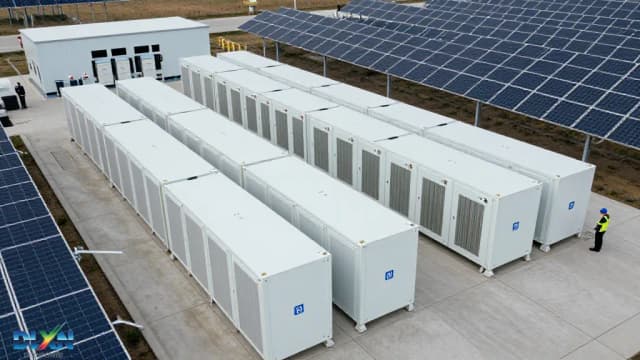
BESS Efficiency Breakthrough Reshapes Grid-Scale Energy Storage
A convergence of advanced lithium-iron-phosphate cell chemistry, silicon-carbide power electronics, and liquid-cooled thermal regulation has pushed commercial battery energy storage system round-trip efficiency past the 95 percent threshold for the first time. According to BloombergNEF and NREL analysis, this breakthrough cuts storage levelized cost by a further 18–22 percent, accelerates the business case for 4-hour and 8-hour duration assets, and strengthens the role of BESS as a dispatchable backbone for high-renewable grids. This article examines the enabling technologies, market implications, grid-validation results, and the roadmap toward even higher performance.
Read moreSolar Energy Fundamentals: A Technical Deep Dive into Photovoltaic Technology
This article provides a comprehensive technical overview of solar energy, from the physics of photovoltaic cells to system design and economics. It explores key components, performance metrics, and future trends, making complex concepts accessible to engineers and enthusiasts alike.
Read more
PV Inverter vs. Traditional Power Conversion: The Quiet Revolution in Solar Efficiency
As solar installations surge past 1,200 GW globally, the debate between modern PV inverters and traditional power conversion systems is reshaping how we think about energy yield, system reliability, and long-term ROI. This article breaks down the technical differences, real-world perfo
Read more
BIPV Installation Guide: Design, Wiring and Commissioning
Building-integrated photovoltaics (BIPV) turns roofs, facades and glazing into electricity-generating building materials, but it demands a different installation discipline than conventional racked PV — coordinated structural review, IEC 63092-compliant dual-certified products, multi-orientation string design and waterproofing details engineered to survive 25 years. This guide walks through the complete BIPV workflow, from feasibility and product selection through mounting, wiring, commissioning and cost recovery, with current market data, technical parameters and benchmarks from installed projects.
Read moreFrequently asked questions
Is TOPCon better than PERC?
TOPCon has a higher cell efficiency and a lower temperature coefficient, and it degrades more slowly, so it wins on kWh per square metre over a 25-year life. PERC remains cheaper per watt and is still the right choice where roof area is not the constraint and the budget is tight.
Do bifacial panels always produce more energy?
Only where the rear side sees light. On a white membrane roof or a tracker at 1.5 m height the rear-side gain can reach 8–15%; flush-mounted on a dark roof it is close to zero and you pay a premium for nothing.