
Solar Carports, Trackers and Sunflowers: Structure, Yield and Siting
A solar carport earns two incomes from one footprint: it generates power and it turns unused parking into shade, EV charging and a branded entrance. Trackers attack the same problem from the yield side, adding 15–35% annual generation by following the sun, at the cost of motors, controls and wind engineering. This hub collects the structural, electrical and commercial notes behind both families — span and clearance for vehicle access, wind and snow load, waterproofing details, BIPV versus framed modules, dual-axis versus single-axis tracking, and the sunflower-style pedestal units used for landscaping and demonstration sites.
In this topic (22)
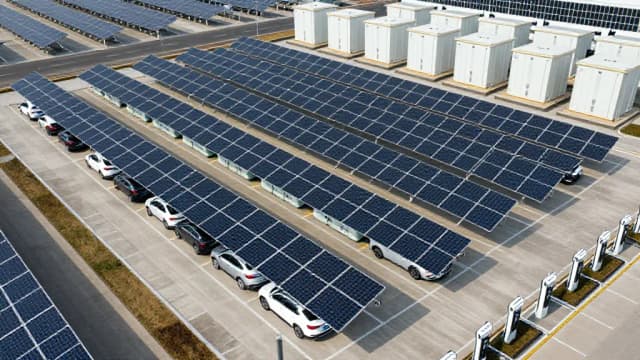
Solar Carports with EV Chargers and Storage: The Next Growth Frontier in Commercial Solar
The solar carport market, integrated with EV charging and battery storage, is experiencing explosive growth, driven by falling battery costs, the global EV adoption surge, and corporate net-zero mandates. Industry analysts project the global solar carport market to reach $6.8 billion b
Read more
BIPV Market Trends 2025: Growth, Costs and Codes
Building-integrated photovoltaics (BIPV) is shifting from an architectural curiosity to a regulated building product, driven by EU and US codes that effectively mandate on-site generation. Market analysts now value the global BIPV sector in the high tens of billions of dollars, with double-digit compound growth projected through 2033, yet BIPV still represents well under 2% of annual solar installations. This article examines the regulatory engines in Europe and North America, the persistent cost gap against conventional rack-mounted modules, the maturation of the IEC 63092 product standard, and the emerging role of module-level power electronics and battery storage in making BIPV economics work on real buildings.
Read moreSolar Energy Fundamentals: A Technical Deep Dive into Photovoltaic Technology
This article provides a comprehensive technical overview of solar energy, from the physics of photovoltaic cells to system design and economics. It explores key components, performance metrics, and future trends, making complex concepts accessible to engineers and enthusiasts alike.
Read more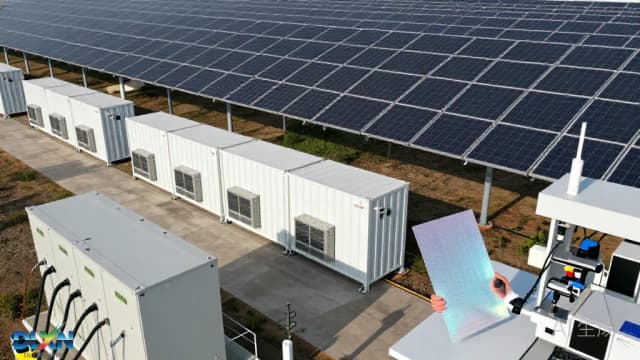
Solar Policy and Technology 2025: What Changed
2025 marks a structural break for the solar industry: policy has shifted from blanket subsidy toward market discipline, domestic-content rules and grid obligation, while the technology stack has consolidated around TOPCon cells, 700 W+ bifacial modules, silicon-carbide inverters and 5 MWh-class LFP storage blocks. China's Document No. 136 replaced fixed tariffs with market pricing, the US reconciliation law tightened credit deadlines and foreign-entity-of-concern rules, the EU's Net-Zero Industry Act added resilience pre-qualification to auctions, and perovskite-silicon tandems moved from lab records toward pilot production. This article examines the policy levers, technical parameters and market figures that will define project economics through 2026.
Read more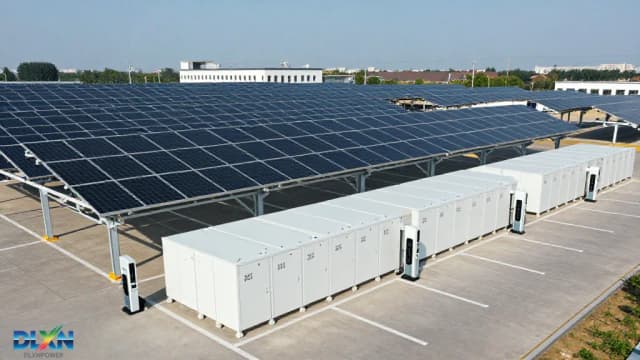
Solar Carports with Battery Storage: The 2026 Technology Leap
Solar carports with battery storage in 2026: bifacial modules, LFP cabinets, AI energy management and V2G — how the economics work and which systems fit.
Read more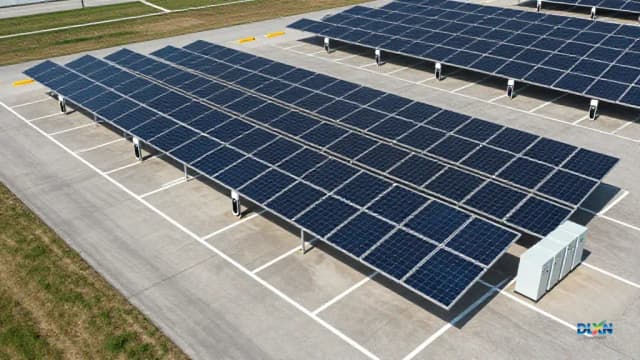
Commercial PV Carports with EV Charging and BESS: A Technical Installation Guide for 2025
Commercial solar carports paired with EV charging stations and battery energy storage systems (BESS) are becoming a standard infrastructure investment for businesses, fleet operators, and commercial property owners. This guide covers the technical specifications, financial considerations, and installation best practices for integrating PV carports with EV charging and BESS, drawing on data from NREL, BNEF, and SEIA.
Read more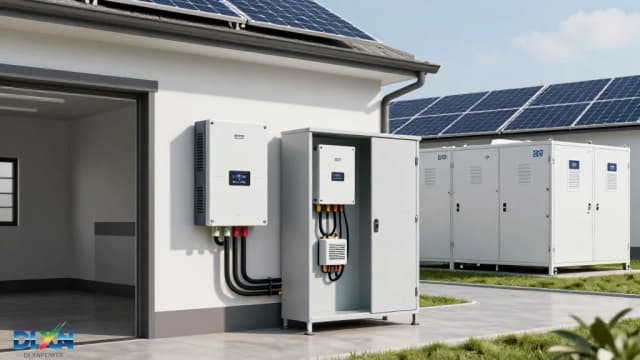
All-in-One Solar Power and Storage vs Traditional Systems
The choice between an all-in-one solar power and storage system and a traditional component-based architecture is no longer a matter of preference — it is an engineering and financial decision that shapes round-trip efficiency, installation labor, warranty exposure and long-term upgrade paths. This article compares both approaches using verified industry data from BloombergNEF, NREL, the IEA and national regulators, examining conversion losses, balance-of-system costs, certification requirements such as UL 9540 and NFPA 855, and real-world deployment patterns in residential, commercial and off-grid applications. It closes with a practical decision framework for specifiers, EPCs and asset owners evaluating hybrid inverters, modular lithium batteries and integrated energy management platforms.
Read more
BIPV Market Trends: Growth, Policy and Technology
Building-integrated photovoltaics is shifting from an architectural curiosity to a regulated building product, driven by the EU's recast Energy Performance of Buildings Directive, France's APER law, Chinese building codes and US tax incentives. Global BIPV revenue sits in the US$15–25 billion range depending on definitions and is forecast to grow at 14–20% annually to 2030, even though the segment remains under 2% of global PV installations. This article examines market sizing, policy drivers, IEC 63092 and EN 50583 certification, the real economics of cost per square metre versus cost per watt, the solar shingle battleground, and reference projects that show where BIPV works.
Read more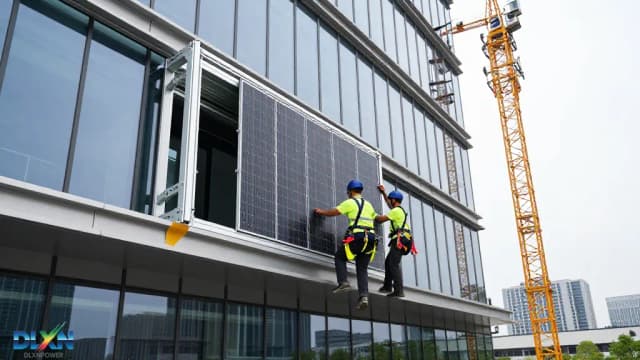
BIPV Installation Guide: Design, Wiring and Commissioning
Building-integrated photovoltaics (BIPV) turns roofs, facades and glazing into electricity-generating building materials, but it demands a different installation discipline than conventional racked PV — coordinated structural review, IEC 63092-compliant dual-certified products, multi-orientation string design and waterproofing details engineered to survive 25 years. This guide walks through the complete BIPV workflow, from feasibility and product selection through mounting, wiring, commissioning and cost recovery, with current market data, technical parameters and benchmarks from installed projects.
Read more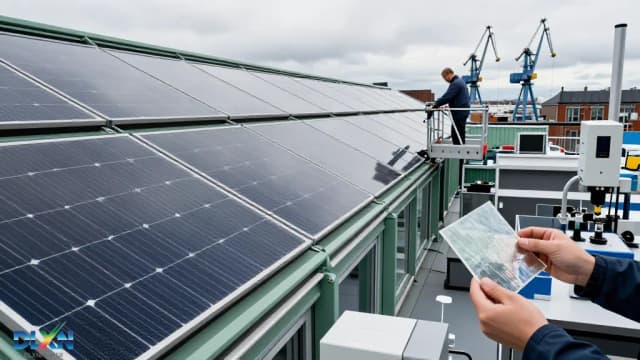
BIPV in 2025: Tandem Cells, Colored Glass, New Codes
Building-integrated photovoltaics (BIPV) moved from architectural curiosity to a regulated, cost-competitive building product in 2025. This article reviews the state of the technology — perovskite-silicon tandem modules entering facade products, colored and semi-transparent glass with far lower efficiency penalties, module-level power electronics, building-scale storage, and the EU and US code changes that now effectively mandate solar-active envelopes. It closes with concrete procurement guidance and documented project data.
Read more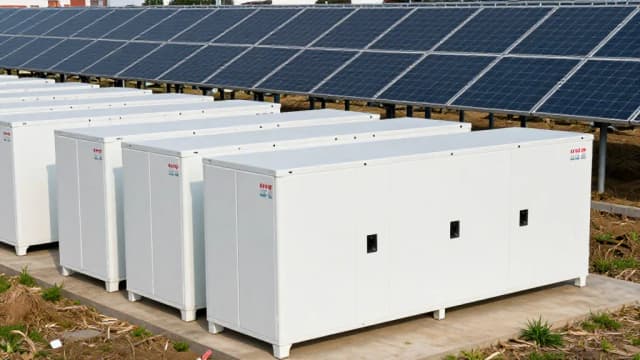
Off-Grid Solar Lithium Battery Systems: The 2025 Technology Leap
The off-grid solar industry is undergoing a shift in 2025, driven by breakthroughs in lithium iron phosphate (LFP) chemistry, smart battery management systems (BMS), and hybrid inverter integration. These advances are slashing costs, extending lifespan, and enabling true
Read more
Polycrystalline Solar Panels Installation Guide: Engineering Best Practices for 2024
This guide provides a technical overview of polycrystalline solar panel installation, covering site assessment, mounting systems, electrical design, and performance optimization. Drawing on data from NREL, IRENA, and SEIA, it addresses the specific characteristics of polycrystalline modules—including temperature coefficients, degradation rates, and efficiency ranges—and outlines step-by-step installation procedures for residential and commercial applications. The article also discusses cost considerations, permitting requirements, and maintenance protocols, offering practical guidance for installers and system owners.
Read more
BIPV Efficiency Breakthrough: How Building-Integrated Solar Is Closing the Gap on Conventional Panels
Building-integrated photovoltaics (BIPV) has long been the aesthetic compromise in solar—beautiful but inefficient. That narrative is shifting. Recent module-level innovations have pushed BIPV efficiency from a 12–14% range to over 20%, narrowing the gap with conventional rooftop panels to under 3 percentage points. This article examines the technical drivers behind this breakthrough—from perovskite-silicon tandem cells to advanced encapsulation—and what it means for architects, developers, and the broader energy transition.
Read more
Carbon Neutral Market Trends Reshape Global Solar Investment
Corporate net-zero pledges, border carbon pricing and maturing storage economics are converging into a single investment signal, and solar PV is the primary beneficiary. According to the IEA, clean energy investment passed $2 trillion in 2024, with solar attracting more capital than any other generation technology. This article examines six structural trends shaping the carbon neutral market — from CBAM-driven procurement and 24/7 carbon-free energy contracting to battery price collapses, manufacturing traceability and the rise of distributed prosumer assets — with the data points and technical parameters that matter for developers, EPCs and asset owners.
Read more
Photovoltaic Panel Market Trends Shaping Global Solar 2025
After a two-year collapse in module prices, the photovoltaic panel market is entering a consolidation phase defined by TOPCon dominance, annual installations above 450 GW, structural manufacturing overcapacity and a widening price gap between Chinese and Western supply chains. This analysis reviews the data points that matter for procurement through 2025 and 2026 — spot prices, cell architecture shifts, wafer formats, trade policy and bankability requirements — drawing on figures from the IEA, BloombergNEF, NREL and InfoLink Consulting, and explains what each trend means for developers, EPCs and installers specifying modules today.
Read more
Lithium Battery Installation Guide: Safe Home Storage Steps
Lithium battery installation has shifted from a niche electrical specialty to a mainstream part of residential and commercial solar work, driven by falling cell prices and record storage deployment. This guide walks through the full process — site assessment and sizing, chemistry selection, mounting and fire-code clearances, DC wiring and torque specifications, inverter coupling, commissioning settings, and long-term monitoring — with the specific data points, standards, and field practices that separate a compliant installation from a callback.
Read more
Utility-Scale Solar: Land Requirements Explained
Utility-scale solar farms typically require 5 to 7 acres of land per megawatt of AC capacity — but that planning shortcut conceals a complex engineering trade-off. This article unpacks the ground coverage ratio, tracker geometry, DC/AC inverter loading and co-located battery storage that determine a project's true footprint, drawing on NREL, IEA and BloombergNEF data to help developers, landowners and investors evaluate land economics with precision.
Read more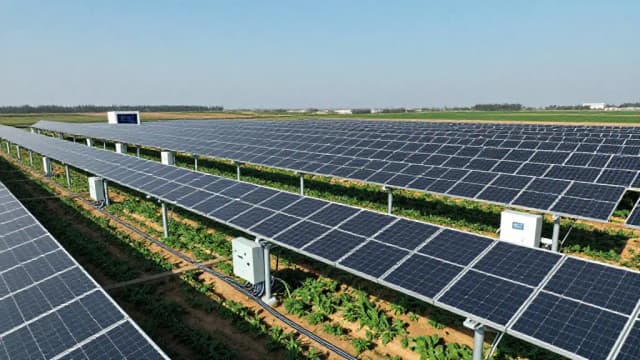
PV Inverter vs. Traditional Power Conversion: The Quiet Revolution in Solar Efficiency
As solar installations surge past 1,200 GW globally, the debate between modern PV inverters and traditional power conversion systems is reshaping how we think about energy yield, system reliability, and long-term ROI. This article breaks down the technical differences, real-world perfo
Read more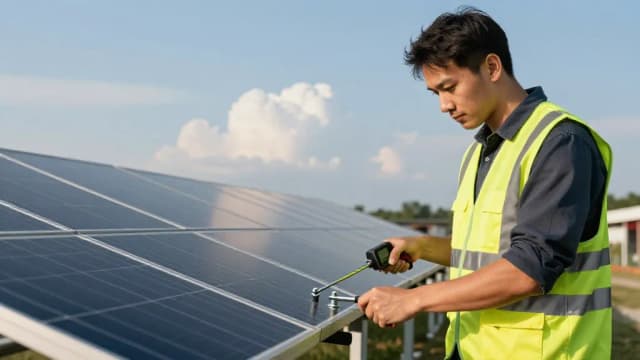
August Pre-Typhoon Checklist: Structural and Drainage Audits for Solar PV Arrays
As the Western Pacific typhoon season peaks from August through October, solar asset owners face a critical maintenance window. This article provides a data-driven inspection checklist for PV mounting structures and drainage systems, drawing on failure analysis from the National Renewable Energy Lab
Read more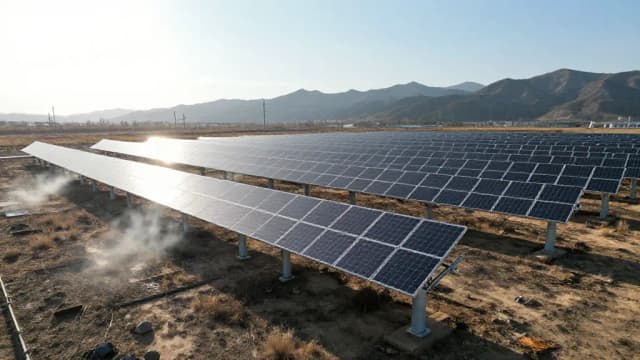
August Heat Cuts Solar Output? Three Cooling Steps Lift Generation 15%
High panel temperatures in August can slash PV output by 10–25% due to the negative temperature coefficient of silicon cells. This article details three field-proven cooling strategies—passive airflow design, active water misting, and optimized mounting geometry—that together restore up to 15% of lo
Read more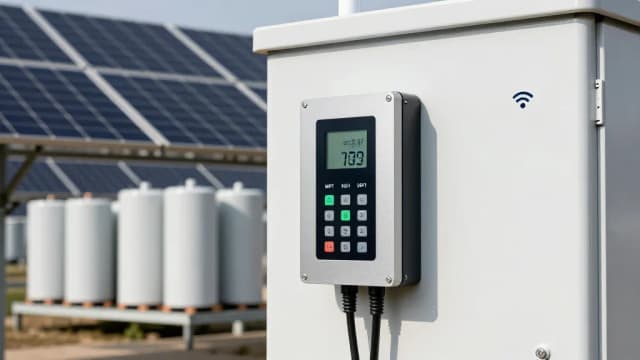
Solar Charge Controller Market Shifts Toward Smart, High-Voltage Architectures
The global solar charge controller market is undergoing a structural transformation driven by falling lithium-ion battery prices, the proliferation of high-voltage PV modules, and the rapid expansion of off-grid and C&I storage applications. According to BloombergNEF, lithium-ion battery pack prices fell to $115/kWh in 2024, making DC-coupled storage architectures increasingly cost-competitive. This article examines the technical and market forces reshaping charge controller design—from MPPT algorithm sophistication to bidirectional converter integration—and what they mean for system integrators and EPC firms.
Read moreBIPV市场趋势:2025年规模化拐点与成本拆解
BIPV(光伏建筑一体化)正从示范样板走向批量交付。中国光伏行业协会数据显示,2024年国内光伏新增并网277.57GW,其中BIPV口径不足3%,但增速明显快于行业均值;欧盟EPBD修订版把太阳能安装写进法律时间表,国内"新建厂房屋顶光伏覆盖率力争50%"的目标同步落地。本文拆解BIPV的成本结构、技术路线与光储直柔配套,并给出2025—2027年的选型与投资建议。
Read moreFrequently asked questions
How much extra energy does a solar tracker produce?
Single-axis trackers typically add 15–25% annual yield over a fixed tilt at the same location, and dual-axis units 25–40% in high-direct-normal-irradiance sites. The gain shrinks in cloudy climates, so a tracker business case should use on-site DNI data rather than the manufacturer headline number.
What wind load must a solar carport be designed for?
Design to the local code, not to a generic figure: most carports are engineered for 120–160 km/h basic wind speed with the modules in the stowed position. Ask for the structural calculation with the actual module layout and the foundation type, because uplift on a canopy is far higher than on a ground mount.