
A C&I ESS is the piece of equipment that decides whether a commercial solar project pays for itself in four years or fourteen. This guide covers what the term actually means, how vendors, distributors and exporters differ, how the system is architected and sized, where the money goes, and which certificates a project will be asked for at commissioning.
What Is a C&I ESS?
C&I ESS stands for commercial and industrial energy storage system: a battery system sized and engineered for a business, a campus, or a utility-scale distributed site rather than a single dwelling. In practice the category starts around 30 kWh and runs into the multi-megawatt range, and it is built from the same LFP cell chemistry as a home battery — the difference is in the engineering around the cells: thermal management at cabinet scale, three-tier safety protection, grid-following and grid-forming inverters, and a control layer that can be dispatched against a tariff schedule.
The commercial case for a C&I ESS rests on four value streams, and most projects stack two or three of them. Demand-charge management shaves the monthly peak that sets a large part of the utility bill. Time-of-use arbitrage charges when energy is cheap and discharges into the expensive window. Solar self-consumption stores midday generation that would otherwise be exported at a low or zero rate. Resilience keeps critical loads running through an outage, which for cold storage, data rooms, water treatment and manufacturing is often the justification on its own.
What separates a serious C&I ESS from a container full of cells is the balance of plant. A commercial system needs a battery management system that reports at cell level, a fire detection and suppression strategy that satisfies the local authority having jurisdiction, HVAC or forced-air cooling that holds cell temperature spread inside a few degrees, and an energy management system (EMS) that can be scheduled, remotely monitored, and integrated with a building management system. Those four subsystems are where most of the engineering cost sits — and where most of the failures in cheap systems originate.
C&I ESS Vendor vs Distributor vs Exporter
The three words are used interchangeably in search results and almost never interchangeably in a contract. Understanding which one you are talking to determines who is accountable when a cabinet underperforms in year three.
A C&I ESS vendor engineers the system: it selects the cell and module, sizes the inverter against your load profile, specifies the thermal and fire strategy, issues the single-line diagram, and warrants capacity retention. When you buy from a vendor you are buying design responsibility. Ask for the sizing calculation and the warranty document before the price sheet.
A C&I ESS distributor holds inventory and resells it, usually with a territory agreement and a price list. Distributors are the right channel when you are an installer who already has design capability and needs stock, lead time certainty and local service. They are the wrong channel when you need someone to tell you whether a 200 kWh cabinet or a 100 kWh cabinet is the correct specification for your site — that question belongs to a vendor or an independent engineer.
A C&I ESS exporter owns the cross-border layer: export packing, dangerous-goods documentation for lithium cells, certificates of origin, freight and customs, and the compliance file the destination market expects. For an overseas buyer, the practical question is whether the exporter is also the manufacturer. Buying direct from an exporter who builds the product removes one margin layer and one translation layer between your site engineer and the people who designed the cabinet.
Most credible C&I battery energy storage system companies play more than one role. The useful filter is not the label but the answers: who signs the capacity warranty, who supplies spare modules in year five, and who provides the commissioning report your utility will accept. If those three answers point to the same organisation, the channel question is settled.
C&I Battery Storage Solution: System Architecture and Sizing
A complete C&I battery storage solution has five layers. The cell and module layer sets the cycle life and safety baseline. The rack and cabinet layer adds the BMS, contactors, fusing, and thermal hardware. The power conversion layer — a bidirectional PCS or a hybrid inverter — sets the C-rate and the grid interface. The transformer and switchgear layerconnects to the site distribution board. The control layer is the EMS that decides, hour by hour, whether to charge, discharge, or hold.
Sizing runs in the opposite direction from the equipment list. Start with 12 months of interval data, not with a target kWh figure. Identify the 15-minute peaks that set the demand charge — that peak sets the power rating in kW. Identify the load between late afternoon and early morning that you want to serve from the battery — that energy sets the capacity in kWh. Only then choose a cabinet that matches both, remembering that a 2-hour system (0.5C) is the commercial default, and that a 4-hour system costs more per kW but less per kWh.
Two sizing rules avoid most expensive mistakes. First, never size to 100% depth of discharge: design around 90% usable energy and leave headroom for degradation, because a system sized exactly to the load is undersized by year five. Second, account for round-trip efficiency honestly — 88–92% for a modern LFP cabinet plus PCS — and for auxiliary consumption from cooling, which on a hot site can take another one to three percent.
| Configuration | Power / energy | Typical application | Where DLXN fits |
|---|---|---|---|
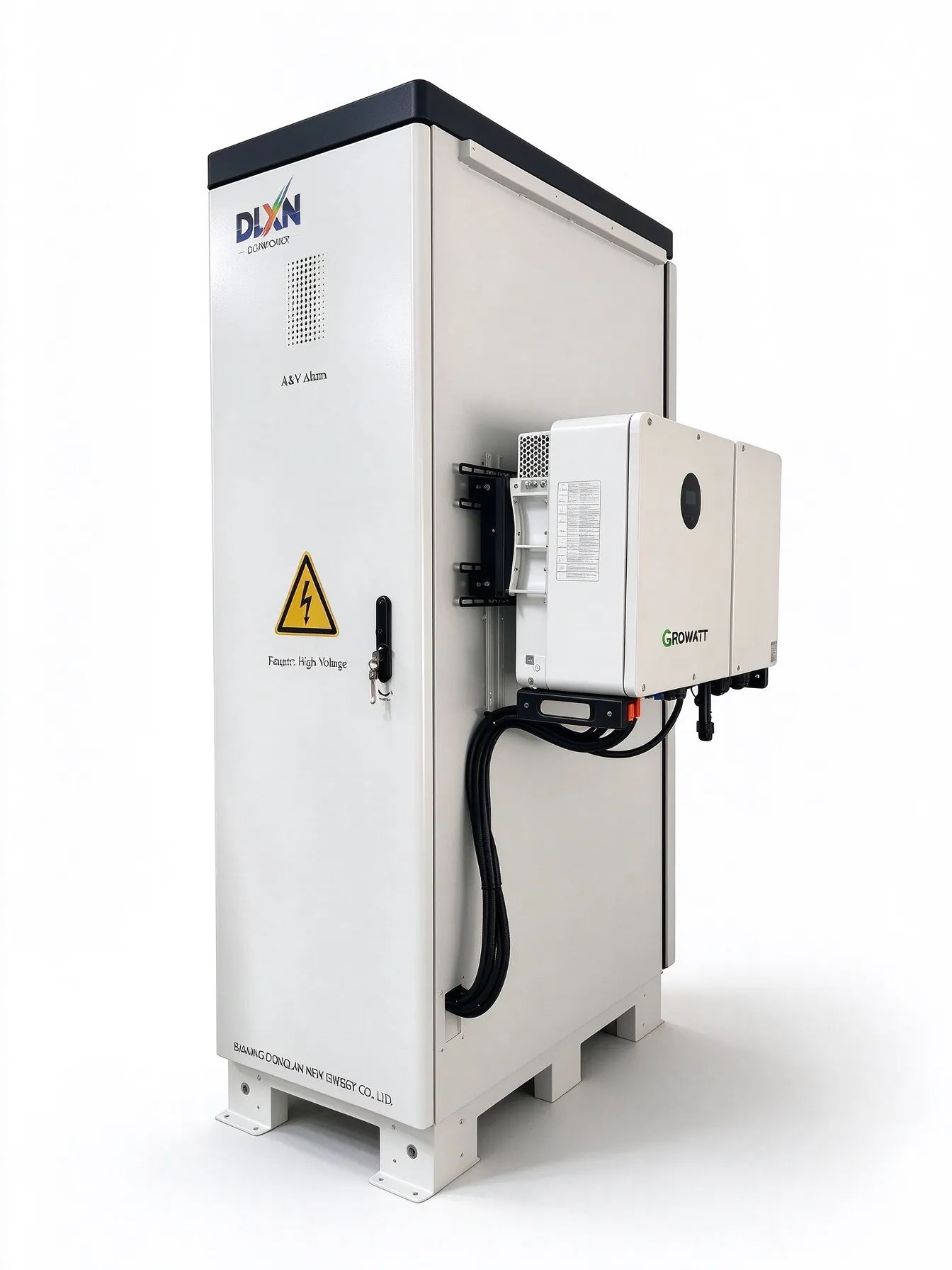
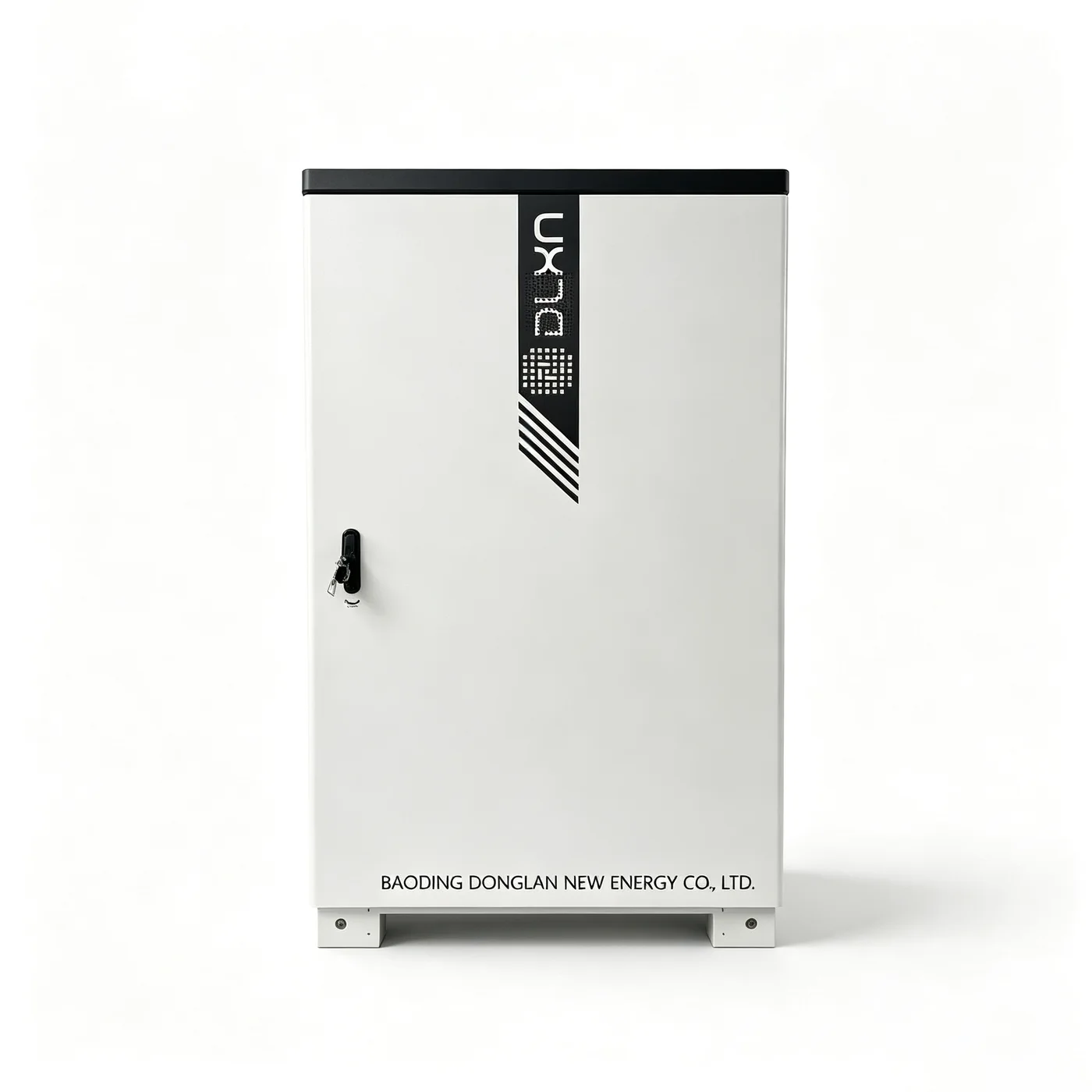
| Single outdoor cabinet | 50–125 kW / 100–120 kWh | Retail, clinics, small industrial sites, demand charge shaving | GC100/120 outdoor battery cabinet |
| Parallel cabinet bank | 250–500 kW / 500 kWh–1 MWh | Factories, cold storage, PV self-consumption, EV hub buffering | Containerised C&I ESS range |
| Containerised system | 0.5–5 MW / 1–20 MWh | Utility-scale distributed storage, microgrids, IPP projects | Engineered to order |
Cost and ROI Drivers for C&I Battery Energy Storage Systems
Commercial storage is priced per kWh of energy and per kW of power, and the two numbers move independently. As an order-of-magnitude reference for budgeting in 2026, a turnkey 2-hour C&I system typically lands in the range of roughly $300–$500 per kWh installed, with the DC cabinet accounting for the largest share, the PCS and transformer for the next, and EPC, commissioning and grid fees for the remainder. Longer-duration systems cost less per kWh because the power conversion equipment is amortised over more energy.
On the revenue side, four drivers decide the payback. Demand charges above roughly $15 per kW make peak shaving the dominant value stream and shorten payback dramatically. Tariff spread between peak and off-peak windows sets arbitrage value; a spread under about $0.10 per kWh rarely justifies storage on its own. Export compensation matters where surplus PV is paid at avoided cost rather than retail rate — self-consumption then beats export. Incentives complete the picture: the 30% federal ITC in the United States applies to standalone storage, and accelerated depreciation under MACRS changes the after-tax return for commercial owners more than most equipment choices do.
Two costs are routinely underestimated. Interconnection and permitting can add months and real money on constrained feeders, and should be scoped before equipment is ordered. Degradation and augmentation should be modelled from the warranty curve, not from the nameplate: a system that delivers 100% of rated energy in year one and 75% in year twelve needs its business case built on the average, not the first year.
Certifications and Grid Codes
Certificates are where a commercial storage purchase differs most from a residential one. The exact set depends on the destination market, and no single list covers every country — but the following are the ones project engineers ask for most often, and they are worth confirming in writing at quotation stage rather than at commissioning.
- Cell and module safety — IEC 62619 for stationary battery systems; UN 38.3 for transport of the lithium cells.
- System-level safety (US projects) — a UL 9540 system listing with UL 9540A cell-level thermal runaway data is what US authorities ask for. Our cabinets ship with IEC 62619 and UN38.3 documentation; where a project needs UL 9540, we confirm the route and test evidence with you at quotation stage rather than assume it.
- Installation code — NFPA 855 in the United States, which governs separation distances, fire suppression, and maximum stored energy per fire area.
- Interconnection — IEEE 1547 in the United States, G99 in the United Kingdom, VDE-AR-N 4105 or 4110 in Germany, CEI 0-21 in Italy, AS/NZS 4777.2 in Australia. Each defines voltage and frequency ride-through, anti-islanding, and reactive power behaviour.
- Quality and environment — ISO 9001 for manufacturing, IEC 62933 for grid-integrated electrical energy storage systems, and IEC 62477 or IEC 62109 for the power conversion equipment.
On the DLXN outdoor cabinet range, the safety file is built around IEC 62619 cell and module compliance, with gas and aerosol fire suppression integrated at cabinet level and fan-based forced-air cooling — a 1.5 kW HVAC unit on the 100/120 kWh GC frame — keeping cell temperatures supervised by the BMS. For a specific project, confirm the certificate list, the issuing laboratory and the report numbers against your utility's interconnection requirements before the equipment ships — grid operators increasingly reject otherwise-compliant systems on documentation alone.
Choosing a C&I ESS Vendor: Five Questions
- Which cells, and at what grade? Tier-1 automotive-grade LFP cells with a named manufacturer and a documented cycle-life test at 80% depth of discharge.
- How is heat managed? Ask which cooling method the cabinet uses — a 1.5 kW HVAC unit, forced-air fans, or another arrangement — and whether the supplier publishes a temperature-uniformity figure and a derating curve for summer ambient.
- What happens in a thermal event? Cell-level monitoring, module-level isolation, and cabinet-level suppression, with the detection and trigger logic documented.
- Who signs the performance warranty? Capacity retention, round-trip efficiency, and availability should all have numbers attached and a named counterparty.
- What does commissioning include? Capacity test, insulation and grounding checks, EMS point-to-point verification, and a report formatted for the utility.
If you are evaluating a commercial storage project, the fastest way to a real number is to send twelve months of interval data and a single-line diagram through the contact page. Our engineering team returns a sized configuration, a bill of materials, and the certificate list for your destination market — or tells you the project does not stack up, which is a useful answer too.
Frequently Asked Questions
- What does C&I ESS stand for?
- C&I ESS stands for commercial and industrial energy storage system. It is a battery system sized for a business rather than a single home — typically 30 kWh to several MWh — used to cut demand charges, shift solar generation to peak hours, provide backup power, and support EV charging loads.
- How do I choose a C&I ESS vendor?
- Ask for four things before signing: the cell supplier and grade, the thermal management method, the certificates that ship with the units, and a sizing calculation built on 12 months of your interval meter data. A C&I ESS vendor that engineers the system from your load profile will also tell you when a smaller battery is the better commercial decision.
- What is the difference between a C&I ESS vendor, distributor and exporter?
- A vendor engineers and warrants the system and stands behind the performance; a distributor holds stock and resells, usually without design responsibility; an exporter handles cross-border logistics, documentation and compliance for the shipment. Some suppliers, including DLXN, act in all three roles for overseas projects.
- How long does a C&I battery storage solution last?
- With LFP cells rated for 6,000+ cycles at 80% depth of discharge, a system cycling once per day is designed for roughly 15 years of operation, with capacity typically guaranteed to 70–80% of nameplate at end of warranty. Cycle life depends heavily on temperature control, so the cooling method and the C-rates the system runs at matter more than the headline cycle count.
- Can a C&I ESS be added to an existing solar array?
- Yes. Most commercial retrofits are AC-coupled: the battery system connects on the AC side of the existing PV inverter, which avoids replacing the array-side equipment. DC-coupled designs are more efficient when the PV and storage are installed together, because one hybrid inverter serves both.