Volume Growth With Revenue Compression
The inverter market is expanding in watts and contracting in dollars per watt. Wood Mackenzie's shipment tracking put global inverter and MLPE volumes at roughly 326 GWac in 2022, up around 48% year-on-year, and volumes have continued to track above global PV installations as developers oversize DC arrays and replace aging fleets. IEA PVPS recorded about 407 GW of new PV capacity in 2023, with the IEA estimating a further step-up in 2024 — meaning inverter demand has effectively doubled in three years.
The revenue picture is very different. According to BloombergNEF, average inverter selling prices have fallen faster than module prices in several segments, with utility-scale string inverter pricing in China compressing toward the $0.02–0.03/W range in 2024 while European and North American delivered prices held nearer $0.04–0.06/W. The result is a market where shipment growth of 20–40% can coexist with flat or declining industry revenue.
That squeeze is driving consolidation. SolarEdge reported steep revenue declines through 2024, SMA initiated restructuring programs in Germany, and Chinese vendors — led by Huawei and Sungrow, followed by Sineng, TBEA and Growatt — now account for the majority of global shipments. Procurement teams that once shortlisted five brands are increasingly evaluating two or three, with bankability, service depth and spare-parts logistics mattering as much as headline efficiency. Our [inverter technology overview](/tech/inverters) covers the qualification criteria that matter most in this environment.
Hybrid and Storage-Ready Inverters Own the Residential Segment
In residential and small commercial markets, the hybrid inverter has moved from niche product to default specification. In Germany, industry association BSW-Solar reports that more than 80% of new residential PV installations are paired with a battery, and hybrid units now represent well over half of European residential inverter shipments. Similar dynamics are visible in Italy, Austria, Switzerland and parts of Australia, where backup capability has become a consumer expectation rather than a premium add-on.
Technically, the DC-coupled hybrid architecture trades a small efficiency penalty — typically 2–4% round-trip versus an AC-coupled pair — for fewer conversion stages, simpler permitting and lower installed cost. Modern units offer backup transfer times under 20 ms, three-phase backup, generator inputs, and native integration with EV charging and heat pumps. Peak efficiencies of 97.5–98.5% are now standard, with European Efficiency ratings above 97% common across the 5–15 kW class.
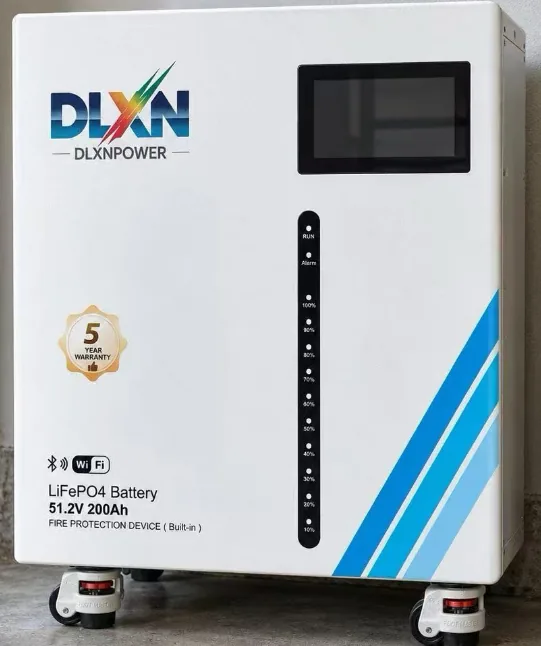
The commercial logic extends beyond hardware margin. Vendors that bundle inverters with batteries capture more value per installation and create stickier service relationships, which is why the residential segment is converging on integrated energy platforms rather than standalone boxes. For installers specifying these systems, the pairing of a hybrid inverter with a properly sized [lithium battery](/products/lithium-battery) and clear backup-load mapping is now the core design decision. Demand normalization after the 2023 European boom — accelerated by the Netherlands' net-metering phase-out and the wind-down of Italy's Superbonus — has made differentiation through features, warranty terms and firmware capability essential.
Grid-Forming Becomes a Procurement Requirement
The most consequential technical shift in the utility segment is the move from grid-following to grid-forming inverters. IEEE 2800-2022 established a North American framework for inverter-based resource interconnection, and system operators have moved faster than the standard. AEMO in Australia, National Grid ESO in Great Britain through its grid-forming pathfinder projects, ERCOT in Texas with expanded ride-through obligations, and Spain's P.O. 12.2 have all introduced requirements that conventional current-source inverters cannot satisfy without augmentation.
Grid-forming units must behave as voltage sources: supplying synthetic inertia, riding through very low short-circuit ratios, and delivering fast frequency response within 100 ms. That demands overcurrent capability of roughly 1.5–2× nominal, internal energy buffers or DC-side storage, and control architectures running advanced virtual synchronous machine models. According to NREL research, systems with high inverter-based penetration require these capabilities to avoid instability as synchronous generation retires.
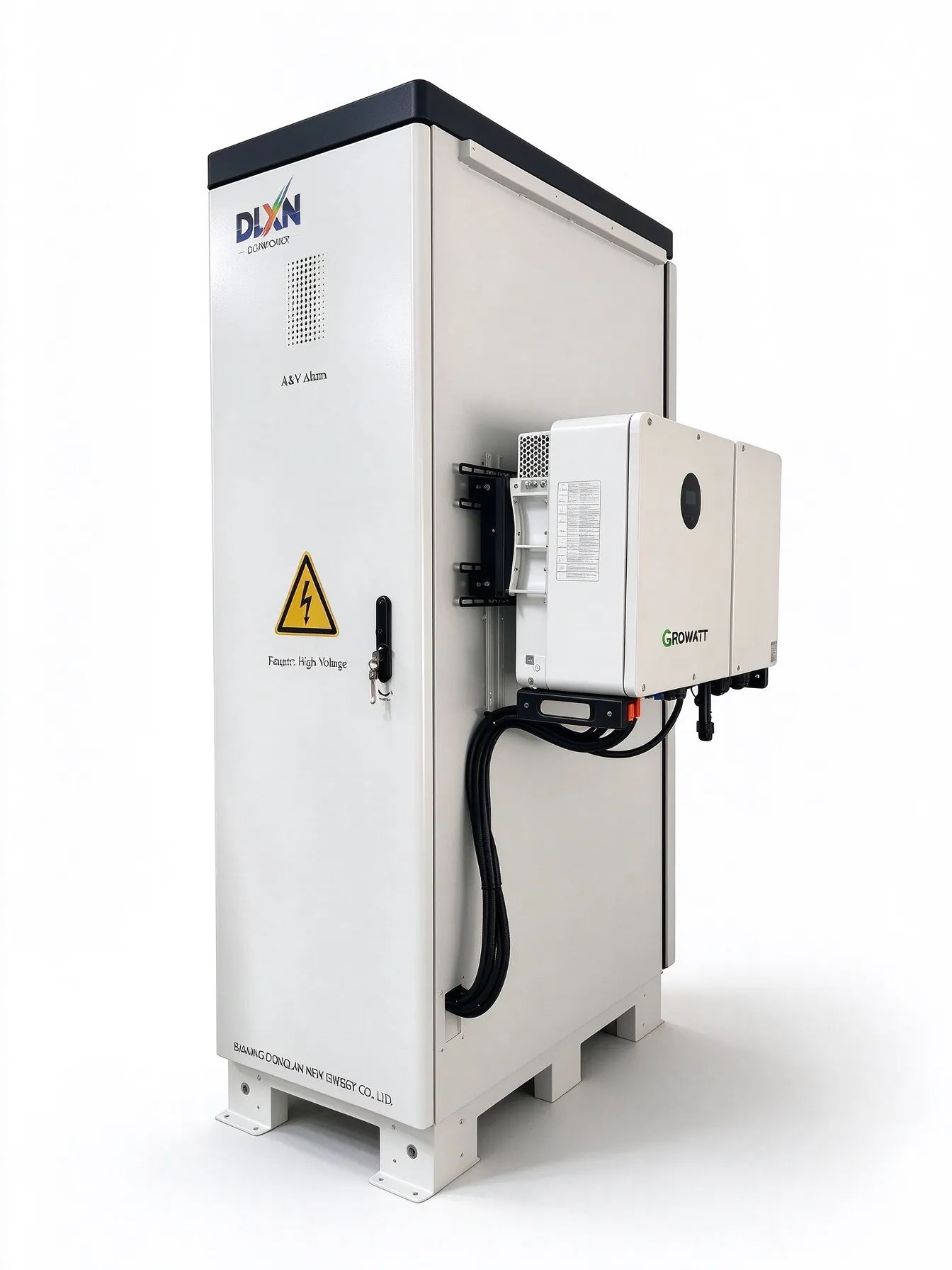
Practically, this is changing tender documents. Developers increasingly specify grid-forming capability with or without co-located storage, and the incremental cost — often 5–15% on the inverter line item — is being absorbed because the alternative is curtailment or connection delay. The engineering overlaps heavily with battery storage controls, which is why inverter and [battery storage](/tech/battery-storage) procurement are increasingly evaluated as one package rather than two.
Architecture: 1500 V, Silicon Carbide and High DC/AC Ratios
At the utility scale, the 1500 V DC architecture is now essentially universal, with 800 V AC output and single-unit ratings of 250–350 kW in the string inverter class. String inverters have taken the dominant share of new utility-scale construction, displacing central inverters on all but the largest, most uniform sites, because they reduce DC wiring, improve granularity of MPPT tracking and simplify O&M through modular replacement.
Silicon carbide MOSFET adoption is the defining semiconductor trend. SiC devices allow higher switching frequencies, smaller magnetics and roughly 0.5–1 percentage point of efficiency gain, pushing peak conversion efficiency to 99% and above in leading products. The transition from IGBT to SiC also reduces cooling requirements and weight per kilowatt, which matters for containerized and rooftop installations alike. Meanwhile, DC/AC ratios of 1.3–1.5 have become routine, trading modest clipping losses for higher energy yield per inverter dollar.
The next step is 2000 V DC. NREL analysis suggests moving from 1500 V to 2000 V could reduce balance-of-system costs by roughly $0.01–0.02/W by cutting combiner, cabling and fuse counts. Field pilots are underway, though component qualification, safety standards and workforce familiarity will keep 2000 V a minority architecture through the near term. For a broader view of how these components fit into complete systems, see our [product range](/products).
Supply Chain, Trade Policy and Lead Times
The inverter supply chain has normalized substantially since the 2021–2023 IGBT shortage, when lead times stretched beyond 40 weeks and developers accepted whatever allocation they could secure. Dual sourcing of semiconductors, expanded SiC capacity and softer European residential demand have brought typical lead times back to 12–20 weeks for mainstream string products, and inventory write-downs have become a recurring theme in vendor earnings calls.
Trade policy is now a structural variable. US tariffs and domestic-content incentives under the Inflation Reduction Act, along with supply-chain security scrutiny of grid-connected equipment, have pushed manufacturers to localize assembly and, in some cases, semiconductor sourcing. India's ALMM and PLI schemes and Europe's Net-Zero Industry Act are creating similar regional preferences.
The practical consequence for EPCs and asset owners is that inverter selection now involves a supply-chain risk assessment: manufacturing location, firmware provenance and cybersecurity posture are legitimate tender criteria. Buyers who treated inverters as commodity hardware are revising that assumption. Our [projects portfolio](/projects) illustrates how these sourcing decisions play out across utility-scale, C&I and residential deployments.
Repowering and the Shape of the Next Cycle
Inverters have a design life of 10–15 years against 25–35 years for modules, which creates a predictable replacement market independent of new-build activity. Europe's early feed-in-tariff fleet — much of it commissioned between 2008 and 2012 — is now entering that window, and repowering with modern hybrid-ready units can raise energy yield by 5–10% while adding storage and grid-service capability to assets that previously provided neither.
Wood Mackenzie and BloombergNEF both expect hybrid and storage-integrated inverters to grow faster than the overall market, with the residential and C&I segments leading on attach rates and the utility segment leading on grid-forming. Price pressure will persist, particularly in Asia, but differentiation is shifting toward software, grid services, warranty structures and service networks rather than conversion efficiency alone.
For specifiers, the strategic takeaways are consistent: assume a 1500 V, high-DC/AC-ratio, SiC-based architecture; require documented grid-code compliance and a credible grid-forming roadmap; and evaluate inverter and storage procurement together. Buyers who lock in those assumptions now will avoid the retrofit costs that the last generation of assets is only beginning to face.