News & Updates
Latest from DLXN Energy
Home Backup Solar Storage in 2025: What Changed
The load audit comes before the shopping list
Most homeowners begin with a capacity target they overheard, usually "one Powerwall" or "ten kilowatt-hours." The better starting point is a clipboard and a winter evening: what actually has to run when the grid drops at 7pm in February. A modern fridge draws roughly 1.5 to 2 kWh a day. A gas furnace blower with an ECM motor pulls 400 to 700 W while running. A 240 V well pump can demand 2 to 3 kW for a few seconds at startup, which is a surge question rather than an energy question. Add modem, router, a few LED circuits and charging, and a realistic critical-load profile lands near 6 to 9 kWh per winter day.
That figure decides everything downstream. Households that want the heat pump and the EV charger to keep running through an outage sit in a different category, typically 25 kWh and above plus a smart panel that sheds circuits automatically when the state of charge falls. Households that want lights, refrigeration, internet and a warm house are well served at 10 to 15 kWh usable.
Sizing the second group with first-group hardware is the most common overbuy in the residential market.
What the 2025 hardware actually does differently
Lithium iron phosphate has effectively won the residential segment, and the practical consequences are boring in the best way: no cobalt, better thermal stability, and cycle ratings that now exceed the warranty period of the inverter. The more interesting shift is architectural. Low-voltage 48/51.2 V stackable systems let a homeowner start at one module and add capacity later without replacing the inverter, while 400 V high-voltage hybrids cut DC cable losses and shave installation time on larger arrays.
Transfer behaviour has changed too. Grid-forming hybrid inverters now switch to backup in under 20 ms on the models we benchmark, fast enough that a desktop computer does not reboot. Modern units accept PV oversizing of 150 to 200 percent, which matters because a 12 kW array clipping into an 8 kW inverter is cheaper than buying a bigger inverter for four sunny hours a year. On the standards side, UL 1741 SB and IEEE 1547 compliance is now table stakes in North America, and it is what allows a battery to participate in utility virtual power plant programs rather than sitting idle.
If you are comparing inverter topologies, our engineering notes on hybrid inverters cover the transfer-time and oversizing trade-offs in more detail.
Sizing, in numbers you can check
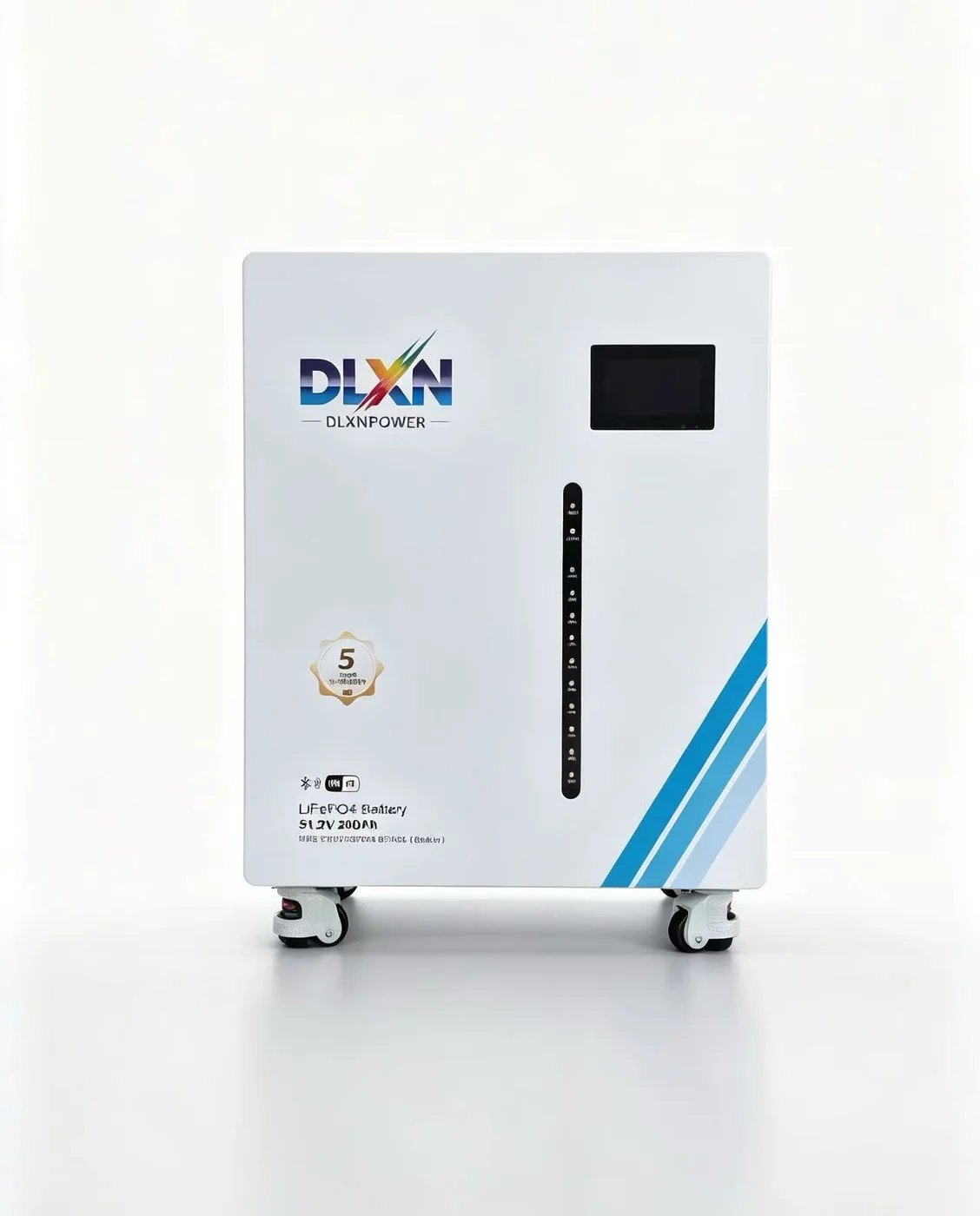
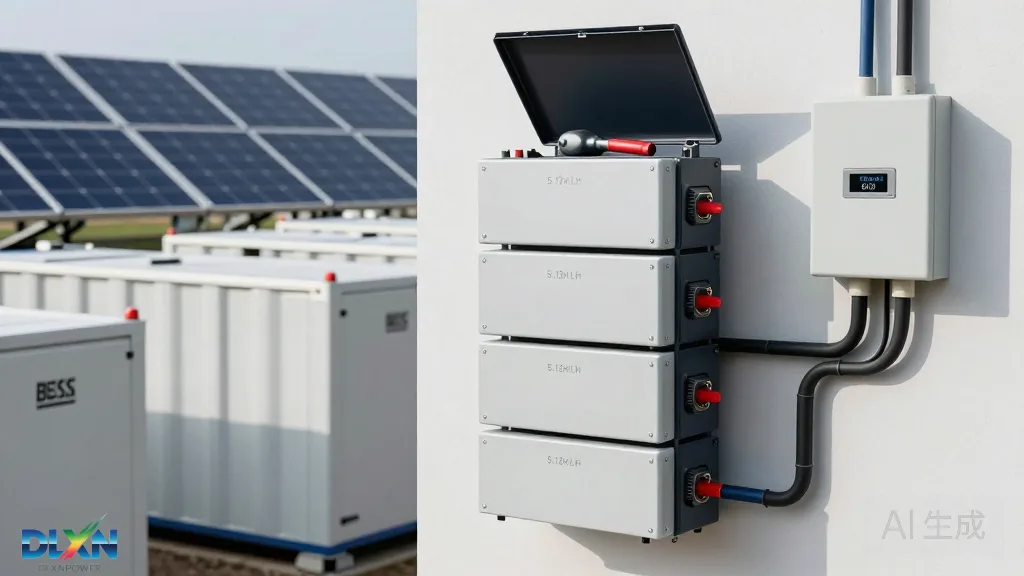
DLXN's residential storage line uses 5.12 kWh LFP modules at 51.2 V nominal and 100 Ah, rated 6,000 cycles to 80 percent state of health at 0.5C continuous charge and discharge, with 94 percent round-trip efficiency. Each module is 48 kg and mounts on a 0.62 m × 0.45 m wall bracket; a four-module cabinet occupies about 0.35 m² of floor.
| Configuration | Nominal / usable kWh | Typical backup window | Best fit |
|---|---|---|---|
| 2 modules | 10.24 / 9.2 | 12–18 h critical loads | Apartment or small home, grid-tied |
| 4 modules | 20.48 / 18.4 | 24–36 h critical loads | Heat pump, EV, two-day resilience |
| 6 modules | 30.72 / 27.6 | 2–3 days critical loads | Rural, frequent multi-day outages |
Usable figures assume a 90 percent depth-of-discharge limit, which is what our warranty terms are written against. Full specifications and wiring diagrams are on the lithium battery product page.
A representative installation, and the parts that fail
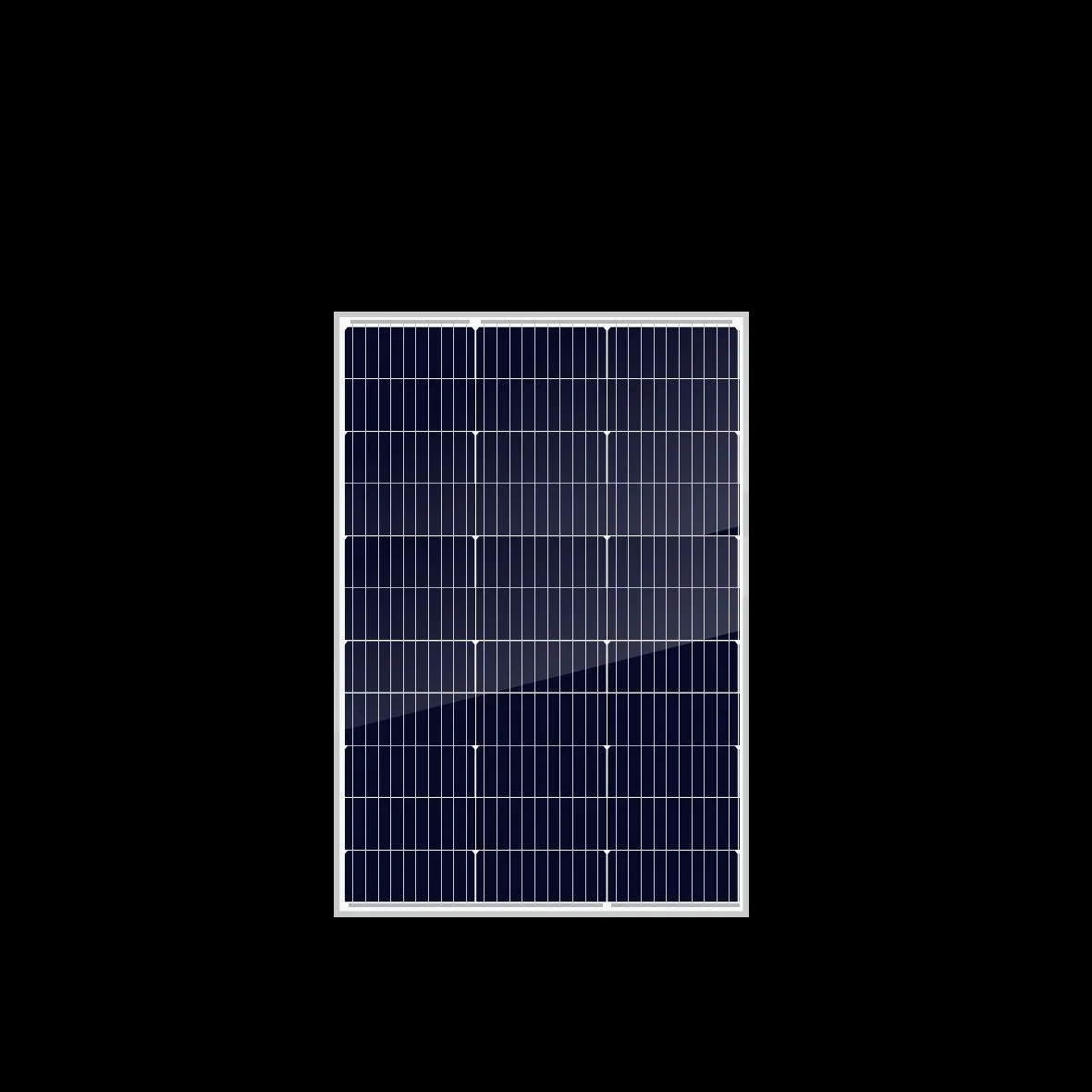
A configuration we supplied in September 2025 to a 1970s terraced house near Utrecht pairs a 9.6 kWp rooftop array with four stacked LFP modules, 20.5 kWh nominal, behind an 8 kW grid-forming hybrid inverter. The array uses 440 W bifacial modules from our solar panel range on a shallow-pitch roof. Installation was carried out by a regional contractor and the system is operated by the household under a dynamic hourly tariff, which charges the battery overnight when prices turn negative and discharges it through the evening peak. The heat pump runs on a dedicated backed-up circuit; the oven and the EV charger do not.
Two months of monitoring put self-consumption at roughly 70 percent of generation, with the remainder exported. That is the number that decides payback in markets where export compensation has been cut.
Here is the operator's view, from our side of the bench: in our own pack assembly line, the field returns that come back to us are almost never cells. They are busbar fasteners that lost torque after two heating seasons, and DC isolators specified one size too small for the array's short-circuit current.
That has a direct implication for buyers. Ask who torques the terminals and whether the value is recorded, and check the isolator rating against the actual array Isc, not the inverter's nominal input.
When a battery is the wrong purchase
If your utility still credits exports at the full retail rate and your annual outage minutes can be counted on two hands, a 20 kWh battery is an expensive insurance policy with a fifteen-year premium and a throughput limit attached. The same applies to any household that has not yet fixed envelope losses: spending on attic insulation and air sealing first will reduce both the heating load and the battery you need to carry it.
There is a second wrong-choice case that gets less attention. A cold-climate home with a variable-speed heat pump and an undersized battery can end up with false confidence, because the system carries the house comfortably in October and fails at hour nine in January. If heat is on the backup circuit, size for the design-day load, not the shoulder season.
Policy timing is adding a third complication. The US residential clean energy credit was set to expire for systems placed in service after 31 December 2025 under the budget law enacted that July, which pulled a wave of installations forward into the second half of the year. Buyers in a rush should not let a deadline override the load audit.
What to put in the contract
- Warranty expressed in megawatt-hours throughput, not only years, plus the state-of-health threshold at which a claim is honoured.
- Transfer time in milliseconds, stated for the whole backed-up panel rather than the inverter alone.
- A single-line diagram showing exactly which circuits are backed up, including any 240 V loads.
- Confirmation of UL 9540 listing for the paired battery and inverter, and UL 9540A cell-level fire test data.
- Clearance dimensions to walls and windows under NFPA 855 and NEC Article 706, checked before the cabinet is sited.
- Written terms if the installer enrols you in a virtual power plant: dispatch limits, compensation, and exit conditions.
Our battery storage technical library carries the clearance and commissioning checklists we give installers, and the projects page shows completed residential and commercial configurations at several scales. For a sizing review against your own load data, the engineering team can be reached through contact.
Related products
In-stock models that match this article — specs and RFQ on each page.