Start With a 12-Month Load and Tariff Analysis
No hardware decision should be made before you pull twelve months of 15-minute interval data from the utility — 35,040 data points that become an 8,760-hour dispatch model. The goal is to separate the three value streams that commercial storage monetizes: demand-charge reduction, time-of-use arbitrage, and resilience. For many commercial and industrial customers, demand charges represent 30–50% of the monthly bill, so the sizing driver is usually the peak, not total consumption. A model that ignores a single 15-minute spike, a chiller startup in July, will destroy the projected savings in the first month of operation.
Sizing follows from the shape of that peak. A distribution center with a 1.2 MW peak and 15-minute spikes can often be clipped to 800 kW with a 400 kW / 800 kWh two-hour lithium iron phosphate (LFP) system running at 90% depth of discharge, leaving roughly 720 kWh of usable energy per cycle. A cold-storage facility with a flatter, longer peak may justify a four-hour system to capture additional arbitrage. Assuming 85–90% AC round-trip efficiency, model the annual throughput before committing — the [battery storage technology overview](/tech/battery-storage) is a useful reference for comparing LFP and NMC cycling behavior at this stage.
The most common sizing error is oversizing for resilience that the site does not actually need. A 2 MWh system specified to back up an entire building will sit idle 99% of the year and lose money; a 500 kWh system on the critical loads (life-safety, IT, refrigeration) plus a demand-management dispatch strategy typically produces a far better internal rate of return. Decide early whether the inverter must form a grid (island mode) or simply ride through — that single answer changes the balance-of-system cost by 15–25%.
Site Assessment, Thermal Management and Fire Code Compliance
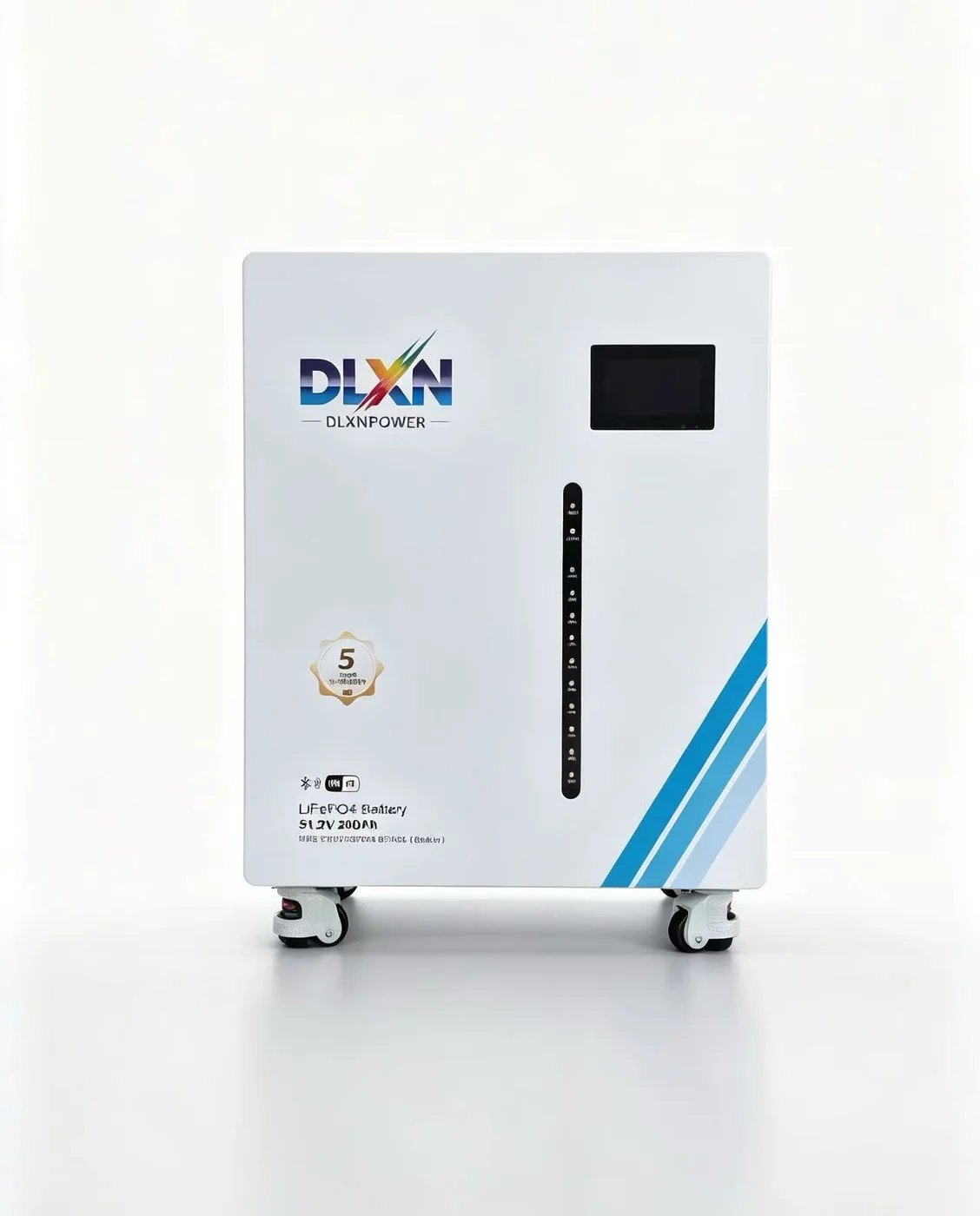
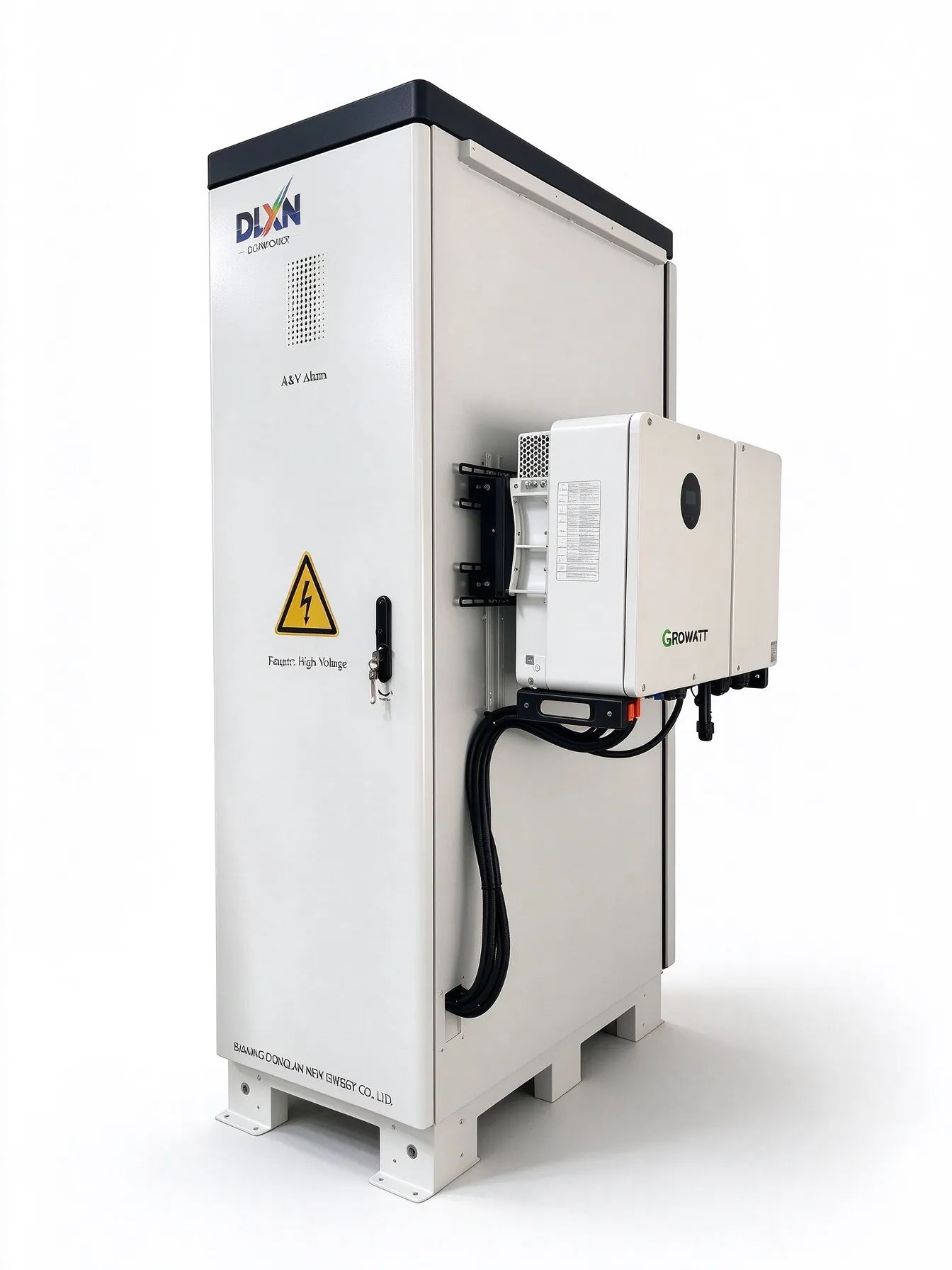
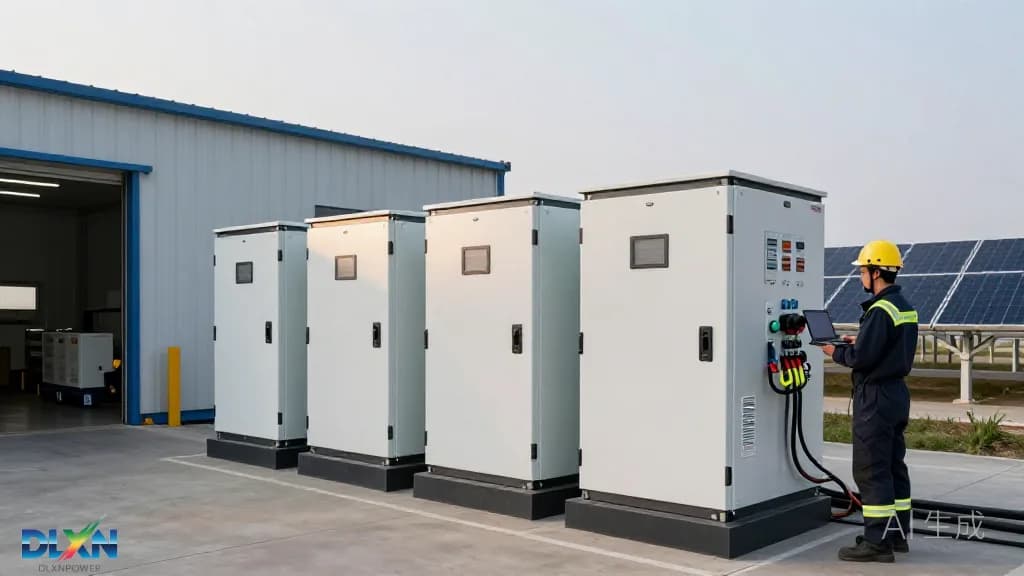
Physical siting is dictated by weight, clearance and fire separation. A 200 kWh LFP cabinet typically weighs 1,500–2,200 kg, and multi-cabinet lineups impose floor loadings of 500–1,000 kg/m². Confirm slab thickness and reinforcement, specify a 150–200 mm housekeeping pad, and place the equipment above the local base-flood elevation. Add bollards rated for vehicle impact and maintain the manufacturer's clearances for door swing and service access — typically 1 m front and 0.6 m sides.
Fire code is now the pacing item in most jurisdictions. NFPA 855 (2023 edition) requires the energy storage system to be listed to UL 9540 as a complete unit, with UL 9540A cell-level thermal-runaway test data available for the authority having jurisdiction. Default separation distances are 0.9 m between units and 3 m from walls, lot lines, exits and combustibles; those distances can be reduced only where large-scale fire testing demonstrates no hazard. Occupiable buildings also trigger smoke and gas detection, exhaust ventilation, and sprinkler protection per NFPA 13 where the building already requires it. Building officials increasingly ask for the UL 9540A report at permit submittal, so obtain it during procurement, not after.
Thermal management determines both warranty validity and parasitic load. Integrated HVAC or liquid-cooling systems hold cells between 15 °C and 30 °C; operation above 35 °C accelerates calendar aging measurably, and many warranties void above 40 °C ambient. Budget HVAC energy at 3–8% of throughput in hot climates, and verify enclosure ratings — NEMA 3R or IP54 minimum for outdoor pads — plus acoustic output, which runs 55–65 dBA at 1 m for small commercial units and can trigger local noise ordinances on tight urban sites.
Electrical Architecture: DC-Coupled vs AC-Coupled and Grid Interconnection
The coupling decision shapes efficiency and retrofit complexity. DC-coupled systems share a single bidirectional inverter between the PV array and the battery, which recovers clipped production — worth 2–5 percentage points of yield on arrays sized above a 1.2 DC/AC ratio. AC-coupled systems use a separate battery inverter paralleled on the AC bus, which is far simpler when retrofitting an existing PV plant or when the storage must operate independently of solar. Power conversion efficiency for modern three-phase units at 480 V is 97–98.5%, but plan for 1.5–4% additional losses across transformers and conductors.
Interconnection now runs on IEEE 1547-2018, verified through UL 1741 Supplement SB certification. That standard mandates smart-inverter functions — Volt-VAR, Volt-Watt, frequency-Watt, and defined ride-through curves — and utilities such as those administering California Rule 21 require them to be enabled with approved settings before permission to operate. Study timelines vary widely: a fast-track screen may clear in 4–8 weeks, while a detailed or supplemental review for export-limiting or non-export configurations can take 3–12 months. Submit the interconnection application before ordering long-lead equipment. The [inverter selection guide](/tech/inverters) covers the certifications to request in an RFQ.
Balance-of-system design follows from the service entrance. Confirm spare breaker capacity, specify a dedicated transformer where the utility requires galvanic isolation, and size conductors for continuous duty at 125% of rated current. Ground-fault detection on the DC side, arc-flash labeling per IEEE 1584, and coordinated relay settings between the storage relay and the main service disconnect are all part of the drawing set — not field decisions.
Protection, Controls and Commissioning Tests
Protection coordination is where integrators are most often caught short. The site-specific settings file must cover over/under voltage and frequency trip points, anti-islanding per UL 1741, DC ground-fault detection and string-level fusing, and breaker ratings verified against available fault current. On 480 V systems above roughly 1 MW, an arc-flash study is effectively mandatory for energization, and the incident-energy labels must be printed and applied before the utility witness test — not after.
Commissioning should follow a written script with witnessed acceptance criteria. The core tests are a full charge and discharge at rated C-rate to verify usable capacity, an AC-to-AC round-trip efficiency measurement following IEC 62933-2-1 methodology, and a step-response and backup-transfer test to confirm the transition time specified for the site. Verify EMS and SCADA point mapping, and confirm remote dispatch, telemetry and curtailment commands work through the utility's channel before the site is handed to operations.
Acceptance rarely ends at energization. A 30-day performance period with measurement and verification per IPMVP protocols catches dispatch-logic errors, uncalibrated meters and missed demand peaks while the integrator is still contractually on the hook. Require the as-built settings, UL 9540A report, O&M manuals, and a cybersecurity hardening record aligned with IEC 62443 for any networked EMS — utility and insurer questionnaires increasingly ask for all four.
Cost Benchmarks, Incentives and Procurement Timelines
Cost data has moved fast. BloombergNEF's annual battery price survey reported the global average turnkey cost of a four-hour battery system falling sharply in 2024 toward the $250–300/kWh range, driven by LFP cell overcapacity. Commercial-scale two-hour systems carry a premium — expect roughly $350–500/kWh installed for a 500 kWh–2 MWh project once switchgear, concrete, permitting and commissioning labor are included, consistent with NREL's Annual Technology Baseline projections for behind-the-meter storage.
Incentives can halve the paywall. In the United States, the Inflation Reduction Act made standalone storage eligible for a 30% investment tax credit through at least 2032, with 10% adders for domestic content and energy-community siting, plus 10–20% for low-income or tribal projects, alongside five-year MACRS depreciation. California's Self-Generation Incentive Program adds roughly $200–250/kWh for general-market non-residential projects, with much larger equity-resiliency budgets. Combined, these structures routinely compress simple paybacks to 5–9 years for demand-charge-heavy loads.
Procurement timelines are usually longer than buyers expect. LFP cabinets and containers quote 12–24 weeks; interconnection studies 3–12 months; permitting and fire-code review 4–12 weeks; construction 6–16 weeks depending on trenching and switchgear. A realistic schedule from signed contract to permission to operate is 9–15 months. Locking cell pricing with a 10–15% contingency and ordering switchgear early — lead times for 480 V gear have stretched to 20–40 weeks — is standard practice on well-run projects.
Operations, Augmentation and Warranty Realities
LFP chemistry degrades at roughly 1.5–2.5% of capacity per year under commercial cycling, which means a 10-year warranty to 70% state of health is achievable but not free. Read the throughput cap: many warranties limit total delivered energy (MWh) as well as years, and aggressive two-cycles-per-day dispatch can exhaust the allowance in year seven. Capacity testing annually gives you the evidence needed to file a warranty claim and the data to plan augmentation.
Augmentation economics have shifted. Adding 10–20% capacity in year eight is now often cheaper than oversizing at installation, given falling cell prices — the IEA's World Energy Outlook series projects global battery capacity expanding from roughly 90 GW in 2023 to well over 1,000 GW by 2030, and that manufacturing scale keeps pushing $/kWh down. O&M budgets of $5–10/kW-year cover remote monitoring, semi-annual HVAC service, torque checks and annual capacity tests.
The recurring failure modes are predictable: undersized HVAC in a sun-exposed pad, dispatch logic that chases TOU arbitrage and misses the demand peak, no coordination with a co-located PV array, and telemetry gaps that leave the utility unable to verify compliance. Review the [lithium battery product specifications](/products/lithium-battery) against the site's thermal envelope, and study [completed project references](/projects) in comparable climates before signing. A commissioning script and a 30-day performance window cost little and catch nearly all of these.