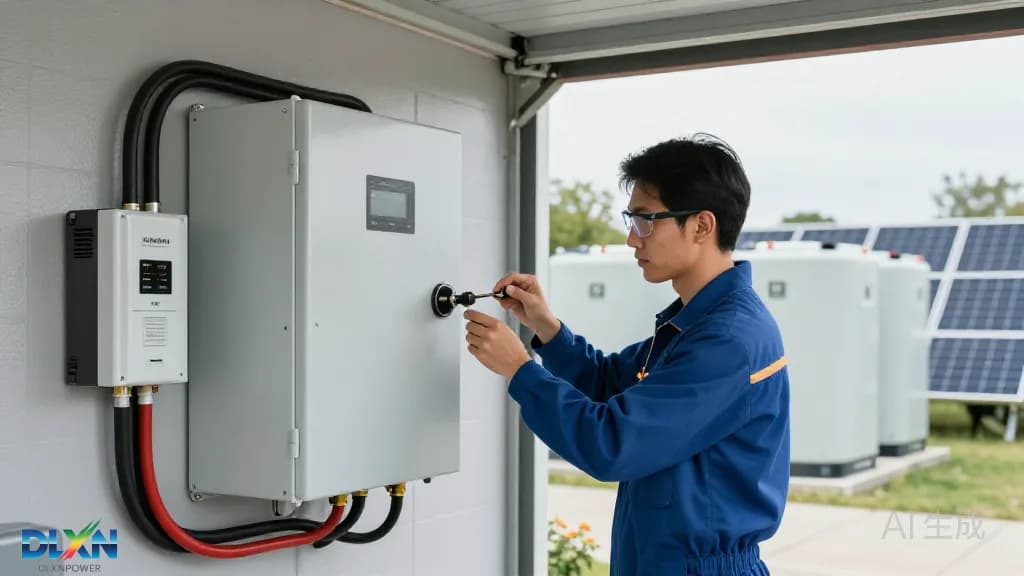
Start With Load Profiling and Site Assessment
Every credible installation begins with interval data, not a catalog. A residential energy audit should capture at least 12 months of utility data, ideally 15-minute or hourly intervals, to establish baseload (typically 0.4–1.5 kW for a North American single-family home) and peak demand (5–8 kW with EV charging or electric resistance heat). According to NREL's residential load research, annual consumption for a typical U.S. household sits near 10,500 kWh, but the shape of that curve — not the total — determines battery size and backup duration.
Next, define the critical-load subpanel. Whole-home backup requires an oversized battery and a service-rated transfer switch; essential-load backup covering refrigeration, lighting, communications, well pump and a furnace blower usually needs only 3–6 kWh per overnight outage. A structured approach separates "survival loads" from "convenience loads" and sizes the battery against the former, then prices the incremental cost of expanding coverage.
Site selection follows the load design. Candidate locations include an attached garage, a utility room, a basement wall, or an exterior wall under a weather-rated enclosure. Record ambient temperature extremes, flood risk, distance to the main panel, and available wall area for the code-mandated working clearance. Photograph and measure everything; retrofit surprises on conduit runs are the most common source of budget overrun in residential storage projects.
Choosing Chemistry and Sizing Usable Capacity
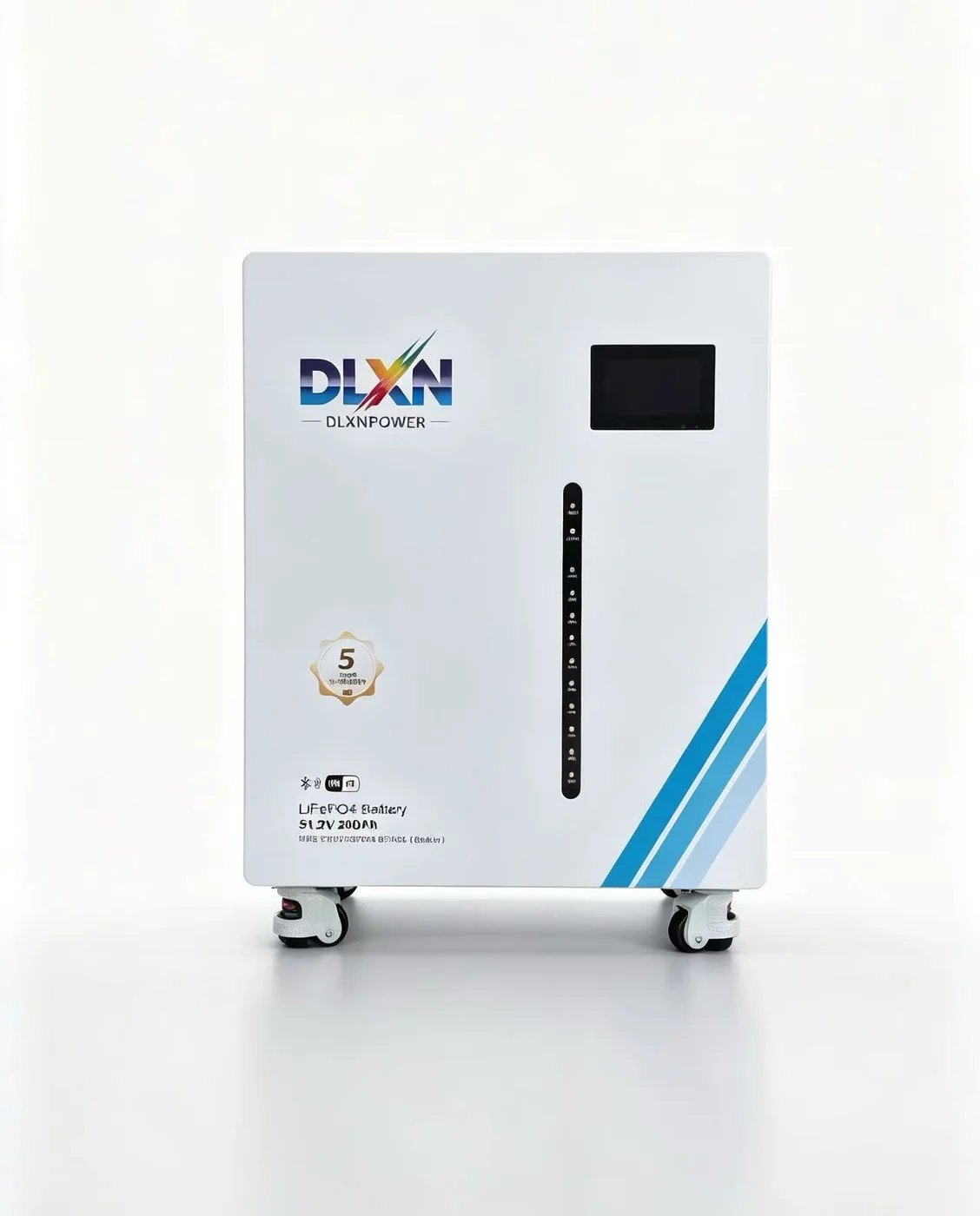
Lithium iron phosphate (LFP) now dominates residential storage. According to BloombergNEF's annual battery price survey, average pack-level prices have fallen to roughly $115/kWh, and LFP's share has grown because of its 6,000–8,000 cycle life, high tolerance for 90–100% depth of discharge, and superior thermal stability relative to nickel-manganese-cobalt (NMC) cells. LFP's round-trip efficiency typically lands between 92% and 96%, against 88–92% for NMC, while NMC retains an energy-density advantage where wall space is tight. Our [lithium battery](/products/lithium-battery) range illustrates the LFP form factors common in residential cabinets.
Sizing math must use usable, not nameplate, capacity. A 13.5 kWh LFP unit at 90% depth of discharge delivers about 12.1 kWh, minus roughly 5% conversion loss, or roughly 11.5 kWh delivered to the panel. At a 1 kW overnight baseload that is about 11 hours of runtime; add a well pump cycling at 1.5 kW and the same battery lasts six to seven hours. Installers should model three scenarios — summer storm, winter storm, and grid outage during peak air-conditioning — before committing to a capacity.
Economics enter the decision here. Turnkey installed costs in the United States run roughly $400–800/kWh of usable capacity, with European installations often between €600 and €1,000/kWh, per industry cost trackers. Incentives materially change payback: the U.S. investment tax credit covers 30% of storage costs when co-installed with solar, while the UK removed VAT on standalone battery storage in February 2024. A detailed treatment of capacity fade and warranty thresholds is available in our [battery storage technology](/tech/battery-storage) overview.
DC-Coupled Versus AC-Coupled Architecture
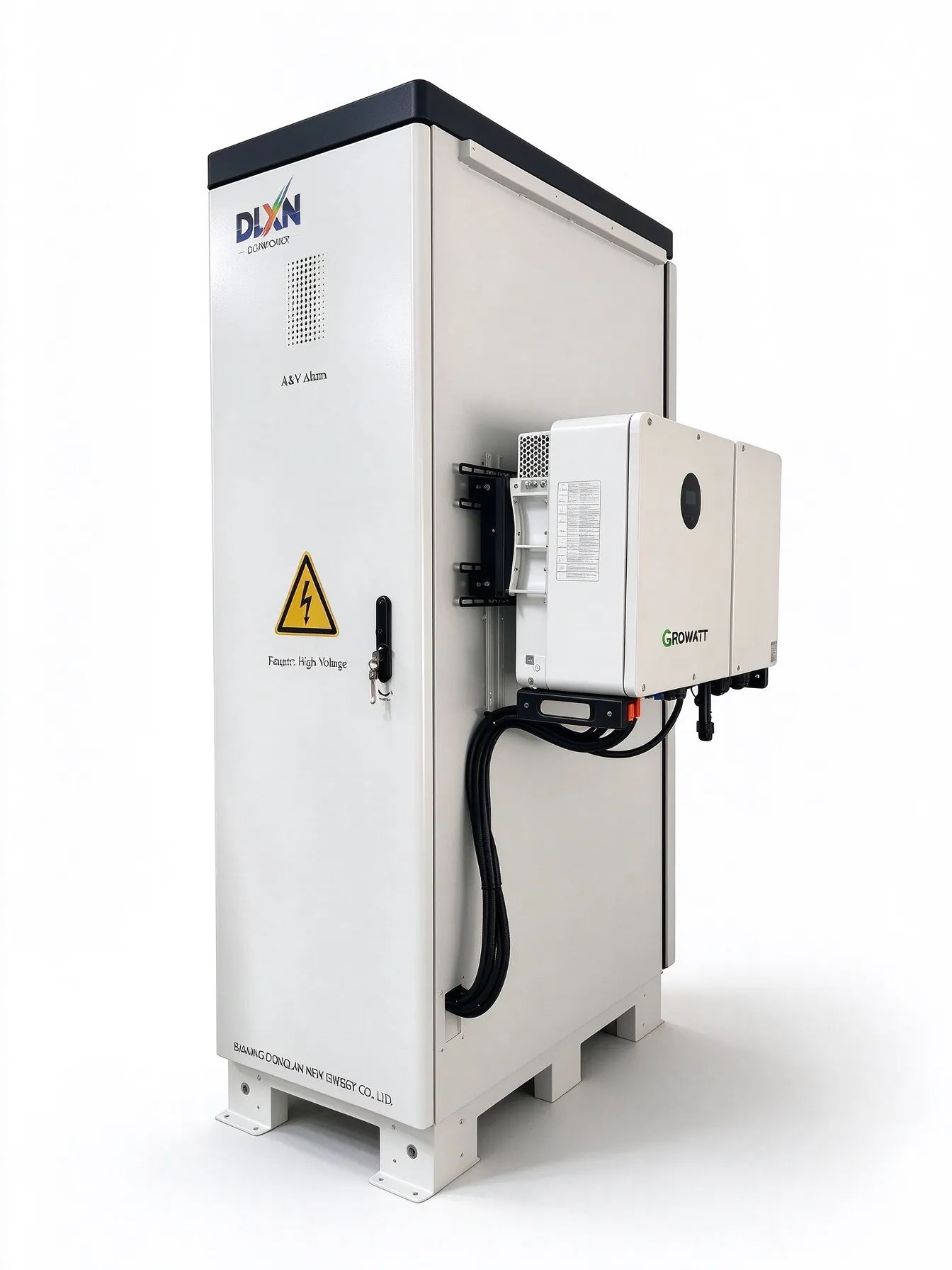
Coupling topology determines efficiency, retrofit complexity, and inverter cost. In a DC-coupled design, PV strings and the battery share a hybrid inverter and a common DC bus, so solar energy can charge the battery directly with a single conversion stage. That saves roughly 2–5 percentage points of round-trip efficiency versus routing solar through an AC inverter, then rectifying it back to DC for the battery in an AC-coupled retrofit. Our [hybrid inverter](/tech/inverters) platforms support both new-build and retrofit configurations.
AC-coupled systems are the practical choice when an existing grid-tied PV array is already in place and the homeowner does not want to replace a functioning string inverter. The battery pairs with its own bidirectional inverter, connected on the AC side of the main panel. Advantages include independent operation, easier incremental expansion, and simpler replacement of either inverter without touching the array. The trade-off is the extra conversion loss and, in some jurisdictions, more complex interconnection review for paired systems.
Whichever topology is chosen, the inverter must be certified to UL 1741 SB and configured to IEEE 1547-2018, the standard governing interconnection and interoperability for distributed energy resources. This matters for functions like volt-watt and frequency-watt response, ride-through behavior, and communicated setpoints. For backup capability, verify the transfer time — sub-20 ms switching is required to keep computers and medical equipment running without a reboot, and grid-forming inverters must be able to black-start an islanded panel.
Permitting, Code Compliance and Grid Interconnection
North American installations are governed principally by NEC Article 706 (Energy Storage Systems), UL 9540 for the system and UL 9540A for cell-level thermal runaway testing, and NFPA 855 for installation spacing and fire protection. Article 706 addresses disconnecting means, working space, marking, and ground-fault protection. Local amendments vary considerably: some jurisdictions adopt NFPA 855's separation distances verbatim, while others grant reductions when UL 9540A test data demonstrates limited propagation risk.
In Europe, the relevant grid code is commonly VDE-AR-N 4105 in Germany, supplemented by IEC 62619 for cell safety and IEC 62477 for power conversion. National regulators increasingly require registered electricians and notification to the distribution network operator before energization. Australia's AS/NZS 5139 adds specific requirements for enclosure, signage, and separation from habitable rooms, and is a useful reference point even outside that market.
Interconnection timelines deserve a place in the project schedule. Utility reviews for storage-plus-solar applications in the U.S. commonly take four to twelve weeks, and jurisdictions with high distributed-energy penetration may impose export limits or require smart-inverter curtailment profiles. Submit the application as early as possible and confirm whether the utility requires a visible lockable AC disconnect, a dedicated meter, or nameplate documentation for the battery and inverter pair.
Mounting, Thermal Management and Fire Safety
Mechanical and thermal details separate a durable installation from a problematic one. Wall-mounted cabinets typically weigh 100–160 kg and must be anchored into structural framing or a rated backing board, not drywall alone. NEC 706 requires working space in front of the equipment — generally 36 inches of depth and 30 inches of width — and the unit must be mounted at a height that keeps terminals accessible without a ladder. Outdoor installations require enclosures rated for the local climate, with conduit entries sealed against driving rain.
Temperature is the dominant aging factor for lithium cells. LFP performs best between roughly 15 °C and 30 °C; sustained operation above 35 °C accelerates calendar fade, and charging below 0 °C is restricted by the battery management system unless the pack includes internal heating. An unheated garage in a cold climate can therefore reduce usable winter capacity, while a sun-exposed exterior wall in a hot climate can shorten service life. Where conditions are marginal, specify an actively conditioned enclosure rather than accepting derating.
Fire safety planning should reflect UL 9540A data for the specific model, not generic assumptions. NFPA 855 prescribes separation between units and from walls and egress paths unless reduced by test evidence; smoke and heat detection in the storage room, clear signage, and bollards protecting garage-mounted units from vehicle impact are standard practice. Keep the battery away from flammable storage and confirm that the local fire department has access and knows the equipment location.
Commissioning, Monitoring and Long-Term Service
Commissioning is a documented sequence, not a power-up. Verify terminal torque to the manufacturer's specification — loose DC connections are a leading cause of arcing faults — then measure insulation resistance on DC circuits (typically above 1 MΩ), confirm polarity, and test the equipment grounding conductor continuity. Load the grid profile matching the local code, update firmware to a known-good release, and record every setting in the commissioning sheet attached to the permit package.
Functional testing follows. Simulate a grid outage and time the backup transition; verify that the critical-load panel remains energized and that non-backed-up loads drop as designed. Test anti-islanding response, confirm the battery reaches its configured state of charge limits, and check that the monitoring portal reports voltage, current, temperature, and state of health per module. Where the utility requires it, witness testing with the inspector present avoids a second visit.
Long-term performance depends on monitoring discipline. Most residential LFP warranties guarantee around 70% capacity retention at ten years or a specified throughput, and claims usually require evidence of operating temperature and cycle history, which the monitoring platform supplies. Annual inspections should check for firmware currency, fan or HVAC function if present, and any swelling or corrosion at terminals. Homeowners planning a larger system can review our [product portfolio](/products) and speak with our team through [contact](/contact) about expansion-compatible configurations.