Start with what you are actually buying
A traditional electricity contract is a rental agreement with a variable price. You pay a volumetric rate, sometimes a capacity charge, sometimes a demand charge ratcheted to your worst 15 minutes of the month, and you own nothing at the end of it. That arrangement is not irrational. It requires zero capital, zero maintenance staff and zero technical risk.
A grid-tied solar system converts a slice of that rental into capital expenditure that sits on your roof or in your yard for 25 years. The utility remains your supplier and effectively becomes your battery for anything you export. What changes at the meter is the direction of flow, the metering scheme and the fact that you now carry an asset that degrades slowly and needs occasional attention.
Everything else in the comparison, including inverter topology, export limitation, rapid shutdown and battery sizing, is detail layered on top of that single swap.
The numbers that decide it
For most commercial and industrial sites the decision turns on four figures: installed cost per kW, self-consumption ratio, the export or net-metering rate, and the spread between your import tariff and your export credit. Published benchmarks set the general shape. IRENA's Renewable Power Generation Costs in 2023 places utility-scale PV generation cost in the same band as new fossil generation in most markets, and NREL's U.S. Solar Photovoltaic System and Energy Storage Cost Benchmark 2024 documents how much of a commercial rooftop project's cost is now non-module balance of system, permitting and labour rather than panels.
| Metric (indicative, C&I scale) | Grid-only supply | Grid-tied PV, no storage | Grid-tied PV + 10 kWh storage |
|---|---|---|---|
| Upfront capital | Zero | Moderate | Moderate to high |
| Daytime self-consumption | n/a | 40–70% typical | 70–90% typical |
| Exposure to tariff increases | Full | Partial | Partial, reduced further |
| Backup during outage | None | None (anti-islanding) | Critical loads only |
| Maintenance scope | None | Inverter, cleaning, connectors | Adds battery thermal management |
| Typical payback band | n/a | 4–8 years | 6–10 years |
Those ranges move sharply with location. A site paying a high commercial tariff in a sunny market with a generous net-metering rule pays back far faster than a site on a low industrial tariff with an export credit set at avoided cost. Self-consumption ratio is the single most sensitive variable in the model, and it is the one most often guessed rather than measured.
Where the hardware diverges
A traditional supply point needs a service entrance, metering and protection. A grid-tied system adds a DC array, a string or central inverter with grid-following behaviour, an AC isolator and a metering arrangement that the utility approves. The inverter is where most of the engineering judgement sits, because it must synchronise, ride through voltage dips where the local code requires it, and disconnect when the grid disappears so it never energises a line a technician is working on.
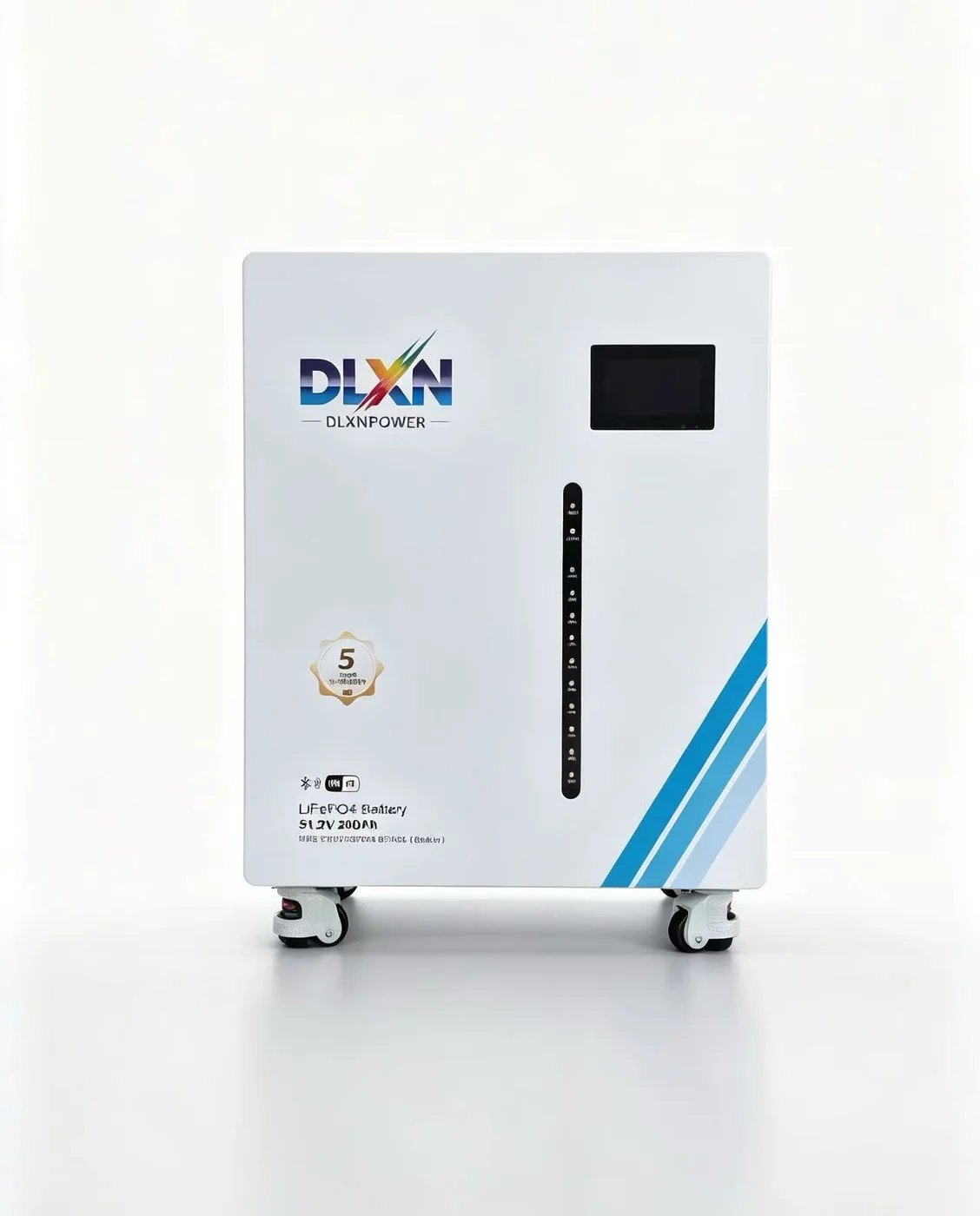
Storage changes the picture again. The DLXN wall-mounted pack we ship most often is a 51.2 V, 5.12 kWh module rated for 0.5C continuous charge and discharge, specified to 6,000 cycles at 80% depth of discharge with roughly 95% round-trip efficiency, and designed to stack in a cabinet footprint under a square metre per 15 kWh. Those figures matter because they set the practical ceiling on backup duration for a given wall space, not because the chemistry is exotic.
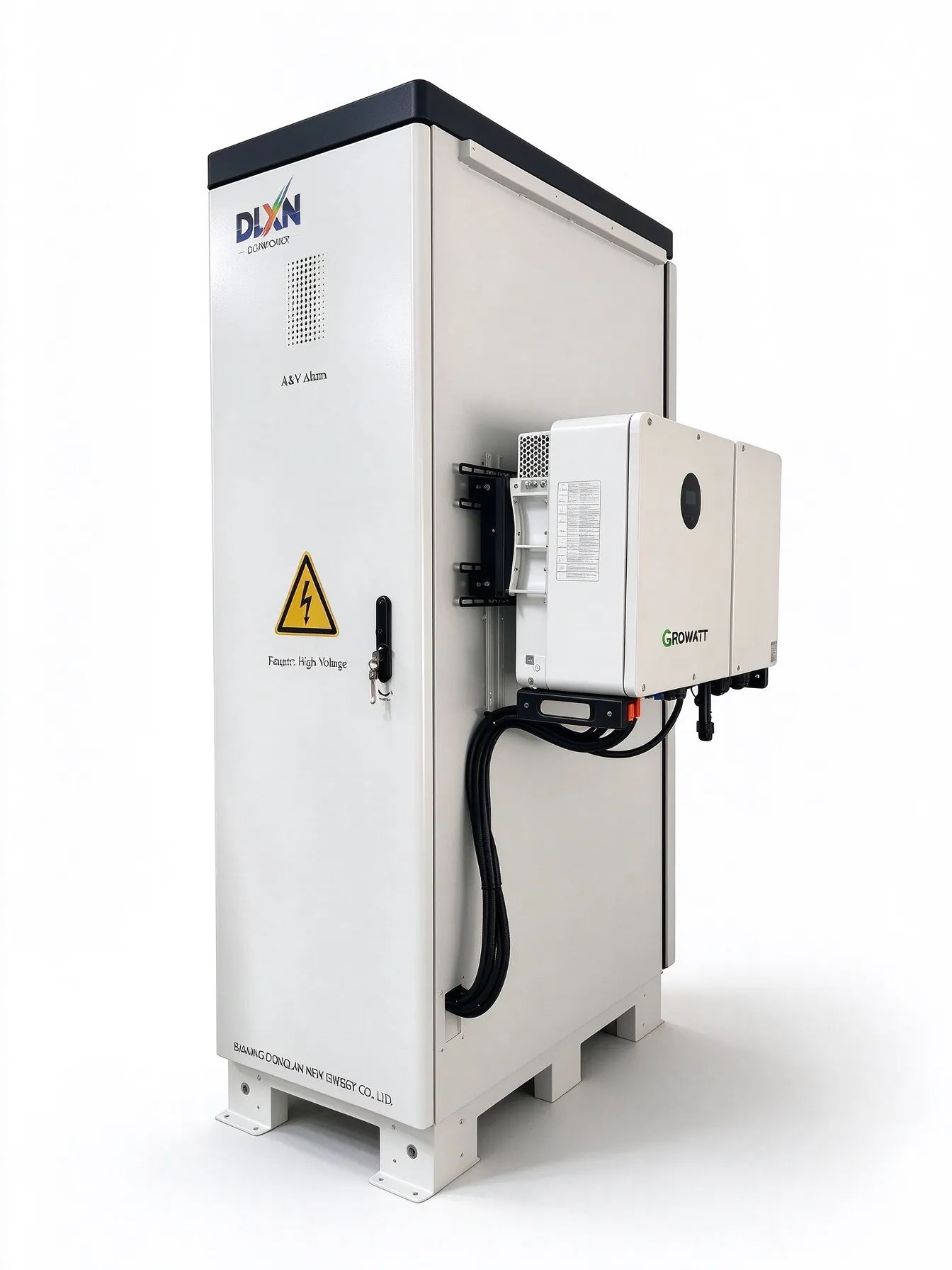
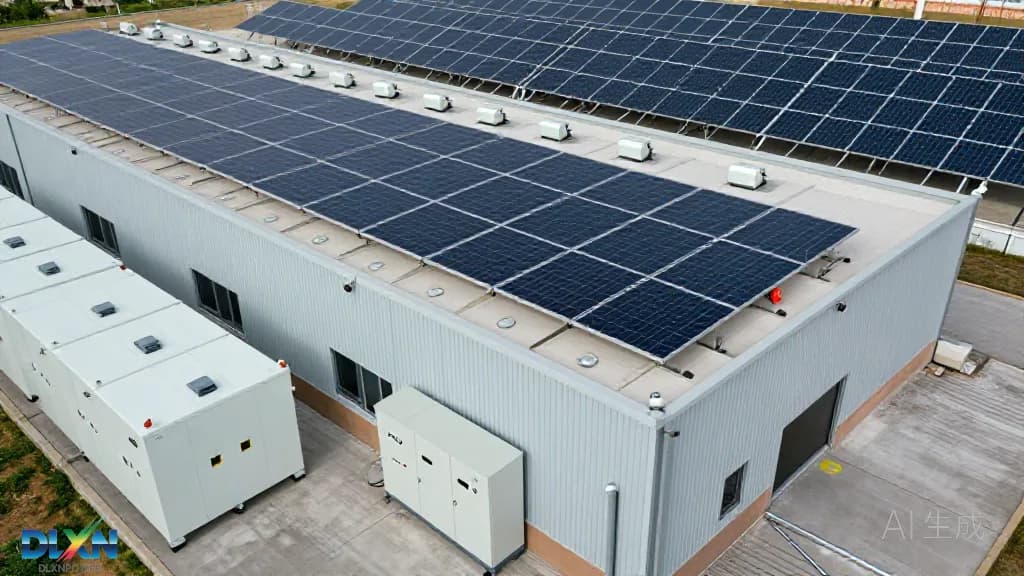
A representative configuration shows the scale: a 120 kW grid-tied rooftop array on a cold-storage and distribution warehouse in Valencia, Spain, commissioned in October 2025, with a 30 kWh lithium cabinet covering control-room and security loads during outages. The array is sized to the refrigeration baseload, which runs through daylight hours and therefore self-consumes at a high ratio without any export at all. That is the easiest business case in the sector, and it is not the one most sites have.
In our own QC line the failures we see coming back are almost never the cells; they are MC4 crimps made with the wrong die and terminal torque that was never checked against the datasheet.
What breaks in year three
The technical risks of a grid-tied system are well understood. The commercial ones are less discussed and cause more write-offs.
- Interconnection approval that arrives late, or arrives with a zero-export condition the design did not assume
- Net-metering or export-tariff rules that change after commissioning, which has happened repeatedly across European and North American markets
- Reverse-power protection settings that trip the inverter on the site's own load steps
- Roof structure or membrane warranty exclusions discovered at the structural survey stage
- Connector and isolator degradation on arrays installed without torque records
BloombergNEF's Global Energy Storage Outlook 2025 tracks the cost decline that has made the storage variant viable at more sites, but the same outlook makes the point that policy design, not cell price, drives adoption in most markets. Nothing guarantees your export credit survives the next regulatory cycle.
Where a grid-tied array is the wrong purchase
Consider a three-shift food-processing plant whose load profile is 85% night, sitting on a low industrial tariff with an export credit set at avoided cost and no budget for storage. A grid-tied array without batteries would export nearly everything it generates at a fraction of the retail rate. The economics collapse: payback stretches past the panel warranty, and the site has taken on maintenance, roof access risk and an interconnection file for a return it could have matched by fixing compressed-air leaks.
Leased premises with a short remaining term are the second wrong case. If the tenancy ends in four years and the lease gives no right to remove the array, the capital is stranded.
A third: sites with a transformer already at its thermal limit and a utility that will not accept export. Export limitation solves the compliance question but forces a curtailment model into the financial case, and that model has to survive scrutiny.
How to sequence the decision
Measure twelve months of interval data before sizing anything. Fifteen-minute load profiles tell you the self-consumption ratio, the demand-charge exposure and the storage duration that actually pays, and they cost nothing to obtain from the utility or the meter operator.
Then size the array to the daytime baseload rather than to the roof area, choose an inverter with a documented grid-support and export-control capability for your jurisdiction, and treat storage as a separate investment decision with its own payback. Reviewing the [inverter options](/tech/inverters) alongside the [battery storage architecture](/tech/battery-storage) early usually prevents the common mistake of specifying a hybrid inverter for a site that will never need backup, or the reverse.
If your load is genuinely daytime-heavy, the array is a straightforward capital substitution with a calculable return. If it is not, fix the load profile first, or buy storage deliberately rather than as an afterthought. The [product range overview](/products) and the [lithium battery line](/products/lithium-battery) give the current specifications to model against, and the [project references](/projects) show what comparable sites actually installed.