News & Updates
Latest from DLXN Energy
South Africa's load shedding solar backup costs shift in 2026
Johannesburg quotes reset for the 2026 winter window
In Johannesburg, installers pricing load shedding solar backup in November 2026 are working from a different cost sheet than a year ago. Eskom's June–August winter window is the immediate trigger: even with a steadier grid than 2023, Stage 2–4 outages remain in municipal risk plans, and City Power customers are still asking for four-hour autonomy. The quote stack now has three visible lines: hardware, NRS 097-2-1 grid-compliance work, and the SANS 10142-1 CoC. The cheapest cash quote is rarely the cheapest installed system once the electrician has to correct a non-compliant changeover. A typical 5 kW hybrid quote in Johannesburg now lands at ~R55,000–R85,000 for a 5 kWh lithium battery, 5 kW hybrid inverter and 6–8 × 550 W panels, depending on mounting and DB-board condition. In Cape Town, coastal mounting and stricter municipal paperwork can push the same scope ~R5,000–R12,000 higher. BloombergNEF's battery price survey and IEA's distributed-PV tracking both point to falling cell costs, but ZAR weakness and compliance labour absorb much of that gain at the till. Compare full scopes in our solar systems catalogue, not inverter-only prices.
NRS 097-2-1 is where cheap quotes fail
NRS 097-2-1 is the grid-connection standard that matters most in South African embedded generation. It sets voltage, frequency, anti-islanding and export-limit behaviour for inverters paralleled with the municipal network. In Cape Town and Johannesburg, municipal approval can stall if the inverter's test report does not match the model on the CoC. A common failure is a rebadged hybrid inverter sold with a valid SANS 10142-1 certificate but no current NRS 097-2-1 test evidence. The installer signs the CoC; the homeowner carries the risk when the supply authority audits the connection. Durban and Pretoria installers report similar friction on older properties. Ethekwini and Tshwane customers often receive quotes that exclude the cost of a compliant changeover, surge protection and labelling. Budget ~R2,500–R7,500 for CoC remediation on an older DB board, plus ~R1,500–R4,000 for NRS 097-2-1 documentation and testing where the inverter is not pre-approved. NRCS listing is separate: it confirms product safety, not grid-code behaviour. For background on how storage sizing interacts with compliance, see our solar battery storage topic page.
Battery costs in ZAR: lower cells, stubborn retail
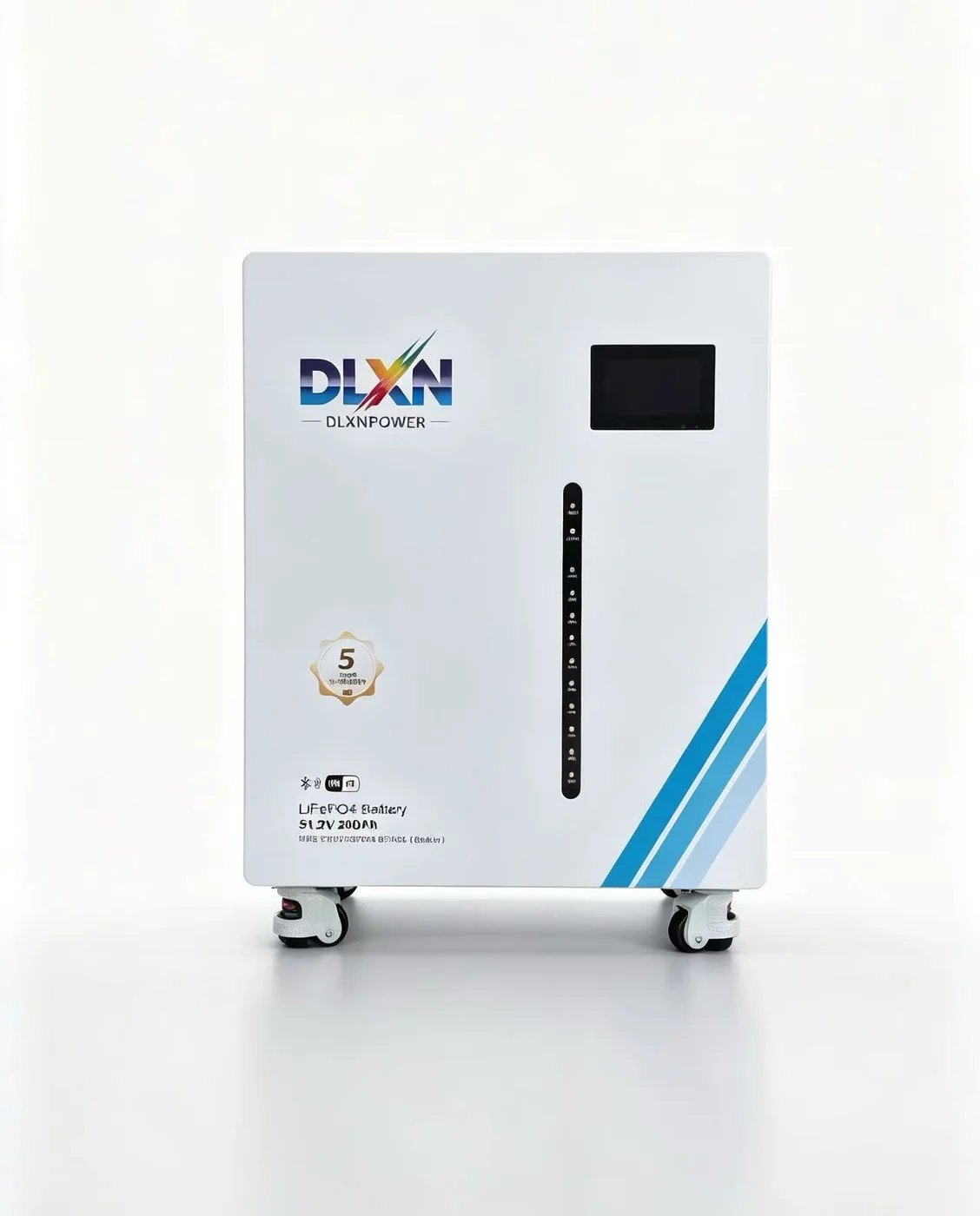
BloombergNEF's annual survey put lithium-ion pack prices at ~$115/kWh in 2024, and 2026 cell pricing is softer again. That does not translate cleanly into ZAR retail. A 5 kWh LFP battery in Johannesburg now quotes at ~R28,000–R45,000 depending on brand, cycle warranty and BMS features; a 10 kWh unit at ~R55,000–R85,000. The gap between cell cost and installed price is import duty, freight, distributor margin, NRCS testing and warranty provisioning. Installers who quote on cell-price headlines alone tend to underprice the replacement cycle. For load shedding solar backup, cycle life matters more than nameplate kWh. A 6,000-cycle LFP pack at 80% depth of discharge is a different product from a 3,000-cycle pack at 90% DoD, even when both are labelled 5 kWh. Ask for the datasheet, the C-rate, the operating temperature range and the local warranty agent. Our lithium battery range lists the DLXN-F5200 5.2 kWh module and the GC100-120 cabinet for larger sites; both need correct NRS 097-2-1 settings during final commissioning.
Sizing for a four-hour outage, not a catalogue headline
A realistic Johannesburg backup load is smaller than most sales decks suggest: fridge ~150 W average, lights ~100 W, router ~20 W, TV ~100 W, plus phone charging. That is ~400–500 W continuous, or ~2 kWh over a four-hour outage block. A 5 kWh battery at 80% usable capacity gives ~4 kWh, enough for that load with margin. NREL's residential load modelling work shows how much diversity matters; measured household peaks are often half the sum of appliance nameplates. Oversizing the inverter while undersizing the battery is the more common mistake. Where the budget is tight, the load shedding solar backup should be designed around critical circuits, not the whole DB. A sub-board for fridge, lighting, router and a few plugs costs less and avoids nuisance trips. If the house has a borehole pump or pool pump, check locked-rotor surge: a 1.1 kW pump can draw 3–5× running current for a second. Use the market price guide to compare ZAR scopes by city before signing; Cape Town and Durban quotes are not directly comparable.
Commercial demand grows in Cape Town and Durban
Cape Town's commercial property managers are increasingly specifying hybrid storage for lifts, access control and server rooms rather than whole-building backup. Durban's logistics and cold-chain operators have a different brief: humidity, salt air and voltage dips. Wood Mackenzie's global BESS forecasts show commercial and industrial storage growth outpacing residential in several markets, though South Africa's volume remains small relative to utility-scale. For sites above ~30 kWh, a cabinet-based system with closed-loop BMS and remote monitoring is more serviceable than stacking residential wall units. The GC100-120 battery cabinet and DLXN-CGP-10 are aimed at this segment, but the commercial case still rests on avoided diesel, avoided spoilage and demand-charge management, not load shedding alone. NERSA registration thresholds and municipal embedded-generation rules can change the payback calculation. In Pretoria, landlords are also being asked for NRCS certificates before tenants sign new leases. Our commercial and industrial ESS page sets out the cabinet options; treat any payback under four years with skepticism unless the tariff assumptions are shown.
What to verify before signing a 2026 quote
A compliant load shedding solar backup quote in South Africa should include five documents: the inverter's NRS 097-2-1 test report, the NRCS certificate or listing reference, the SANS 10142-1 CoC, the municipal approval or registration letter, and the battery warranty terms. If any is missing, the price is not comparable. Ask who signs the CoC and whether the electrician is registered with the Department of Employment and Labour. A CoC issued without inspecting the DC side, surge protection and labelling is a paperwork exercise, not a compliance certificate. Finally, stress-test the ZAR number. Ask for the battery replacement price in 2026 rand, the inverter firmware update policy and the response time of the local service agent. In Johannesburg, Cape Town, Durban and Pretoria, lead times for compliant hybrid inverters have narrowed, but battery stock remains brand-specific. A quote that locks hardware but leaves compliance as a provisional sum is a red flag. The cheapest way to buy load shedding solar backup is usually a smaller, well-documented system that can be expanded, not a headline kW number.
Related products
In-stock models that match this article — specs and RFQ on each page.