News & Updates
Latest from DLXN Energy
High-Voltage Lithium Battery Market Trends
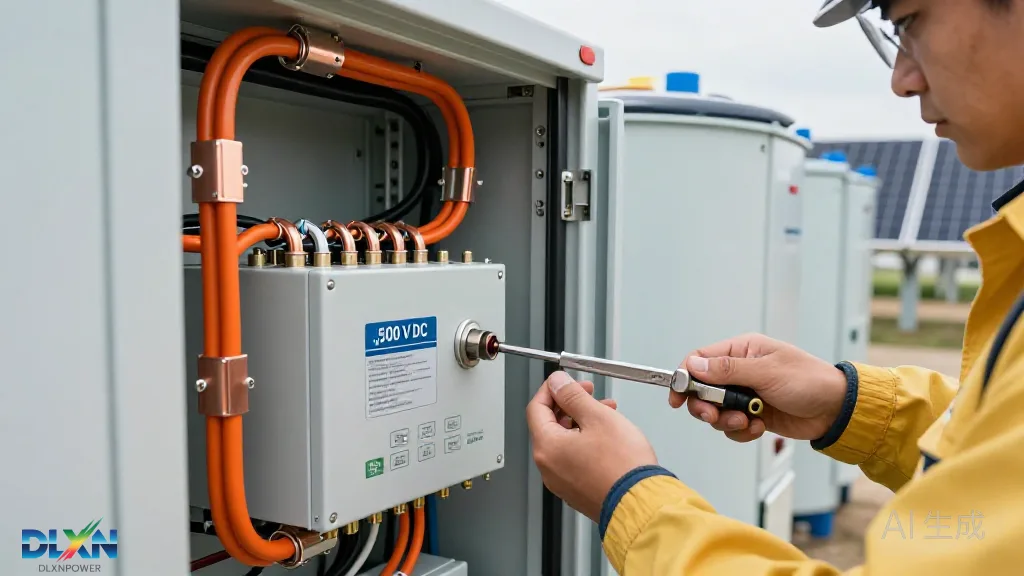
The 800-Volt Architecture Becomes the Automotive Default
The single largest demand driver for high-voltage lithium batteries remains the passenger vehicle, where the migration from 400 V to 800 V architectures is accelerating. Doubling system voltage halves current for a given power level, cutting resistive losses and copper mass while enabling 350 kW-plus DC fast charging. Porsche introduced the first 800 V production platform in 2019; Hyundai's E-GMP, Kia's EV6 and a growing roster of Chinese platforms from BYD, Xpeng and Zeekr have since normalized the design.
Silicon carbide inverters are the enabling companion technology, and their cost curve now tracks battery costs closely. According to IEA analysis, EV battery demand exceeded 750 GWh in 2023 and continued to grow in 2024, with 800 V-capable models representing the fastest-growing premium segment. For module and pack suppliers, the shift raises insulation, creepage and clearance requirements — pushing cell-to-pack and cell-to-chassis designs that eliminate conventional module housings.
The consequence for the supply chain is consolidation around fewer, larger pack formats. Pouch and prismatic cells rated at 3.6–3.7 V nominal are stacked in series strings of 200 or more cells, demanding active balancing, reinforced dielectric isolation and higher-voltage-rated contactors and fuses. Component suppliers — not cell makers — increasingly capture the margin on high-voltage safety hardware, an inversion of the 2015–2020 pattern.
Pricing: Deflation Slows but Does Not Stop
BloombergNEF's annual battery price survey recorded a roughly 20% decline in 2024, with volume-weighted average pack prices landing near USD 115/kWh — the largest single-year drop since 2017. Chinese LFP packs traded considerably lower, with cell prices in some contracts approaching USD 50–60/kWh, creating a widening gap between Chinese and Western cost structures that trade policy is now actively addressing.
The deflationary mechanism has changed. Through 2023, price falls were driven by scale and manufacturing yield; in 2024–2025, they are driven by overcapacity. Announced global cell manufacturing capacity exceeds 3 TWh against demand of roughly 1.2 TWh, according to IEA tracking, producing utilization rates low enough to compress margins across tier-2 and tier-3 suppliers. Consolidation is inevitable, and analysts including BloombergNEF expect the pace of price decline to moderate toward 2026 as marginal capacity exits.
For system integrators, the purchasing logic has inverted. Where buyers once locked multi-year contracts to secure supply, they now negotiate spot-indexed pricing with quarterly resets. High-voltage racks — the integrated DC blocks combining modules, BMS, contactors and thermal management — are increasingly priced per kilowatt-hour of usable energy rather than per nameplate capacity, a shift that rewards accurate state-of-health estimation and warranty transparency. Buyers evaluating storage hardware can compare architectures on our battery storage technology pages.
LFP Consolidates Its Grip on High-Voltage Packs
Lithium iron phosphate has moved from a niche, low-energy-density chemistry to the default for both stationary storage and a majority of new EV platforms. Its nominal cell voltage of 3.2 V — lower than NMC's 3.7 V — means more cells in series for the same pack voltage, but the chemistry's thermal stability and 3,000–6,000 cycle ratings make it uniquely suited to high-voltage strings that are rarely fully discharged.
In China, LFP accounted for roughly 70% of EV battery installations in 2024, and its share of global installations passed 40%, according to SNE Research figures. The chemistry's flat discharge curve, however, complicates state-of-charge estimation in long series strings, driving demand for more sophisticated battery management systems with per-cell impedance monitoring and higher-resolution voltage sensing — typically ±5 mV accuracy across 100-plus series elements.
Nickel-rich NMC and NCA retain a role in premium long-range vehicles, where gravimetric energy density above 250 Wh/kg still matters. But even there, high-manganese and mid-nickel variants are being positioned as cost-compromise cathodes for 800 V packs. For stationary applications, the calculus is settled: LFP dominates, and the differentiation has moved to packaging, cooling design and BMS firmware rather than cell chemistry. Our lithium battery product range reflects that shift toward high-voltage LFP stacks.
Utility-Scale: 1,500 V DC Becomes the Standard
At grid scale, the high-voltage story is about DC bus voltage. The transition from 1,000 V to 1,500 V DC system architecture — first proven in solar inverters — has now propagated to battery energy storage, reducing current per megawatt, cutting cable cross-sections, and allowing fewer, larger power conversion units per block. Most new utility-scale racks are specified at 1,500 V DC maximum system voltage, with cells configured in strings of 400 or more series elements.
The market consequence is scale. BloombergNEF recorded approximately 69 GW/169 GWh of global energy storage installations in 2024, a record year driven by China, the United States and the Middle East. Average project duration is lengthening from two hours toward four, which changes the economics of high-voltage architecture: longer duration favors lower-cost LFP and simpler, more efficient DC topologies over power-dense designs.
Integration with solar is tightening. DC-coupled architectures, where the PV array and battery share a 1,500 V DC bus, avoid a redundant AC conversion and can lift round-trip efficiency by several percentage points. That coupling is now common in hybrid projects and in packaged products such as the Eos carport and Helio2, where generation and storage share power electronics. Meanwhile, safety standards — UL 9540A cell-level fire testing, NFPA 855 separation distances, IEC 62619 for industrial cells — are becoming the gating factor for project approval in the US and Europe.
Supply Chain, Trade Policy and Compliance Pressure
Concentration remains the defining structural risk. SNE Research places CATL at roughly 37% of global EV battery installations in 2024, with BYD, LG Energy Solution and Samsung SDI following. In high-voltage stationary racks, Chinese suppliers hold an even larger share. The United States' Inflation Reduction Act, the EU's Net-Zero Industry Act and Section 301 tariff increases are all attempts to rebalance that concentration, at a measurable cost premium.
Compliance is becoming a design constraint rather than a paperwork exercise. The EU Battery Regulation introduces carbon-footprint declarations, recycled-content thresholds and a digital battery passport by 2027, all of which require traceability down to the cell and cathode-precursor level. High-voltage packs complicate this because a single rack may combine cells from multiple lots and suppliers — forcing integrators to adopt lot-level digital records that survive module replacement over a 15-year service life.
Regulators are also tightening grid-interconnection requirements. IEEE 1547-2018 and its regional derivatives demand ride-through, frequency-response and voltage-support behavior from storage inverters, which pushes high-voltage systems toward faster-sampling BMS and inverter coordination. Buyers should verify certification scope early; our technical resources outline the documentation typically required for interconnection review.
What Comes Next: Sodium-Ion, Solid-State and Standardization
Two challenger chemistries bear watching. Sodium-ion cells, now in volume production in China, offer lower cost and improved cold-weather performance but a lower nominal voltage of roughly 3.0 V and reduced energy density — making them better suited to short-duration or stationary duty than to 800 V vehicle packs. Solid-state cells, still pre-commercial at scale, would raise both voltage and safety margins but face manufacturing yield barriers that most analysts, including BloombergNEF, do not expect to clear in volume before 2028.
Standardization may prove more consequential than chemistry. The industry lacks a common specification for high-voltage rack interfaces, state-of-health reporting or second-life qualification, which fragments procurement and inflates engineering costs. Efforts through IEC TC 21 and UL 1973 revisions aim to harmonize module-level testing, while insurers are beginning to demand validated cycle-life data as a condition of warranty cover.
For installers and asset owners, the practical implication is to specify for interoperability: documented Modbus or SunSpec register maps, replaceable BMS modules, and voltage windows that accept future module variants. Projects designed around open high-voltage architecture will absorb chemistry shifts; those built around proprietary stacks will not. To discuss system sizing for a specific site, our team is available via contact, and reference deployments are documented in our projects archive.
Related products
In-stock models that match this article — specs and RFQ on each page.