News & Updates
Latest from DLXN Energy
Lithium Battery Efficiency Breakthrough: What 96% Means
The headline number is measured at the cell terminals
Coulombic efficiency above 99.5% has been routine for LFP since the early 2020s, so a "breakthrough" claim on that metric alone is marketing. What has genuinely moved is voltage efficiency: the cell holds a higher average discharge voltage under load because internal resistance has fallen. Dry electrode coating removes solvent-recovery steps and produces more uniform porosity, ceramic-coated separators tolerate thinner gauges without the short-circuit risk that used to force thicker, more resistive layers, and electrolyte additive packages now stabilise the cathode-electrolyte interphase well enough that resistance growth over 4,000 cycles is modest rather than severe. Formation and grading protocols do the rest, sorting cells by measured DC internal resistance rather than by capacity alone. Push those levers together and a good LFP cell returns roughly 95–97% DC-to-DC at 0.5C and 25 °C, where a decade ago 92–94% was normal. None of that number survives contact with a real container.
Where the losses actually sit
The table below is a range assembled from manufacturer literature and publicly reported system tests, not a single controlled comparison. Treat it as an order-of-magnitude guide for feasibility work.
| Storage configuration | Typical AC-to-AC round-trip range | Where the remaining loss goes |
|---|---|---|
| LFP rack, 0.5C, HVAC-controlled | 85–90% | PCS 2–3 pts, transformer 1–2 pts, auxiliaries 2–4 pts |
| NMC rack, 0.5C | 83–88% | Higher cooling demand, tighter voltage window |
| Sodium-ion rack, 0.5C | 80–86% | Lower voltage efficiency, less mature balancing |
| Vanadium flow | 65–75% | Pumping parasitic load and shunt currents |
| Lead-acid AGM or gel | 72–80% | High internal resistance, Peukert losses |
Auxiliaries deserve attention. Cooling, balancing electronics and the BMS itself draw power continuously, and in a hot climate that parasitic load can double.
A cold-chain retrofit in Minas Gerais
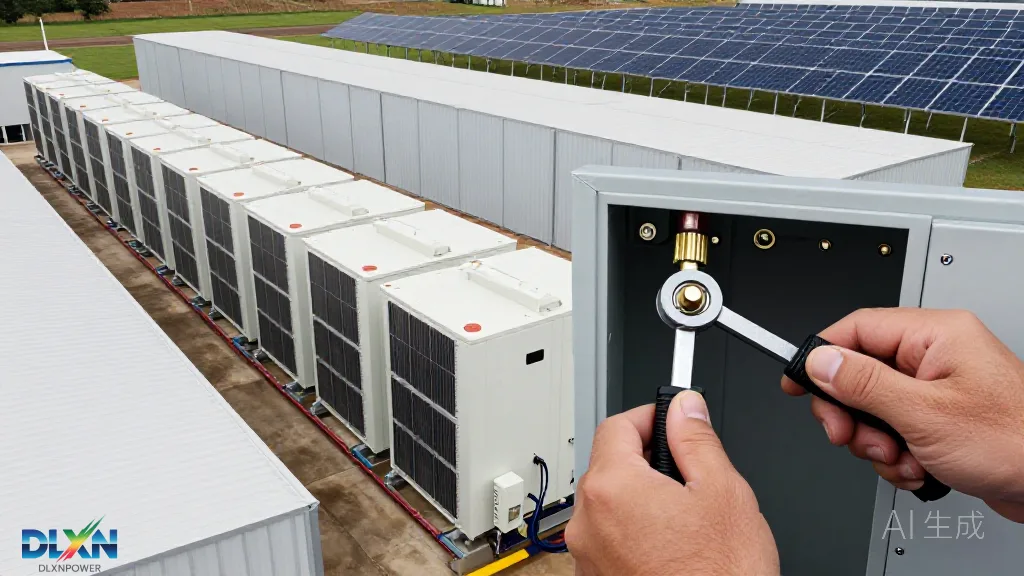
A representative configuration: 2.2 MWh of LFP cabinets paired with a 1.1 MW rooftop array at a refrigerated food distribution centre in Minas Gerais, Brazil, commissioned in September 2025 and operated by the site's own facilities team. The business case was peak-shaving and diesel displacement during grid outages, not arbitrage. Ambient temperatures inside the plant roof void regularly exceeded 40 °C, which pushed the cooling setpoint down and added roughly 3% to the parasitic load. Measured AC-to-AC round-trip settled near 87% in the first quarter of operation, against a design assumption of 90%. The project still cleared its hurdle rate because the avoided diesel was expensive. On a pure arbitrage spread, that three-point shortfall would have been fatal.
What we put on our own specification sheets
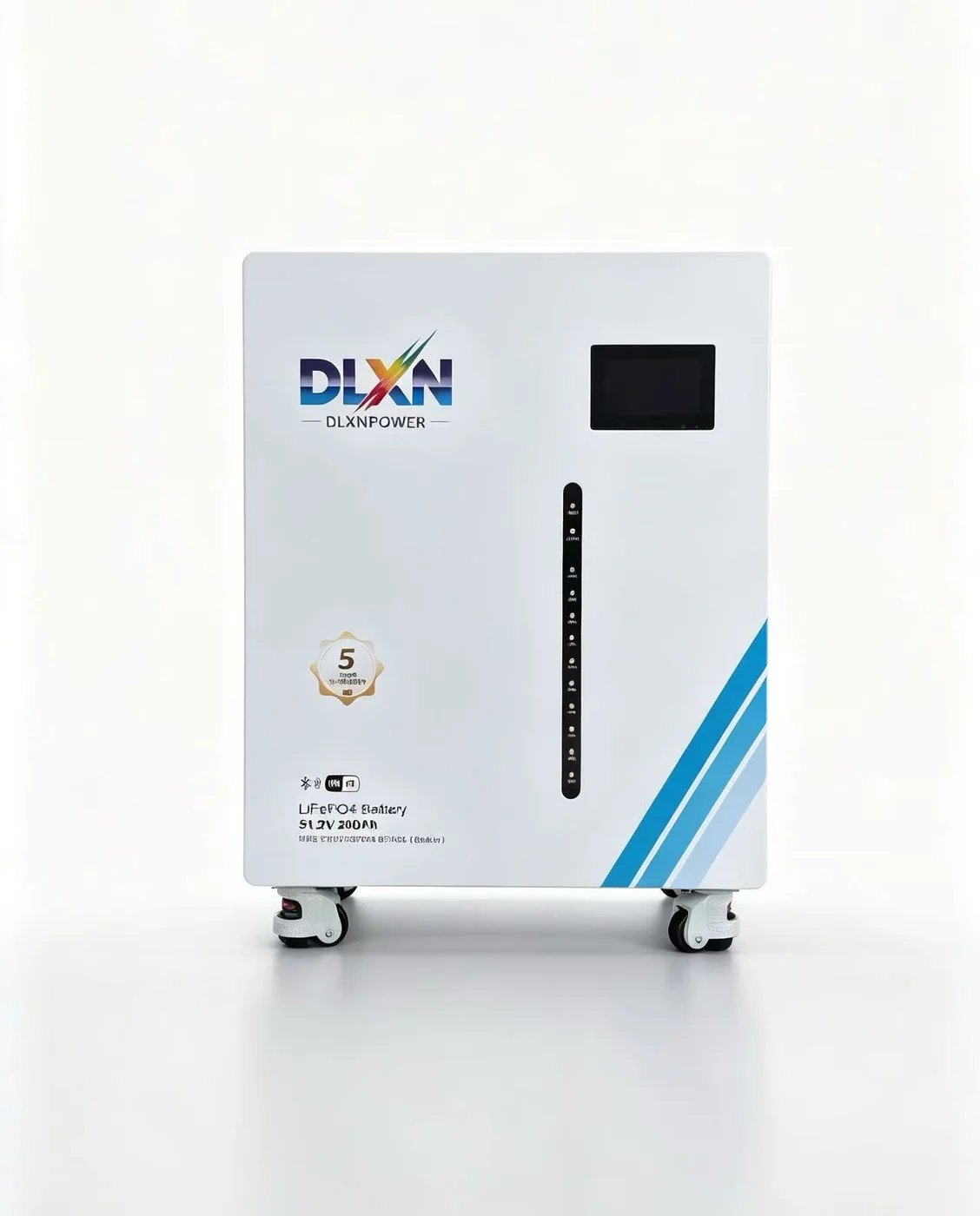
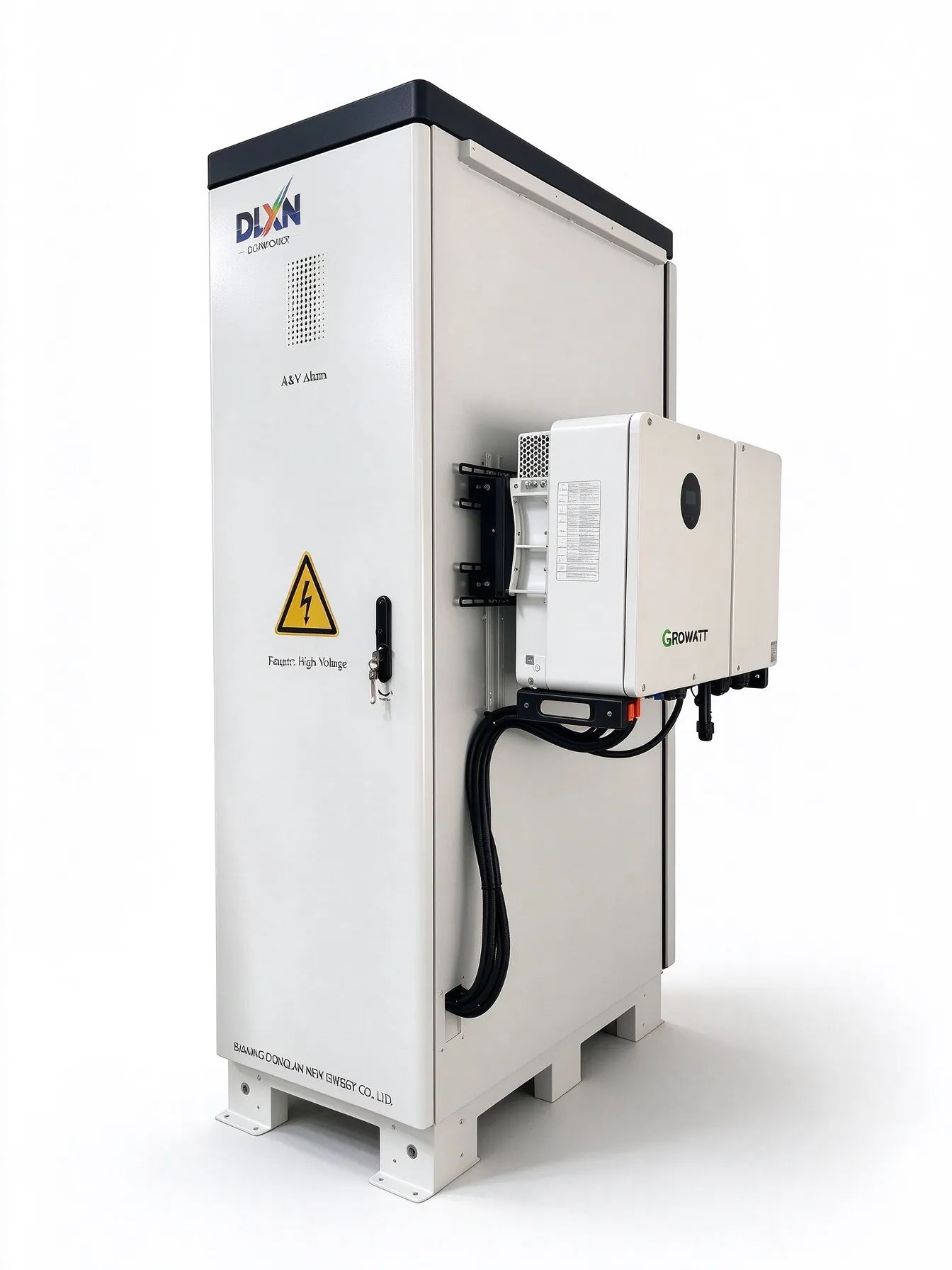
Our lithium battery cabinets are published as 100 kWh to 261 kWh per rack, 0.5C continuous charge and discharge, 1C peak for ten seconds, and 6,000 cycles to 80% state of health at 25 °C. We quote DC round-trip efficiency as a range with the C-rate and temperature attached, because a single percentage without those two conditions is not a specification. In our own formation and grading line, the rejections we chase are almost never the cells: they are busbar weld quality and terminal torque, which is why our battery storage engineering notes put more weight on joint resistance than on chemistry claims.
Systems engineering matters as much as the cell. A well-matched hybrid inverter with a high-efficiency MPPT stage and a transformer sized for the actual load profile will recover two to three points that a poorly specified power path throws away.
The load profile where LFP is the wrong purchase
If your demand profile is a 4 MW arc furnace or a stamping press drawing ten-second pulses at 8C, LFP is the wrong answer regardless of its round-trip figure. The chemistry will deliver the current, but cycle life collapses under that stress and the cooling plant becomes larger than the battery. A supercapacitor bank or a flywheel handles the pulses, with a smaller LFP pack behind it for energy. Similarly, a site at -30 °C without a heated enclosure should not buy any lithium system until the thermal design is settled.
What to ask before signing
- Ask for round-trip efficiency at your expected C-rate and your site's design ambient temperature, not at 25 °C and 0.2C.
- Ask whether the quoted figure is DC-to-DC, DC-to-AC, or AC-to-AC including auxiliaries.
- Ask what the warranty assumes about cooling setpoint and annual cycling.
- Ask which solar panel and inverter combination was modelled in the feasibility study, and whether the coupling was DC or AC.
The efficiency gain is real, and it is worth roughly two to four points at system level compared with equipment specified five years ago. Specifying it properly, with temperature, C-rate and auxiliary load stated in the contract, is worth more than the gain itself. Our completed projects show the measured numbers rather than the modelled ones.
Related products
In-stock models that match this article — specs and RFQ on each page.